


Exploring the Contrasts: Java vs. JavaScript in Modern Programming
The Difference Between Java and JavaScript
Java and JavaScript are two popular programming languages that are often confused due to their similar names. However, they serve different purposes and have distinct characteristics.
Java
Java is a robust, general-purpose programming language that is widely used for developing desktop, web, and mobile applications. It is known for its platform independence, meaning that Java programs can run on any device that has a Java Virtual Machine (JVM) installed.
Java is statically typed, which means that variables must be declared before they can be used. It is an object-oriented language with a strong emphasis on code reusability and modularity.
JavaScript
JavaScript, on the other hand, is a dynamic scripting language primarily used for creating interactive web pages. It runs on the client side within a web browser, allowing developers to add functionality to websites such as form validation, animations, and dynamic content updates.
JavaScript is loosely typed, allowing variables to change data types dynamically. It is also an event-driven language, meaning that code execution is triggered by user actions or system events.
Main Differences
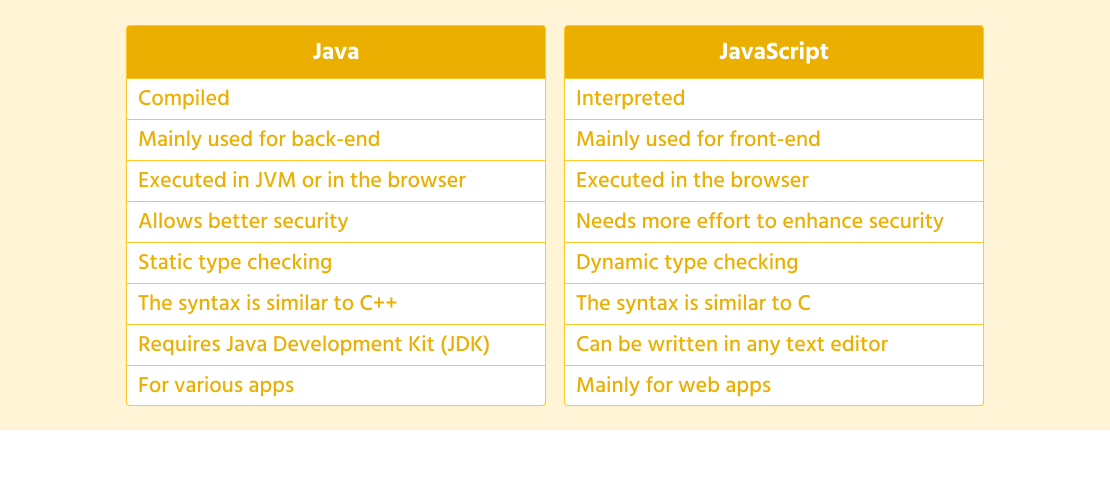
- Java is a compiled language, while JavaScript is an interpreted language.
- Java requires a specific development environment to run (JVM), whereas JavaScript runs directly in web browsers.
- Java is more suitable for building complex applications with high performance requirements, while JavaScript excels in enhancing user interfaces and interactivity on websites.
- Despite their differences, both languages play crucial roles in the world of software development and have their unique strengths and use cases.
In conclusion, while Java and JavaScript share some similarities in their syntax and structure, they cater to different needs in the realm of programming. Understanding their distinctions can help developers choose the right tool for the job when embarking on software development projects.
Understanding Java and JavaScript: Answers to 7 Common Questions
- Are Java and JavaScript the same thing?
- Which is the no. 1 coding language?
- Is Java and JavaScript the same thing?
- Can I learn JavaScript in 7 days?
- Should I learn Java or JavaScript?
- Can Java be used with JavaScript?
- Is JavaScript replacing Java?
Are Java and JavaScript the same thing?
One common misconception in the programming world is whether Java and JavaScript are the same thing. Despite their similar names, Java and JavaScript are two distinct programming languages with different purposes and characteristics. Java is a versatile, statically typed language primarily used for developing applications across various platforms, while JavaScript is a dynamic scripting language mainly utilized for enhancing interactivity on web pages. Understanding the differences between Java and JavaScript can help clarify their unique roles in software development and dispel the confusion surrounding their namesake similarity.
Which is the no. 1 coding language?
The question of which coding language holds the top spot as the number one choice is subjective and can vary depending on the context and purpose. Java and JavaScript are both widely used languages in the programming world, each excelling in different areas. Java is favored for its versatility and robustness in building various applications, while JavaScript shines in creating dynamic and interactive web experiences. Ultimately, there is no definitive answer to which coding language is the absolute best, as it ultimately depends on the specific requirements of a project and the expertise of the developer utilizing it.
Is Java and JavaScript the same thing?
The frequently asked question, “Is Java and JavaScript the same thing?” often arises due to their similar names. However, Java and JavaScript are two distinct programming languages with different purposes and characteristics. Java is a versatile language used for developing various applications, while JavaScript is primarily utilized for enhancing web pages with interactive elements. Despite sharing some syntax similarities, Java and JavaScript serve separate roles in software development, each offering unique features and capabilities tailored to specific use cases. Understanding the differences between Java and JavaScript is essential for developers to effectively leverage the strengths of each language in their projects.
Can I learn JavaScript in 7 days?
Learning JavaScript in 7 days is a common question among beginners eager to acquire programming skills quickly. While it is possible to grasp the basics of JavaScript within a week through intensive study and practice, mastering the language in such a short timeframe may be challenging for most individuals. JavaScript is a powerful and versatile programming language used for web development, and proficiency typically requires consistent practice and hands-on experience over an extended period. Setting realistic learning goals, dedicating time daily to study and code, and seeking guidance from resources like tutorials, documentation, and online communities can help accelerate the learning process effectively. Ultimately, the journey to becoming proficient in JavaScript is a continuous learning experience that evolves with time and practice.
Should I learn Java or JavaScript?
When faced with the frequently asked question of whether to learn Java or JavaScript, it’s essential to consider your specific goals and interests in programming. Java is a versatile language commonly used for building robust applications across various platforms, while JavaScript is primarily focused on enhancing web interactivity and user experience. If you aim to delve into desktop or mobile application development, mastering Java might be the way to go. On the other hand, if your focus lies in web development and creating dynamic website features, learning JavaScript would be more beneficial. Ultimately, both languages have their strengths and applications in the programming world, so choosing between Java and JavaScript depends on your desired career path and the type of projects you envision working on.
Can Java be used with JavaScript?
When it comes to the question of whether Java can be used with JavaScript, it’s important to clarify that while both languages share a similar name, they serve different purposes and operate in distinct environments. Java is a robust programming language commonly used for developing applications, while JavaScript is primarily utilized for enhancing web pages with interactive features. While there are ways to integrate Java and JavaScript in certain scenarios, they typically function independently due to their specific roles and execution environments. Developers may leverage tools like Java applets or server-side technologies to communicate with JavaScript on the client side, but direct integration between the two languages is not a typical practice in modern software development. Understanding the strengths and limitations of each language can help determine the most effective approach when considering their potential collaboration in a project.
Is JavaScript replacing Java?
The frequently asked question of whether JavaScript is replacing Java is a common topic of discussion in the programming community. While both languages have their strengths and use cases, it’s essential to understand that JavaScript and Java serve different purposes in the world of software development. JavaScript is primarily used for client-side web development, enhancing user interfaces and adding interactivity to websites. On the other hand, Java is a versatile language known for its platform independence and robustness, making it suitable for building complex applications across various domains. While JavaScript’s popularity has surged in recent years due to its role in web development, Java continues to be widely used in enterprise applications, mobile development, and other areas where its strengths shine. Ultimately, rather than replacing each other, JavaScript and Java coexist as valuable tools that cater to distinct programming needs.