cfchris.com

Loading

artificial intelligence and machine learning

Exploring the Synergy of Artificial Intelligence and Machine Learning

Artificial Intelligence and Machine Learning

Understanding Artificial Intelligence and Machine Learning

Artificial Intelligence (AI) and Machine Learning (ML) are two of the most transformative technologies in today’s digital age. They are reshaping industries, enhancing efficiencies, and paving the way for innovations that were once considered science fiction.

What is Artificial Intelligence?

Artificial Intelligence refers to the simulation of human intelligence processes by machines, especially computer systems. These processes include learning (the acquisition of information and rules for using it), reasoning (using rules to reach approximate or definite conclusions), and self-correction. AI can be categorized into two types:

  • Narrow AI: Also known as weak AI, this type is designed to perform a narrow task (like facial recognition or internet searches) and operates under a limited set of constraints.
  • General AI: Also known as strong AI, this type possesses the ability to perform any intellectual task that a human can do. It remains largely theoretical at this point.

The Role of Machine Learning

Machine Learning is a subset of AI that involves the use of algorithms and statistical models to enable computers to improve their performance on tasks through experience. Instead of being explicitly programmed to carry out a specific task, ML systems use data-driven approaches to learn patterns from data.

Types of Machine Learning

  1. Supervised Learning: The algorithm is trained on labeled data. It’s like teaching a child with examples. For instance, teaching an algorithm to recognize cats by showing it thousands of labeled cat images.
  2. Unsupervised Learning: The algorithm works with unlabeled data and tries to identify patterns or groupings without any guidance. Clustering algorithms fall under this category.
  3. Semi-supervised Learning: This approach uses both labeled and unlabeled data for training. It’s useful when acquiring a fully labeled dataset is expensive or time-consuming.
  4. Reinforcement Learning: Here, an agent learns how to achieve a goal in an uncertain environment by taking actions and receiving feedback from those actions in terms of rewards or penalties.

The Impact on Industries

The implications of AI and ML are vast across various sectors:

  • Healthcare: From predictive analytics for patient care to advanced imaging techniques, AI helps in diagnosing diseases faster and more accurately.
  • Finance: Algorithms detect fraudulent transactions in real-time while personalized banking experiences enhance customer satisfaction.
  • Agriculture: Precision farming powered by AI optimizes crop yield predictions based on weather conditions, soil health, etc.
  • E-commerce: Personalized recommendations improve user experience while inventory management becomes more efficient through demand forecasting.

The Future Ahead

The future holds immense potential for further advancements in artificial intelligence and machine learning. As these technologies evolve, ethical considerations around privacy, security, bias, and employment must be addressed responsibly. Collaboration between policymakers, technologists, businesses, and society will be crucial in harnessing these powerful tools for the greater good.

The journey ahead is exciting as we continue exploring the possibilities that artificial intelligence and machine learning offer in transforming our world into a smarter place.


Understanding AI and Machine Learning: Key Questions Answered

  1. What is artificial intelligence?
  2. How does machine learning differ from artificial intelligence?
  3. What are the real-world applications of artificial intelligence and machine learning?
  4. What are the different types of machine learning algorithms?
  5. How do artificial intelligence and machine learning impact job roles and industries?
  6. What ethical considerations are associated with the use of AI and ML technologies?
  7. How can businesses leverage artificial intelligence and machine learning to gain a competitive advantage?

What is artificial intelligence?

Artificial Intelligence (AI) is a branch of computer science focused on creating systems capable of performing tasks that typically require human intelligence. These tasks include understanding natural language, recognizing patterns, solving problems, and making decisions. AI systems are designed to simulate human cognitive processes by learning from data and adapting to new inputs. They can be categorized into narrow AI, which is specialized for specific tasks like facial recognition or voice assistants, and general AI, which remains largely theoretical and would possess the ability to perform any intellectual task a human can do. The development of AI has profound implications across various sectors, from healthcare to finance, as it enhances efficiency and opens up new possibilities for innovation.

How does machine learning differ from artificial intelligence?

Machine learning is a subset of artificial intelligence that focuses on enabling machines to learn from data without being explicitly programmed. While artificial intelligence encompasses a broader concept of simulating human intelligence in machines, machine learning specifically deals with algorithms that improve their performance over time through experience. In essence, artificial intelligence represents the overarching goal of creating intelligent machines, whereas machine learning serves as a key technique within the field of AI, emphasizing the ability of systems to learn and adapt autonomously.

What are the real-world applications of artificial intelligence and machine learning?

Artificial intelligence and machine learning have numerous real-world applications that are transforming industries and enhancing everyday life. In healthcare, AI is used for predictive analytics, improving diagnostic accuracy, and personalizing patient care plans. In finance, algorithms help detect fraudulent activities and automate trading processes. The automotive industry benefits from AI through the development of autonomous vehicles and advanced driver-assistance systems. In retail, machine learning enhances customer experience by enabling personalized recommendations and optimizing inventory management. Additionally, AI-powered chatbots are revolutionizing customer service across various sectors by providing instant support and handling routine inquiries efficiently. These technologies are also making significant strides in agriculture with precision farming techniques that increase crop yields while minimizing resource usage. Overall, AI and machine learning are driving innovation across multiple domains, making processes more efficient and opening up new possibilities for growth and development.

What are the different types of machine learning algorithms?

Machine learning algorithms can be broadly categorized into several types, each serving different purposes depending on the nature of the task and the data available. The main types include supervised learning, where algorithms are trained on labeled data to make predictions or classifications; unsupervised learning, which involves finding patterns or groupings in data without predefined labels; and reinforcement learning, where an agent learns to make decisions by receiving feedback in the form of rewards or penalties from its environment. Additionally, there is semi-supervised learning that combines both labeled and unlabeled data to improve learning accuracy, and deep learning, a subset of machine learning that utilizes neural networks with many layers to model complex patterns in large datasets. Each type has its own strengths and is selected based on the specific problem being addressed.

How do artificial intelligence and machine learning impact job roles and industries?

Artificial intelligence and machine learning are significantly transforming job roles and industries by automating routine tasks, enhancing decision-making processes, and creating new opportunities. In many sectors, AI and ML technologies streamline operations, allowing employees to focus on more strategic and creative tasks rather than repetitive ones. For instance, in manufacturing, AI-driven robots handle assembly lines with precision, reducing the need for manual labor while increasing productivity. In finance, algorithms analyze vast datasets to detect fraud or predict market trends faster than human analysts could. While some fear that automation might lead to job displacement, these technologies also generate demand for new roles in AI development, data analysis, and system maintenance. Industries are evolving as they integrate AI and ML into their workflows, fostering innovation and requiring a workforce skilled in digital literacy to adapt to these technological advancements.

What ethical considerations are associated with the use of AI and ML technologies?

The ethical considerations associated with the use of AI and ML technologies are multifaceted and crucial to address as these technologies become more integrated into daily life. One major concern is privacy, as AI systems often rely on large datasets that include personal information, raising questions about data security and consent. Additionally, there is the potential for bias in AI algorithms, which can lead to unfair or discriminatory outcomes if the data used to train these systems is not representative or contains inherent biases. Transparency is another significant issue, as the decision-making processes of complex AI models can be opaque, making it difficult for users to understand how conclusions are reached. Moreover, the impact of AI on employment must be considered, as automation could displace jobs without adequate measures for workforce transition. Finally, ensuring accountability in AI systems is essential to determine who is responsible when these technologies fail or cause harm. Addressing these ethical challenges requires a collaborative effort among technologists, policymakers, and society to develop frameworks that promote fair and responsible use of AI and ML.

How can businesses leverage artificial intelligence and machine learning to gain a competitive advantage?

Businesses can leverage artificial intelligence (AI) and machine learning (ML) to gain a competitive advantage by optimizing operations, enhancing customer experiences, and driving innovation. AI and ML can automate routine tasks, freeing up valuable human resources for more strategic activities. By analyzing vast amounts of data, these technologies provide insights into consumer behavior, allowing companies to tailor products and services to meet customer needs more effectively. Predictive analytics powered by AI can improve decision-making processes, enabling businesses to anticipate market trends and adjust strategies proactively. Additionally, AI-driven tools can enhance product development cycles by identifying inefficiencies and suggesting improvements. By integrating AI and ML into their operations, businesses not only increase efficiency but also foster innovation that sets them apart in the marketplace.

Exploring the Transformative Power of AI and Machine Learning

Understanding AI and Machine Learning

Understanding AI and Machine Learning

Artificial Intelligence (AI) and Machine Learning (ML) are two of the most transformative technologies of our time. They are reshaping industries, enhancing productivity, and driving innovation across various sectors.

What is Artificial Intelligence?

Artificial Intelligence refers to the simulation of human intelligence in machines that are programmed to think and learn like humans. AI systems can perform tasks such as visual perception, speech recognition, decision-making, and language translation.

The Evolution of AI

The concept of AI has been around for decades, but recent advancements in computing power and data availability have accelerated its development. From simple rule-based systems to complex neural networks, AI has evolved significantly over the years.

What is Machine Learning?

Machine Learning is a subset of AI that involves the use of algorithms and statistical models to enable computers to improve their performance on a specific task through experience. Instead of being explicitly programmed for every task, ML systems learn from data.

Types of Machine Learning

  • Supervised Learning: Involves training a model on labeled data. The model learns to make predictions or decisions based on input-output pairs.
  • Unsupervised Learning: Involves training a model on unlabeled data. The system tries to learn patterns and structures from the input data without any guidance.
  • Reinforcement Learning: Involves training an agent to make sequences of decisions by rewarding desired behaviors and punishing undesired ones.

The Impact of AI and ML

The impact of AI and ML can be seen in various fields:

  • Healthcare: These technologies assist in diagnostics, personalized medicine, and drug discovery.
  • Finance: They enhance fraud detection, algorithmic trading, and credit scoring processes.
  • Agriculture: They optimize crop yields through predictive analytics and automated monitoring systems.
  • Transportation: Autonomous vehicles rely heavily on machine learning algorithms for navigation and safety features.
  • E-commerce: Personalized recommendations improve customer experience by analyzing user behavior patterns.

The Future of AI and Machine Learning

The future holds immense potential for further advancements in AI and ML. As these technologies continue to evolve, they will likely lead to more sophisticated applications that could revolutionize industries even further. However, it is also important to address ethical considerations such as privacy concerns, job displacement, and bias in algorithms as we move forward with these innovations.

The journey into artificial intelligence promises exciting developments that could transform how we live our lives while presenting unique challenges that need careful consideration along the way.


Understanding AI and Machine Learning: Key FAQs Answered

  1. What is Artificial Intelligence (AI)?
  2. How does Machine Learning (ML) differ from AI?
  3. What are the different types of Machine Learning algorithms?
  4. How is AI being used in healthcare?
  5. What role does AI play in autonomous vehicles?
  6. Can AI and ML be applied in finance and banking sectors?
  7. What are the ethical considerations surrounding AI and ML?
  8. How can businesses leverage AI and ML for improved decision-making?

What is Artificial Intelligence (AI)?

Artificial Intelligence (AI) refers to the creation of computer systems that can perform tasks typically requiring human intelligence. These tasks include problem-solving, understanding natural language, recognizing patterns, and making decisions. AI systems are designed to learn from data and improve over time, allowing them to adapt to new information and situations. By mimicking cognitive functions such as learning and problem-solving, AI can automate complex processes and provide insights in various fields, ranging from healthcare to finance. As a rapidly evolving technology, AI has the potential to transform industries by enhancing efficiency and creating new opportunities for innovation.

How does Machine Learning (ML) differ from AI?

Machine Learning (ML) is a subset of Artificial Intelligence (AI), and while the two terms are often used interchangeably, they refer to different concepts. AI is the broader concept of machines being able to carry out tasks in a way that we would consider “smart,” encompassing everything from rule-based systems to complex decision-making algorithms. Machine Learning, on the other hand, specifically involves the use of algorithms and statistical models that enable computers to learn from data and improve their performance over time without being explicitly programmed for each task. In essence, while AI encompasses the idea of machines simulating human intelligence, ML focuses on the process by which machines can automatically learn and adapt when exposed to new data.

What are the different types of Machine Learning algorithms?

Machine Learning algorithms can be broadly categorized into three main types: supervised learning, unsupervised learning, and reinforcement learning. Supervised learning algorithms are trained on labeled data, where the input and the desired output are provided, allowing the model to learn the mapping between them. This type is commonly used for tasks like classification and regression. Unsupervised learning algorithms, on the other hand, work with unlabeled data and aim to uncover hidden patterns or structures within the input data. Techniques such as clustering and dimensionality reduction fall under this category. Lastly, reinforcement learning involves training an agent to make a sequence of decisions by rewarding desired actions and penalizing undesired ones. This approach is often used in scenarios requiring dynamic decision-making, such as robotics and game playing. Each type of algorithm serves different purposes and is chosen based on the specific requirements of a task or problem domain.

How is AI being used in healthcare?

AI is revolutionizing healthcare by enhancing diagnostics, personalizing treatment, and improving patient outcomes. In diagnostics, AI algorithms analyze medical images such as X-rays and MRIs with remarkable accuracy, often detecting anomalies that may be missed by the human eye. Personalized medicine benefits from AI through the analysis of genetic information and patient data to tailor treatments specifically to individual needs. Additionally, AI-powered virtual health assistants provide patients with 24/7 support, answering questions and managing appointments. In research, AI accelerates drug discovery by predicting how different compounds will interact with targets in the body. Overall, AI is streamlining operations in healthcare facilities, reducing costs, and ultimately leading to better care for patients.

What role does AI play in autonomous vehicles?

AI plays a crucial role in the development and operation of autonomous vehicles, serving as the brain behind their ability to navigate and make real-time decisions. Machine learning algorithms process vast amounts of data from sensors and cameras to understand the vehicle’s environment, identify obstacles, interpret traffic signals, and predict the actions of pedestrians and other vehicles. AI systems enable autonomous vehicles to continuously learn from new data, improving their accuracy and safety over time. By integrating computer vision, sensor fusion, and deep learning techniques, AI allows these vehicles to operate with minimal human intervention, aiming for safer roads and more efficient transportation systems.

Can AI and ML be applied in finance and banking sectors?

AI and Machine Learning have significant applications in the finance and banking sectors, revolutionizing how these industries operate. These technologies enhance fraud detection by analyzing vast amounts of transaction data to identify unusual patterns indicative of fraudulent activity. Additionally, AI and ML streamline customer service through chatbots and virtual assistants that provide 24/7 support, improving customer satisfaction and reducing operational costs. In investment management, machine learning algorithms analyze market trends and historical data to optimize trading strategies and portfolio management. Credit scoring has also become more accurate with AI, as it evaluates a broader range of factors to assess creditworthiness, thereby enabling more informed lending decisions. Overall, AI and ML are driving efficiency, accuracy, and innovation in finance and banking.

What are the ethical considerations surrounding AI and ML?

The ethical considerations surrounding AI and machine learning are multifaceted and critical to address as these technologies continue to evolve. One major concern is bias in algorithms, which can occur when AI systems are trained on data that reflects existing prejudices, leading to unfair or discriminatory outcomes. Privacy is another significant issue, as AI systems often require vast amounts of personal data to function effectively, raising concerns about how this data is collected, stored, and used. Additionally, the potential for job displacement due to automation poses economic and social challenges that need thoughtful solutions. The use of AI in decision-making processes also raises questions about accountability and transparency, as it can be difficult to determine how an AI system arrived at a particular decision. Ensuring that AI and ML technologies are developed and deployed responsibly requires ongoing dialogue among technologists, ethicists, policymakers, and the public.

How can businesses leverage AI and ML for improved decision-making?

Businesses can leverage AI and machine learning to enhance decision-making by utilizing data-driven insights and predictive analytics. These technologies enable companies to process vast amounts of data quickly and accurately, uncovering patterns and trends that might be missed by human analysis alone. By integrating AI and ML into their operations, businesses can forecast market trends, optimize supply chains, personalize customer experiences, and improve risk management. Additionally, AI-powered tools can automate routine tasks, freeing up human resources for more strategic initiatives. This leads to more informed decisions, increased efficiency, and a competitive edge in the marketplace.

machine learning and deep learning

Exploring the Synergy Between Machine Learning and Deep Learning

The Power of Machine Learning and Deep Learning

Machine learning and deep learning are two transformative technologies that have revolutionized various industries, from healthcare to finance to transportation. These cutting-edge fields of artificial intelligence have the potential to unlock new possibilities and drive innovation like never before.

Machine Learning

Machine learning is a subset of artificial intelligence that enables systems to learn from data and improve their performance without being explicitly programmed. By analyzing patterns in data, machine learning algorithms can make predictions or decisions with minimal human intervention. This technology is widely used in applications such as recommendation systems, fraud detection, and image recognition.

Key Concepts in Machine Learning:

  • Supervised Learning: Algorithms learn from labeled training data to make predictions or classifications.
  • Unsupervised Learning: Algorithms find patterns in unlabeled data without predefined outcomes.
  • Reinforcement Learning: Agents learn by interacting with an environment and receiving rewards or penalties based on their actions.

Deep Learning

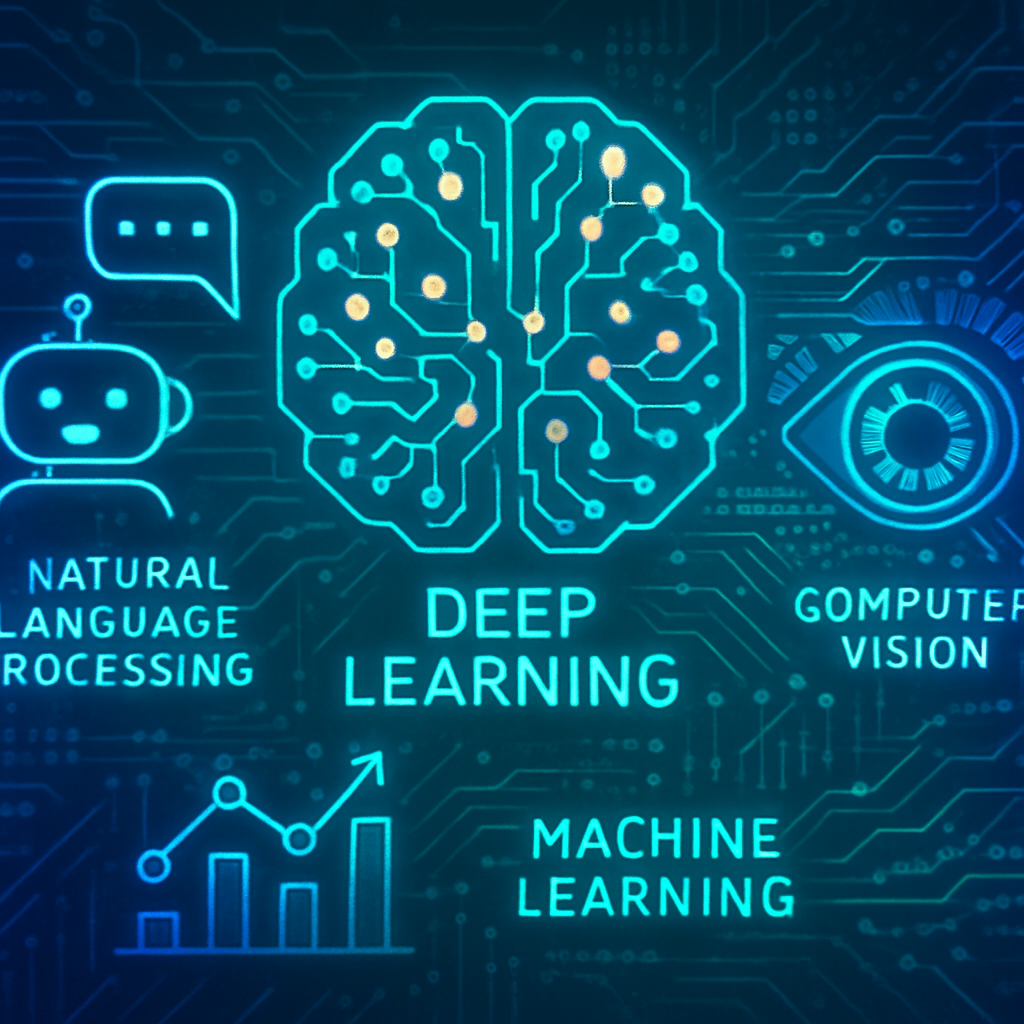
Deep learning is a subset of machine learning that uses artificial neural networks with multiple layers to model complex relationships in data. These deep neural networks can automatically discover intricate patterns and features, leading to state-of-the-art performance in tasks like natural language processing, computer vision, and speech recognition.

Advantages of Deep Learning:

  • Hierarchical Feature Representation: Deep neural networks can learn hierarchical representations of data, capturing intricate features at different levels of abstraction.
  • Scalability: Deep learning models can scale with more data and computational resources, allowing for continuous improvement in performance.
  • Versatility: Deep learning architectures can be adapted to various domains and tasks, making them highly versatile for diverse applications.

In conclusion, machine learning and deep learning are driving the next wave of technological advancements across industries. As these fields continue to evolve, we can expect even more groundbreaking innovations that will shape the future of AI-driven solutions.


Understanding the Differences: ML vs DL vs NLP vs AI

  1. What is ML vs DL vs NLP?
  2. What is the difference between machine learning and deep learning?
  3. Does deep learning require machine learning?
  4. What is ML vs DL vs AI?
  5. What is the difference between deep learning and machine learning?
  6. What is the difference between AI ML and DL?

What is ML vs DL vs NLP?

When discussing machine learning (ML), deep learning (DL), and natural language processing (NLP), it’s essential to understand their distinctions. Machine learning is a broader concept that encompasses various algorithms and techniques enabling systems to learn from data and make predictions. Deep learning is a subset of machine learning that uses neural networks with multiple layers to model complex patterns in data, achieving high levels of accuracy in tasks like image recognition and speech synthesis. Natural language processing focuses specifically on the interaction between computers and human language, allowing machines to understand, interpret, and generate human language. In essence, ML provides the foundation for DL, which in turn powers advanced applications like NLP, showcasing the interconnected nature of these technologies in shaping the future of artificial intelligence.

What is the difference between machine learning and deep learning?

When exploring the distinction between machine learning and deep learning, it is essential to understand that machine learning is a broader concept that encompasses various techniques for enabling computers to learn from data and make decisions without explicit programming. On the other hand, deep learning is a subset of machine learning that specifically focuses on artificial neural networks with multiple layers to model complex patterns and relationships in data. While machine learning algorithms can handle a wide range of tasks based on labeled or unlabeled data, deep learning excels in processing vast amounts of unstructured data for tasks like image recognition, natural language processing, and speech recognition. In summary, deep learning is a sophisticated approach within the realm of machine learning that leverages deep neural networks to achieve high levels of accuracy and performance in complex tasks requiring intricate pattern recognition.

Does deep learning require machine learning?

In the realm of artificial intelligence, deep learning is actually a subset of machine learning. Therefore, deep learning does require machine learning as a foundational concept. Machine learning encompasses various algorithms and techniques that enable systems to learn from data and make predictions or decisions without explicit programming. Deep learning, on the other hand, utilizes complex neural networks with multiple layers to model intricate patterns in data. So, while deep learning is a specialized form of machine learning, it builds upon the core principles and methodologies of machine learning to achieve advanced levels of performance in tasks such as image recognition, natural language processing, and more.

What is ML vs DL vs AI?

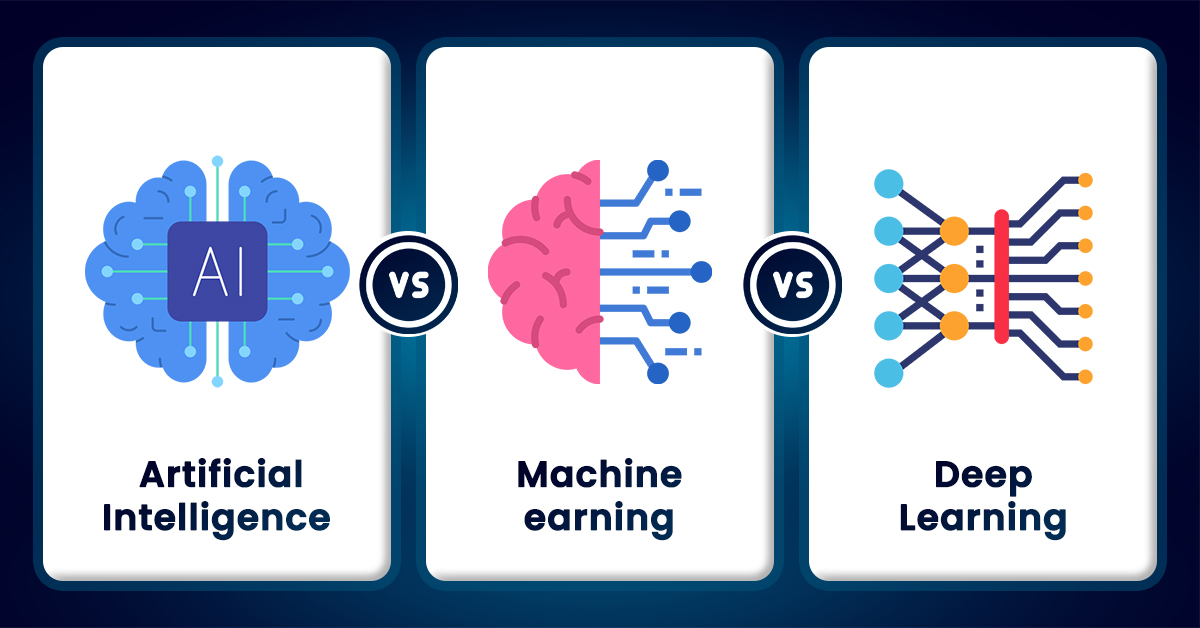
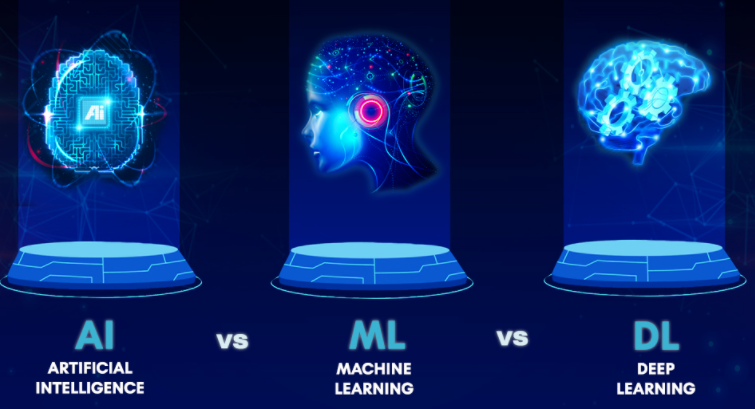
Machine Learning (ML), Deep Learning (DL), and Artificial Intelligence (AI) are interconnected fields that often cause confusion due to their overlapping nature. AI is the broadest concept, encompassing any technique that enables machines to mimic human intelligence. Within AI, machine learning is a subset focused on creating algorithms that allow computers to learn from and make predictions based on data. Deep learning, in turn, is a specialized subset of machine learning that uses neural networks with multiple layers to analyze complex patterns in large datasets. While AI can include rule-based systems and other non-learning techniques, ML and DL specifically refer to data-driven approaches where systems improve over time with exposure to more data.

What is the difference between deep learning and machine learning?

When discussing the difference between deep learning and machine learning, it’s important to understand that deep learning is a subset of machine learning. While both technologies involve training algorithms to make predictions based on data, the key distinction lies in their approach to data representation and feature extraction. Machine learning algorithms typically require manual feature engineering to extract relevant patterns from data, whereas deep learning models use artificial neural networks with multiple layers to automatically learn hierarchical representations of data. This allows deep learning algorithms to capture intricate features at different levels of abstraction, leading to superior performance in complex tasks such as image recognition and natural language processing. In essence, deep learning can be seen as a more advanced and sophisticated form of machine learning that leverages deep neural networks for unparalleled predictive power.

What is the difference between AI ML and DL?

Artificial Intelligence (AI), Machine Learning (ML), and Deep Learning (DL) are interconnected fields, but they differ in scope and complexity. AI is the broadest concept, encompassing any technique that enables machines to mimic human intelligence. Within AI, machine learning is a subset that focuses on algorithms allowing computers to learn from data and improve their performance over time without being explicitly programmed. Deep learning, in turn, is a specialized subset of machine learning that uses neural networks with multiple layers to analyze complex patterns in large datasets. While AI provides the overarching goal of creating intelligent systems, ML offers the methods for data-driven learning, and DL enhances these methods by enabling more sophisticated pattern recognition through deep neural networks.

ai artificial intelligence

Unlocking the Potential of AI: Exploring the World of Artificial Intelligence

The Rise of Artificial Intelligence

The Rise of Artificial Intelligence

Artificial Intelligence (AI) has become one of the most transformative technologies of the 21st century. From its humble beginnings in academic research to its current widespread application across various industries, AI is reshaping how we live and work.

What is Artificial Intelligence?

Artificial Intelligence refers to the simulation of human intelligence in machines that are programmed to think and learn like humans. These intelligent systems are designed to perform tasks such as recognizing speech, making decisions, and translating languages.

Key Components of AI

  • Machine Learning: A subset of AI that focuses on building systems that can learn from data and improve over time without being explicitly programmed.
  • Natural Language Processing (NLP): Enables machines to understand and respond to human language.
  • Robotics: Involves designing intelligent robots capable of performing tasks autonomously.
  • Computer Vision: Allows machines to interpret and make decisions based on visual data from the world around them.

The Impact of AI Across Industries

The impact of AI is evident across numerous sectors:

  • Healthcare: AI assists in diagnosing diseases, personalizing treatment plans, and managing patient care efficiently.
  • Finance: AI algorithms are used for fraud detection, risk management, and automated trading strategies.
  • Manufacturing: Robotics powered by AI streamline production processes and enhance quality control.
  • Agriculture: AI optimizes crop management through predictive analytics and automated machinery.

The Future of Artificial Intelligence

The future of AI holds immense potential. As technology continues to advance, we can expect more sophisticated applications that will further integrate into our daily lives. However, with these advancements come ethical considerations such as privacy concerns, job displacement, and the need for regulation to ensure responsible use.

The journey of artificial intelligence is just beginning. As researchers and developers continue to push the boundaries of what is possible, society must navigate both the opportunities and challenges presented by this powerful technology.


5 Essential Tips for Mastering Artificial Intelligence

  1. Understand the basics of AI algorithms and how they work.
  2. Stay updated with the latest trends and advancements in AI technology.
  3. Experiment with different AI tools and platforms to gain hands-on experience.
  4. Consider the ethical implications of AI development and usage.
  5. Collaborate with experts in the field to enhance your knowledge and skills in artificial intelligence.

Understand the basics of AI algorithms and how they work.

Understanding the basics of AI algorithms and how they work is crucial for anyone looking to harness the power of artificial intelligence effectively. AI algorithms are the building blocks that enable machines to process data, recognize patterns, and make decisions. By grasping fundamental concepts such as supervised learning, unsupervised learning, and reinforcement learning, individuals can better appreciate how AI systems operate and make informed decisions about implementing AI technologies. This foundational knowledge not only aids in selecting the right tools and approaches for specific tasks but also helps in troubleshooting issues and optimizing performance. As AI continues to evolve and permeate various sectors, a solid understanding of its core algorithms will empower users to leverage its capabilities responsibly and innovatively.

Staying updated with the latest trends and advancements in AI technology is crucial for anyone looking to leverage its potential effectively. As AI continues to evolve rapidly, new tools, techniques, and applications emerge regularly, transforming industries and creating new opportunities. By keeping abreast of these developments, individuals and businesses can make informed decisions about integrating AI into their operations, ensuring they remain competitive and innovative. Additionally, understanding the latest advancements helps in anticipating future challenges and preparing for changes that AI might bring to various sectors. Engaging with AI-focused publications, attending conferences, and participating in online forums are excellent ways to stay informed about this dynamic field.

Experiment with different AI tools and platforms to gain hands-on experience.

Experimenting with different AI tools and platforms is an excellent way to gain hands-on experience and deepen understanding of artificial intelligence. By exploring a variety of tools, such as machine learning frameworks, natural language processing libraries, and computer vision software, individuals can discover the unique features and capabilities each platform offers. This practical approach allows users to apply theoretical knowledge in real-world scenarios, fostering problem-solving skills and innovation. Additionally, experimenting with diverse tools helps identify the most suitable technologies for specific projects or tasks, enhancing efficiency and effectiveness in AI development. Whether it’s through open-source platforms or commercial software, hands-on experimentation is invaluable for anyone looking to excel in the rapidly evolving field of AI.

Consider the ethical implications of AI development and usage.

When developing and utilizing artificial intelligence, it’s crucial to consider the ethical implications that accompany this powerful technology. AI systems have the potential to significantly impact society, influencing everything from privacy and security to employment and decision-making processes. Developers must ensure that AI solutions are designed with fairness, transparency, and accountability in mind to prevent biases and discrimination. Additionally, there should be clear guidelines on data usage to protect individual privacy rights. As AI continues to evolve, ongoing dialogue among technologists, ethicists, policymakers, and the public is essential to navigate these challenges responsibly and ensure that AI benefits humanity as a whole without exacerbating existing inequalities or creating new ethical dilemmas.

Collaborate with experts in the field to enhance your knowledge and skills in artificial intelligence.

Collaborating with experts in the field of artificial intelligence is a valuable tip to enhance your knowledge and skills in this rapidly evolving technology. By working alongside seasoned professionals, you can gain insights, learn best practices, and stay updated on the latest trends and advancements in AI. This collaborative approach not only accelerates your learning curve but also provides opportunities for networking, mentorship, and potential collaborations on innovative projects that can further deepen your expertise in artificial intelligence.