cfchris.com

Loading

introduction to java

An Introduction to Java Programming: Exploring the Basics of Java Development

Introduction to Java

Introduction to Java

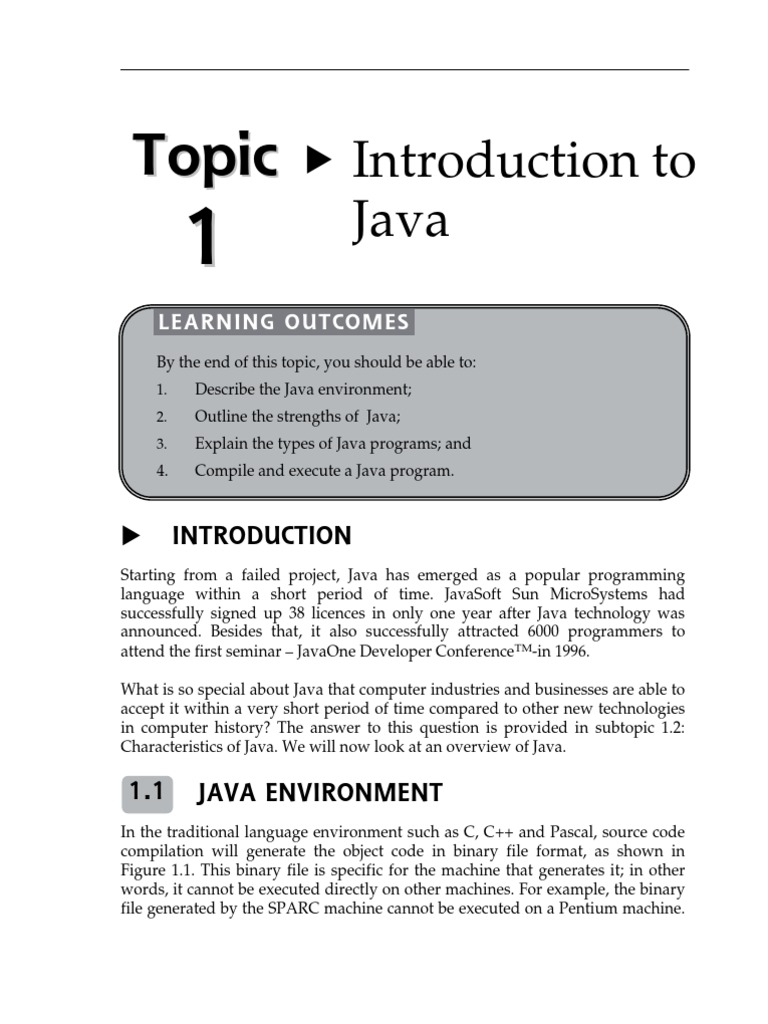
Java is a high-level, object-oriented programming language developed by Sun Microsystems in the mid-1990s. It is known for its portability, versatility, and robustness, making it one of the most popular programming languages in the world.

Key Features of Java:

  • Platform Independence: Java programs can run on any platform that has a Java Virtual Machine (JVM) installed, making it highly portable.
  • Object-Oriented: Java follows an object-oriented programming paradigm, allowing developers to create modular and reusable code.
  • Syntax Simplicity: Java syntax is easy to read and understand, making it a beginner-friendly language.
  • Automatic Memory Management: Java handles memory management automatically through its built-in garbage collector, reducing the risk of memory leaks.
  • Rich Standard Library: Java comes with a vast standard library that provides pre-built functionality for common tasks, saving developers time and effort.

Main Components of Java:

  1. JVM (Java Virtual Machine): The JVM is an essential component of the Java platform that executes compiled Java code.
  2. JRE (Java Runtime Environment): The JRE includes the JVM and other libraries necessary for running Java applications.
  3. JDK (Java Development Kit): The JDK is a software development kit that includes tools for developing, debugging, and monitoring Java applications.

Hello World Example in Java:

“`java

public class HelloWorld {

public static void main(String[] args) {

System.out.println(“Hello, World!”);

}

}

“`

The above code snippet demonstrates a simple “Hello World” program in Java. It defines a class named `HelloWorld` with a `main` method that prints “Hello, World!” to the console.

In conclusion, Java’s versatility and ease of use make it an ideal choice for developing various types of applications, from web applications to mobile apps. Whether you are a beginner or an experienced developer, learning Java can open up numerous opportunities in the world of programming.


5 Key Advantages of Learning Java: Platform Independence, Object-Oriented Design, Simplicity, Memory Management, and a Robust Standard Library

  1. Java is platform-independent, allowing programs to run on different operating systems with a Java Virtual Machine (JVM).
  2. Java is object-oriented, promoting code reusability and modular development.
  3. Java has a simple syntax that is easy to read and understand, making it beginner-friendly.
  4. Java features automatic memory management through garbage collection, reducing the risk of memory leaks.
  5. Java offers a rich standard library with pre-built functionality for common tasks, saving developers time and effort.


6 Drawbacks to Consider When Learning Java for Beginners

  1. Java can be verbose, requiring more lines of code compared to other languages.
  2. Learning Java syntax and concepts may be challenging for beginners with no prior programming experience.
  3. Java’s performance may not be as fast as some lower-level languages like C or C++.
  4. Managing memory in Java can be complex, especially when dealing with large-scale applications.
  5. Java’s strict typing system can lead to longer development times due to the need for explicit type declarations.
  6. Java updates and versions may introduce compatibility issues with existing codebases.

Java is platform-independent, allowing programs to run on different operating systems with a Java Virtual Machine (JVM).

Java’s platform independence is a significant advantage that sets it apart from many other programming languages. By utilizing the Java Virtual Machine (JVM), Java programs can be executed on various operating systems without the need for recompilation. This cross-platform compatibility simplifies software development and deployment, making Java an ideal choice for creating applications that can run seamlessly across different environments.

Java is object-oriented, promoting code reusability and modular development.

Java’s object-oriented nature is a significant advantage, as it fosters code reusability and modular development. By structuring programs around objects and classes, Java enables developers to create reusable components that can be easily integrated into different parts of a project. This approach not only streamlines the development process but also enhances the maintainability and scalability of Java applications, making them more efficient and adaptable to changing requirements.

Java has a simple syntax that is easy to read and understand, making it beginner-friendly.

Java’s simple syntax sets it apart as a beginner-friendly programming language, as it is designed to be easy to read and understand. This feature of Java allows new programmers to grasp the fundamentals quickly and start writing code with confidence. The straightforward syntax of Java contributes to its popularity among beginners and experienced developers alike, making it an excellent choice for those looking to enter the world of programming.

Java features automatic memory management through garbage collection, reducing the risk of memory leaks.

Java’s automatic memory management through garbage collection is a significant advantage that sets it apart from many other programming languages. By handling memory allocation and deallocation automatically, Java reduces the risk of memory leaks, a common issue in manual memory management languages. This feature not only simplifies the development process but also enhances the reliability and stability of Java applications by ensuring efficient memory usage.

Java offers a rich standard library with pre-built functionality for common tasks, saving developers time and effort.

Java’s rich standard library is a standout feature that significantly benefits developers by providing pre-built functionality for common tasks. This extensive library not only saves developers valuable time but also reduces the effort required to implement basic functionalities in their applications. By leveraging the ready-to-use components within the standard library, Java developers can focus more on solving complex problems and building innovative solutions rather than reinventing the wheel for routine tasks.

Java can be verbose, requiring more lines of code compared to other languages.

Java’s verbosity is often cited as a drawback, as it typically requires more lines of code compared to some other programming languages. This can lead to increased development time and potentially make the codebase harder to maintain. While Java’s explicit syntax can enhance readability and maintainability in some cases, developers may find themselves writing more boilerplate code than desired, which can be seen as a downside, especially when working on projects with tight deadlines.

Learning Java syntax and concepts may be challenging for beginners with no prior programming experience.

Learning Java syntax and concepts may pose a challenge for beginners with no prior programming experience. Java, being an object-oriented language, introduces new concepts such as classes, objects, inheritance, and polymorphism that may require a steep learning curve for those unfamiliar with programming principles. Additionally, Java syntax can be strict and verbose compared to some other languages, demanding attention to detail and precision in coding practices. However, with dedication, practice, and the right resources, beginners can overcome these initial hurdles and gradually build a solid foundation in Java programming.

Java’s performance may not be as fast as some lower-level languages like C or C++.

Java’s performance may not always match the speed of lower-level languages such as C or C++. Due to its design as a high-level language with automatic memory management and platform independence, Java may introduce some overhead that can impact its execution speed compared to more optimized, lower-level languages. While Java offers advantages in terms of portability and ease of development, developers working on performance-critical applications may need to carefully consider the trade-offs between these benefits and the potential performance limitations of the language.

Managing memory in Java can be complex, especially when dealing with large-scale applications.

Managing memory in Java can be complex, especially when dealing with large-scale applications. One of the challenges developers face is ensuring efficient memory usage to prevent issues like memory leaks or excessive garbage collection pauses. In large-scale applications, the sheer volume of objects created and the complexity of their interactions can make it challenging to optimize memory allocation and deallocation effectively. This complexity requires careful planning and implementation of memory management strategies to maintain application performance and stability.

Java’s strict typing system can lead to longer development times due to the need for explicit type declarations.

Java’s strict typing system, while beneficial for ensuring code integrity and reducing errors at runtime, can sometimes result in longer development times. The requirement for explicit type declarations in Java means that developers need to specify the data types of variables, parameters, and return values throughout their code. This level of detail can add complexity to the development process, especially when compared to dynamically typed languages where type inference is more flexible. Despite this potential drawback, the strict typing system in Java ultimately contributes to code reliability and maintainability in the long run.

Java updates and versions may introduce compatibility issues with existing codebases.

Java updates and new versions can sometimes pose a challenge for developers due to potential compatibility issues with existing codebases. When Java introduces changes or deprecates certain features, it may require modifications to the code to ensure that it functions correctly with the latest version. This can be a time-consuming process, especially for large projects with extensive codebases, as developers need to carefully assess and update their code to maintain compatibility and take advantage of new Java features. Despite this con, staying up-to-date with Java versions is essential for security patches, performance improvements, and access to new functionalities in the language.

java software

Unlocking the Potential of Java Software: A Comprehensive Guide

The Power of Java Software

The Power of Java Software

Java software has become a cornerstone in the world of technology, powering a wide range of applications and systems. Its versatility, reliability, and scalability make it a popular choice for developers and businesses alike.

What is Java?

Java is a high-level programming language that was developed by Sun Microsystems in the mid-1990s. It is known for its “write once, run anywhere” philosophy, which means that Java programs can run on any platform that has a Java Virtual Machine (JVM) installed.

Features of Java Software

One of the key features of Java software is its portability. This allows developers to create applications that can be deployed on various operating systems without any modifications. Additionally, Java is known for its robust security features, making it a popular choice for developing secure applications.

Applications of Java Software

Java software is used in a wide range of applications, including:

  • Enterprise applications
  • Web applications
  • Mobile applications
  • Gaming applications
  • Embedded systems
  • Big data technologies

The Future of Java Software

Despite the emergence of new programming languages and technologies, Java continues to be a popular choice for developers due to its stability and performance. With ongoing updates and improvements, Java software remains relevant in today’s rapidly evolving tech landscape.


6 Essential Tips for Writing Clean and Effective Java Software

  1. Use meaningful variable names to improve code readability.
  2. Follow Java naming conventions for classes, methods, and variables.
  3. Break down complex tasks into smaller methods for better maintainability.
  4. Document your code using comments to explain its purpose and functionality.
  5. Make use of Java’s built-in libraries and frameworks to avoid reinventing the wheel.
  6. Regularly test your code using unit tests to ensure its correctness.

Use meaningful variable names to improve code readability.

Using meaningful variable names is a crucial tip in Java software development as it significantly enhances code readability. By choosing descriptive and relevant names for variables, developers can easily understand the purpose and function of each variable within the code. This practice not only makes the code more readable for the original developer but also for anyone else who may need to work on or maintain the code in the future. Clear and meaningful variable names help streamline the coding process, improve collaboration among team members, and ultimately contribute to creating more maintainable and efficient Java software applications.

Follow Java naming conventions for classes, methods, and variables.

It is essential to adhere to Java naming conventions when naming classes, methods, and variables in your code. By following these conventions, such as using camelCase for method and variable names and PascalCase for class names, you ensure consistency and readability throughout your codebase. Consistent naming practices make it easier for other developers to understand your code and maintain it effectively. Additionally, following Java naming conventions helps in promoting good coding practices and standards within the Java development community.

Break down complex tasks into smaller methods for better maintainability.

When working with Java software, it is essential to break down complex tasks into smaller methods to enhance maintainability. By dividing a large task into smaller, more manageable chunks, developers can improve code readability, reusability, and ease of maintenance. This approach also facilitates debugging and troubleshooting processes, as each method focuses on a specific functionality or aspect of the overall task. Overall, breaking down complex tasks into smaller methods is a best practice that promotes efficient development and long-term sustainability of Java software projects.

Document your code using comments to explain its purpose and functionality.

Documenting your code using comments is a crucial practice when working with Java software. By adding comments to explain the purpose and functionality of your code, you not only make it easier for yourself to understand and maintain the code in the future but also for other developers who may collaborate on the project. Clear and concise comments can provide valuable insights into the logic behind the code, making it more readable and maintainable. In addition, well-documented code helps in troubleshooting and debugging, saving time and effort in identifying and fixing issues.

Make use of Java’s built-in libraries and frameworks to avoid reinventing the wheel.

When working with Java software, it is highly beneficial to leverage Java’s built-in libraries and frameworks to avoid reinventing the wheel. Java offers a rich collection of libraries and frameworks that provide ready-made solutions for common programming tasks, such as data manipulation, networking, and user interface development. By utilizing these resources, developers can streamline their workflow, improve efficiency, and focus on implementing unique features rather than writing code from scratch. This approach not only saves time and effort but also ensures that the software benefits from well-tested and optimized components.

Regularly test your code using unit tests to ensure its correctness.

Regularly testing your code using unit tests is a crucial practice in Java software development to ensure its correctness and reliability. By writing and running unit tests, developers can verify the behavior of individual components of their code, identifying bugs and errors early in the development process. This proactive approach not only helps in maintaining the quality of the code but also streamlines the debugging process and enhances overall code stability. Incorporating unit testing as a routine part of the development cycle promotes code maintainability and fosters a culture of continuous improvement in software development practices.