
cfchris.com

Loading

java full stack development

Mastering Java Full Stack Development: A Comprehensive Guide

Article: Java Full Stack Development

The World of Java Full Stack Development

Java Full Stack Development is a popular and in-demand skill set in the tech industry. Full stack developers are proficient in both front-end and back-end technologies, allowing them to work on all aspects of web development.

What is Java Full Stack Development?

Java Full Stack Development refers to the ability to work with Java programming language for both front-end and back-end development. A Java full stack developer is capable of handling tasks ranging from creating user interfaces to managing databases and server-side logic.

Skills Required for Java Full Stack Development

To excel in Java Full Stack Development, one needs a solid understanding of:

  • Java programming language
  • Front-end technologies like HTML, CSS, JavaScript
  • Back-end frameworks such as Spring or Hibernate
  • Database management with SQL or NoSQL databases
  • Version control systems like Git
  • Knowledge of web servers and deployment processes

Career Opportunities in Java Full Stack Development

Professionals with expertise in Java Full Stack Development are highly sought after by companies looking to build robust web applications. They can pursue roles such as:

  • Full Stack Developer
  • Web Application Developer
  • Software Engineer
  • System Architect

The Future of Java Full Stack Development

In a rapidly evolving tech landscape, Java Full Stack Development continues to be a valuable skill set. As businesses increasingly rely on web applications for their operations, the demand for skilled full stack developers is expected to grow.


7 Essential Tips for Excelling in Java Full Stack Development

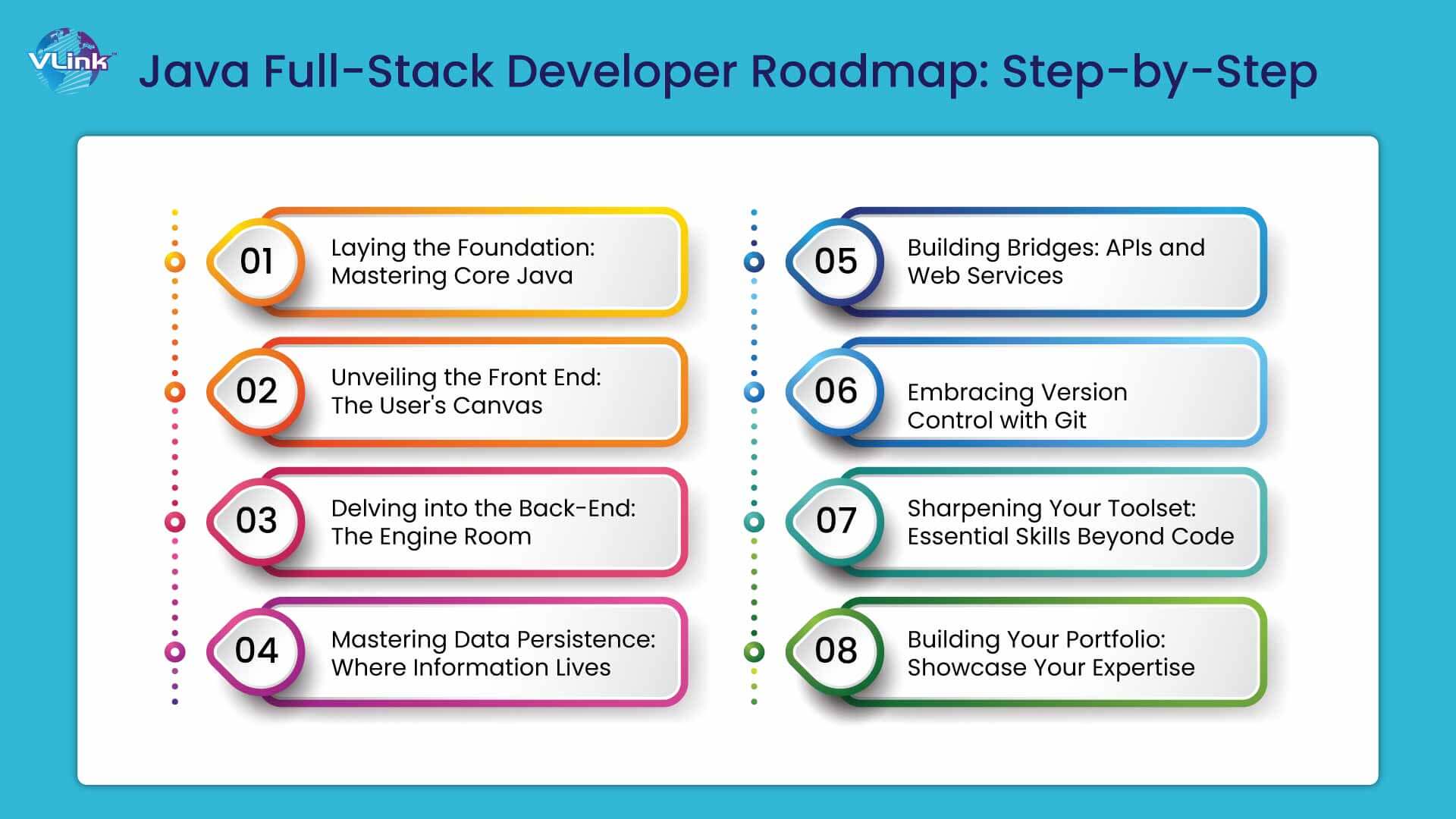
  1. 1. Master the core Java programming language.
  2. 2. Learn popular front-end technologies like HTML, CSS, and JavaScript.
  3. 3. Get familiar with back-end frameworks such as Spring or Hibernate.
  4. 4. Practice building full-stack applications to integrate front-end and back-end components.
  5. 5. Understand databases and how to work with them using tools like SQL or NoSQL.
  6. 6. Stay updated with the latest trends and technologies in Java full stack development.
  7. 7. Collaborate with other developers through online communities or by contributing to open-source projects.

1. Master the core Java programming language.

To excel in Java Full Stack Development, it is crucial to master the core Java programming language. Understanding the fundamentals of Java, such as syntax, data types, control structures, and object-oriented programming principles, forms the foundation for building robust web applications. Proficiency in core Java allows developers to efficiently work on both front-end and back-end components, enabling them to create scalable and efficient solutions for various projects. By mastering the core Java programming language, developers can unleash their full potential in the dynamic field of Full Stack Development.

To excel in Java Full Stack Development, it is essential to prioritize learning popular front-end technologies such as HTML, CSS, and JavaScript. These foundational languages are crucial for creating dynamic and interactive user interfaces on the web. Proficiency in HTML for structuring content, CSS for styling elements, and JavaScript for adding functionality and interactivity will not only enhance your skills as a full stack developer but also enable you to build engaging and user-friendly web applications.

3. Get familiar with back-end frameworks such as Spring or Hibernate.

To excel in Java Full Stack Development, it is crucial to get familiar with back-end frameworks like Spring or Hibernate. These frameworks provide essential tools and features that streamline back-end development tasks, such as database management, transaction handling, and application configuration. By mastering these frameworks, developers can efficiently build robust and scalable web applications that meet industry standards and best practices in back-end development.

4. Practice building full-stack applications to integrate front-end and back-end components.

To enhance your skills in Java Full Stack Development, it is crucial to practice building full-stack applications that seamlessly integrate front-end and back-end components. By working on projects that involve both aspects of web development, you gain valuable experience in connecting user interfaces with server-side logic. This hands-on approach not only solidifies your understanding of how different components interact but also prepares you for real-world scenarios where comprehensive knowledge of both front-end and back-end technologies is essential for creating functional and efficient web applications.

5. Understand databases and how to work with them using tools like SQL or NoSQL.

To excel in Java Full Stack Development, it is crucial to understand databases and how to effectively work with them using tools like SQL or NoSQL. Proficiency in database management allows developers to store, retrieve, and manipulate data efficiently, ensuring that web applications function seamlessly. By mastering these essential skills, Java full stack developers can design robust and scalable systems that meet the demands of modern web development projects.

To excel in Java full stack development, it is crucial to stay updated with the latest trends and technologies in the field. Continuous learning and keeping abreast of new advancements ensure that developers remain competitive and can leverage cutting-edge tools to enhance their projects. By staying informed about emerging practices and technologies, Java full stack developers can adapt quickly to industry changes and deliver innovative solutions that meet the evolving needs of clients and users.

7. Collaborate with other developers through online communities or by contributing to open-source projects.

To enhance your skills in Java Full Stack Development, consider collaborating with other developers through online communities or contributing to open-source projects. Engaging with like-minded professionals in online forums, discussion groups, or by actively participating in open-source initiatives not only expands your knowledge but also provides valuable real-world experience. By working collaboratively, you can learn new techniques, receive feedback on your code, and contribute to the broader tech community while sharpening your Java Full Stack Development skills.

tech stack

Mastering Your Tech Stack: Building Efficient Software Solutions

In the world of software development, a tech stack plays a crucial role in determining the success and efficiency of a project. A tech stack, short for technology stack, refers to the combination of programming languages, frameworks, tools, and software used by developers to build and deploy applications.

Choosing the right tech stack is essential as it directly impacts factors such as performance, scalability, security, and maintainability of the software. A well-thought-out tech stack can streamline development processes and ensure that the final product meets both functional and non-functional requirements.

Typically, a tech stack consists of three main components:

  1. Frontend: The frontend of an application is what users interact with. It includes technologies like HTML, CSS, and JavaScript along with popular frameworks such as Angular, React, or Vue.js.
  2. Backend: The backend is responsible for handling data processing, business logic, and server-side operations. Common backend technologies include programming languages like Python, Java, Ruby on Rails, or Node.js along with frameworks like Django or Spring.
  3. Database: The database component stores and manages the application’s data. Developers can choose from various types of databases such as relational (e.g., MySQL), NoSQL (e.g., MongoDB), or in-memory databases (e.g., Redis) based on the project requirements.

Additionally, a tech stack may include other elements like version control systems (e.g., Git), cloud services (e.g., AWS or Azure), containerization tools (e.g., Docker), and continuous integration/continuous deployment (CI/CD) pipelines to automate testing and deployment processes.

The choice of a tech stack depends on factors like project complexity, scalability needs, time-to-market requirements, developer expertise, budget constraints, and future growth considerations. It’s crucial for development teams to evaluate these factors carefully before finalizing a tech stack for their projects.

In conclusion, a well-designed tech stack is fundamental to the success of any software development project. By selecting the right combination of technologies and tools tailored to specific project needs, developers can create robust applications that meet user expectations while ensuring efficient development processes and long-term sustainability.


7 Key Advantages of a Well-Defined Tech Stack for Modern Application Development

  1. 1. Enables efficient development by providing a structured framework for building applications.
  2. 2. Facilitates scalability, allowing applications to handle increased user loads and data volumes.
  3. 3. Enhances performance through optimized use of technologies that meet project requirements.
  4. 4. Improves collaboration among team members with a shared understanding of the tech stack components.
  5. 5. Streamlines maintenance and updates by standardizing tools and processes within the development environment.
  6. 6. Boosts innovation by leveraging cutting-edge technologies and frameworks to create advanced solutions.
  7. 7. Supports seamless integration with third-party services and APIs, enhancing functionality and expanding capabilities.


6 Common Drawbacks of Tech Stacks: Navigating Complexity, Compatibility, and More

  1. Complexity
  2. Compatibility Issues
  3. Learning Curve
  4. Maintenance Challenges
  5. Vendor Lock-in
  6. Performance Overhead

1. Enables efficient development by providing a structured framework for building applications.

A significant advantage of utilizing a tech stack is its ability to enable efficient development by offering a structured framework for building applications. By incorporating predefined technologies, programming languages, and tools into a cohesive stack, developers can streamline the development process, reduce redundancy, and focus on implementing core functionalities. This structured approach not only enhances productivity but also promotes consistency across the project, making it easier to maintain and scale the application as needed. Ultimately, a well-defined tech stack serves as a solid foundation that empowers developers to work more efficiently and effectively towards delivering high-quality software solutions.

2. Facilitates scalability, allowing applications to handle increased user loads and data volumes.

Facilitates scalability, allowing applications to handle increased user loads and data volumes. A well-chosen tech stack enables applications to scale seamlessly as user traffic and data volumes grow. By incorporating scalable technologies and architectures, developers can ensure that the application remains responsive and performs optimally even under heavy loads. This pro of a tech stack is crucial for businesses looking to expand their user base or handle growing amounts of data without compromising on performance or user experience.

3. Enhances performance through optimized use of technologies that meet project requirements.

By optimizing the use of technologies that align with project requirements, a well-chosen tech stack enhances performance significantly. By carefully selecting programming languages, frameworks, and tools that are best suited for the project’s needs, developers can ensure efficient code execution, faster response times, and overall improved system performance. This optimization not only boosts the application’s speed and responsiveness but also contributes to better scalability and resource utilization, ultimately leading to a more robust and high-performing software solution.

4. Improves collaboration among team members with a shared understanding of the tech stack components.

Enhancing collaboration among team members is a significant advantage of utilizing a tech stack in software development. By establishing a shared understanding of the tech stack components, team members can effectively communicate, troubleshoot issues, and work together seamlessly. With everyone on the same page regarding the technologies, frameworks, and tools being used, collaboration becomes more efficient and productive. This shared knowledge fosters a cohesive team environment where developers can leverage each other’s expertise and contribute collectively to the success of the project.

5. Streamlines maintenance and updates by standardizing tools and processes within the development environment.

Streamlining maintenance and updates is a significant advantage of utilizing a tech stack in software development. By standardizing tools and processes within the development environment, teams can ensure consistency and efficiency when managing and updating their applications. This approach simplifies the maintenance tasks, as developers are familiar with the standardized tools and procedures, making it easier to troubleshoot issues, implement updates, and ensure the overall stability of the software. Additionally, having a uniform tech stack across projects enables smoother collaboration among team members and facilitates knowledge sharing, ultimately enhancing productivity and reducing the time required for maintenance activities.

6. Boosts innovation by leveraging cutting-edge technologies and frameworks to create advanced solutions.

By leveraging cutting-edge technologies and frameworks within a tech stack, developers can boost innovation and create advanced solutions that push the boundaries of what is possible in the digital landscape. Incorporating the latest tools and techniques allows for the exploration of new ideas, implementation of novel features, and development of groundbreaking applications that meet evolving user demands. This proactive approach to technology adoption not only enhances product offerings but also positions businesses at the forefront of innovation in their respective industries.

7. Supports seamless integration with third-party services and APIs, enhancing functionality and expanding capabilities.

By leveraging a well-structured tech stack, developers can harness the power of seamless integration with third-party services and APIs, thereby enhancing the functionality and expanding the capabilities of their applications. This pro allows for the incorporation of a wide range of external tools and services, enabling developers to tap into additional features and resources without having to reinvent the wheel. By integrating with third-party services and APIs, development teams can boost efficiency, improve user experience, and unlock new possibilities for innovation within their software projects.

Complexity

Managing multiple technologies in a tech stack can indeed introduce a significant challenge in the form of increased complexity. Each technology within the stack may have its own set of requirements, dependencies, and best practices, making it essential for developers to possess specialized skills and expertise in each area. Juggling multiple technologies can lead to compatibility issues, integration challenges, and troubleshooting complexities, ultimately demanding a higher level of coordination and effort to ensure seamless functionality across the entire tech stack. This complexity can also impact project timelines and resource allocation as teams may need to invest additional time and resources in managing and maintaining the diverse components of the tech stack.

Compatibility Issues

Compatibility issues can pose a significant challenge when dealing with a tech stack. Due to the diverse nature of components within a tech stack, such as programming languages, frameworks, and tools, ensuring seamless integration can be complex. Incompatibilities between different components can result in unexpected errors, performance issues, or even system failures. Resolving compatibility issues requires careful testing, troubleshooting, and sometimes reevaluating the choice of technologies to ensure that all parts of the tech stack work harmoniously together. Addressing compatibility challenges effectively is crucial to maintaining the stability and functionality of software applications built on that tech stack.

Learning Curve

Adapting to a new tech stack can present a significant challenge for developers due to the learning curve associated with mastering unfamiliar technologies. This adjustment period may lead to a temporary decrease in productivity as developers invest time and effort in understanding and becoming proficient with the new tools and frameworks. The need for training and skill development can slow down project progress in the short term, impacting deadlines and deliverables. However, once developers overcome the initial learning curve, they can leverage their newfound expertise to enhance efficiency and effectiveness in future project work within the tech stack.

Maintenance Challenges

Maintenance challenges pose a significant con when it comes to tech stacks. Updating or replacing components of a tech stack can be a daunting task, particularly in complex projects. The process can be time-consuming and challenging, requiring careful planning and execution to ensure that the changes do not disrupt the functionality of the system. Additionally, compatibility issues between different components can arise during updates, leading to unexpected errors and downtime. Managing maintenance challenges effectively is crucial to maintaining the stability and performance of a tech stack over time.

Vendor Lock-in

Depending heavily on specific technologies within a tech stack can lead to a significant drawback known as vendor lock-in. This con arises when a development team becomes overly reliant on proprietary tools or platforms provided by a particular vendor. Vendor lock-in can restrict flexibility and hinder the ability to adapt or switch to alternative solutions in the future. It poses a risk of being tied to a single vendor’s ecosystem, potentially limiting innovation and increasing dependency on external providers, which may result in higher costs or compatibility issues down the line. Developers need to carefully consider the implications of vendor lock-in when selecting technologies for their tech stack to ensure long-term adaptability and mitigate risks associated with being locked into a specific vendor’s offerings.

Performance Overhead

Introducing multiple layers of technology in a tech stack can lead to performance overhead, potentially affecting the speed and responsiveness of an application. Each additional layer, whether it be a framework, library, or tool, introduces complexity and may require additional processing resources. This can result in increased latency, slower response times, and overall decreased performance efficiency. Developers need to carefully consider the trade-offs between functionality and performance when selecting components for a tech stack to mitigate the risk of performance overhead impacting the user experience negatively.