
cfchris.com

Loading

software engineer machine learning

Software Engineer in Machine Learning: Roles, Skills, and Career Path

What Does a Machine Learning Software Engineer Do?

A machine learning software engineer builds the systems that allow computers to learn from data and make predictions or decisions. The role combines software engineering with machine learning, turning models and experiments into reliable features that can be used by real people and businesses.

Machine learning is used in many familiar products, including recommendation systems, fraud detection, voice assistants, image recognition, and search. Behind these features are engineers who develop the software, data pipelines, and infrastructure needed to make machine learning work at scale.

What Is a Machine Learning Software Engineer?

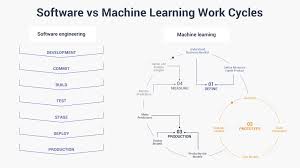
A machine learning software engineer applies engineering principles to the full lifecycle of machine learning products. This may include preparing data, building and integrating models, deploying services, and monitoring performance after release.

The job title can mean different things from one company to another. Some roles focus heavily on model development, while others emphasize production software, infrastructure, or data systems. In general, the role sits between traditional software engineering and applied machine learning.

Typical Responsibilities

Responsibilities vary by team and product, but may include:

  • Designing, building, and maintaining software that uses machine learning models
  • Preparing data for training, testing, and inference
  • Integrating models into applications, APIs, or backend services
  • Developing tools and pipelines for training and deploying models
  • Testing model behavior, software quality, and system reliability
  • Monitoring production systems for errors, latency, and changes in model performance
  • Working with data scientists, product managers, designers, and other engineers
  • Documenting technical decisions and communicating tradeoffs

In many cases, the work does not end when a model is trained. The model must also be served efficiently, updated when data changes, and evaluated to ensure it continues to meet product requirements.

Skills and Technologies

Programming and Software Engineering

Python is widely used in machine learning, but engineers may also work with languages such as Java, C++, Go, or JavaScript. Strong software engineering skills matter regardless of language. These include writing readable code, designing maintainable systems, testing changes, using version control, and troubleshooting production issues.

Machine Learning Fundamentals

Machine learning software engineers benefit from understanding common model types, training and evaluation methods, and the strengths and limits of different approaches. Useful concepts include supervised and unsupervised learning, classification, regression, feature engineering, overfitting, and model evaluation.

A role focused on production systems may not require inventing new algorithms. However, engineers still need enough machine learning knowledge to implement models correctly, understand their limitations, and identify when their behavior may be unreliable.

Data and Infrastructure

Machine learning systems depend on data that is accurate, accessible, and appropriately managed. Engineers may work with databases, data processing frameworks, cloud platforms, containers, and distributed systems. They may also use tools for model tracking, workflow orchestration, deployment, and monitoring.

The specific technology stack depends on the organization. More important than knowing every tool is understanding how data and models move through a system, how to handle failures, and how to build processes that can be repeated and maintained.

Communication and Collaboration

Machine learning projects often involve people with different areas of expertise. An engineer may need to explain why a model is too slow for a particular product, clarify what data is available, or help a team choose between accuracy, cost, and response time. Clear communication helps teams make practical decisions and set realistic expectations.

How Machine Learning Software Engineering Differs from Data Science

Data scientists often focus on exploring data, testing hypotheses, and developing models or analyses. Machine learning software engineers generally focus on making software systems that can use those models reliably in production.

The responsibilities can overlap. At smaller organizations, one person may handle data analysis, model development, and deployment. At larger companies, these tasks may be divided among several specialized teams. The exact boundaries depend on the product and organization.

How to Become a Machine Learning Software Engineer

There is no single path into the field, but a strong foundation in software engineering is a practical starting point. A typical learning path may include:

  1. Learn programming fundamentals. Build confidence with a language commonly used for software or machine learning, such as Python.
  2. Develop core engineering skills. Practice data structures, algorithms, testing, APIs, databases, and version control.
  3. Study the math and concepts behind machine learning. Focus on statistics, probability, linear algebra, and foundational model concepts.
  4. Build complete projects. Go beyond training a model by creating an application or service that uses it.
  5. Learn deployment and monitoring. Explore how to package, serve, evaluate, and update models in a production-like environment.
  6. Share your work clearly. Document projects, describe design decisions, and explain how you measured results.

A degree in computer science, engineering, mathematics, or a related field can be helpful, but practical experience also matters. Personal projects, internships, research, and contributions to open-source software can demonstrate relevant skills.

Challenges in the Role

Machine learning systems introduce challenges beyond those found in many conventional applications. Data may be incomplete or change over time. A model that performed well in testing may behave differently in production. Predictions can also be difficult to explain, and small changes in a pipeline may affect results in unexpected ways.

Engineers must consider more than model accuracy. A successful system also needs appropriate safeguards, acceptable response times, reliable infrastructure, and responsible data practices. Depending on the application, privacy, fairness, security, and regulatory requirements may be essential parts of the work.

Career Outlook

Organizations across many industries are exploring ways to use machine learning, creating opportunities for engineers who can connect models with dependable software. Demand and job requirements vary by location and industry, and not every position uses the same tools or level of machine learning expertise.

For people interested in both building software and working with data-driven technology, machine learning software engineering can be a rewarding career. The strongest candidates combine sound engineering judgment with a practical understanding of machine learning—and keep learning as tools and techniques evolve.


6 Essential Tips for Software Engineers to Master Machine Learning

  1. Learn Python, SQL, and core machine learning concepts.
  2. Build projects with real-world datasets.
  3. Track experiments and version your data and models.
  4. Evaluate models with metrics that match the task.
  5. Deploy models with monitoring and clear rollback plans.
  6. Keep learning about new tools and techniques.

Learn Python, SQL, and core machine learning concepts.

Start by building a strong foundation in Python, SQL, and core machine learning concepts. Python is widely used to develop models and machine learning applications, while SQL helps you query, organize, and understand the data those systems depend on. Learn key ideas such as supervised and unsupervised learning, model training, evaluation, and overfitting. Together, these skills will help you contribute to machine learning projects and prepare you to build reliable, data-driven software.

Build projects with real-world datasets.

Build projects with real-world datasets to learn how machine learning works beyond clean, classroom examples. Real data often contains missing values, inconsistent formats, noise, or unexpected patterns, giving you practice with the preparation and troubleshooting required in real projects. Choose a dataset connected to a problem you care about, document your decisions, and evaluate your model with appropriate metrics. Then, if possible, turn your work into a small application or service to show how the model could be used in practice.

Track experiments and version your data and models.

Track every machine learning experiment, and version your data and models so you can reproduce results and understand what changed. Record key details such as the code version, dataset, model settings, evaluation metrics, and environment. When an outcome improves—or a model behaves unexpectedly—this history makes it easier to compare approaches, debug issues, and reliably roll back to a previous version.

Evaluate models with metrics that match the task.

Evaluate machine learning models with metrics that reflect the task and the cost of different mistakes. For example, accuracy can be misleading when one class is much more common than another; precision and recall may better show how well a model handles important positive cases. For regression, metrics such as mean absolute error or root mean squared error can reveal how far predictions are from actual values. Choose metrics based on how the model will be used, and review them alongside real-world constraints like latency, reliability, and the impact of incorrect predictions.

Deploy models with monitoring and clear rollback plans.

When deploying a machine learning model, set up monitoring to track performance, errors, latency, and changes in incoming data. Clear alerts can help the team catch problems before they affect many users. Create and test a rollback plan in advance so you can quickly restore a previous model or system version if the new deployment behaves unexpectedly. Together, monitoring and a reliable rollback process make releases safer and easier to manage.

Keep learning about new tools and techniques.

Machine learning tools and techniques evolve quickly, so make continuous learning part of your routine. Follow trusted industry publications, take courses, attend meetups, and experiment with new libraries or approaches through small projects. Focus not only on what a tool can do, but also on when it is useful and what tradeoffs it brings. Staying curious helps you make better technical decisions and build machine learning systems that are effective, reliable, and up to date.
artificial intelligence software development

Exploring the Future: Artificial Intelligence Software Development Innovations

Artificial Intelligence Software Development

Artificial Intelligence Software Development: Transforming the Future

The realm of artificial intelligence (AI) has rapidly evolved, becoming a cornerstone of modern technology. AI software development is revolutionizing industries by automating processes, enhancing decision-making, and providing innovative solutions to complex problems.

What is Artificial Intelligence?

Artificial intelligence refers to the simulation of human intelligence in machines programmed to think and learn like humans. These systems can perform tasks such as recognizing speech, making decisions, and translating languages. AI encompasses various subfields including machine learning (ML), natural language processing (NLP), and computer vision.

The Importance of AI in Software Development

AI is transforming software development in several significant ways:

  • Automation: AI can automate repetitive tasks such as code generation, testing, and debugging, thereby increasing efficiency and reducing human error.
  • Enhanced Decision-Making: AI algorithms analyze vast amounts of data to provide insights that help developers make informed decisions.
  • Personalization: AI enables the creation of personalized user experiences by analyzing user behavior and preferences.
  • Predictive Analytics: Machine learning models can predict future trends and outcomes based on historical data.

The Process of Developing AI Software

The development of AI software involves several key steps:

  1. Problem Definition: Identify the problem that needs solving and determine how AI can provide a solution.
  2. Data Collection:
  3. Model Training:Model Deployment:
    • /P At Cfchris we committed leveraging power Ai deliver cutting-edge solutions tailored meet unique needs clients Contact us today learn more about how our expertise help harness full potential artificial intelligence /P

      /BODY

      /HTML


      9 Key Benefits of Artificial Intelligence in Software Development

      1. Automation of repetitive tasks leads to increased efficiency.
      2. Enhanced decision-making through data analysis.
      3. Personalization of user experiences based on behavior and preferences.
      4. Predictive analytics for forecasting trends and outcomes.
      5. Improved accuracy and reduced human error in processes.
      6. Cost savings by streamlining operations with AI solutions.
      7. Scalability to handle large volumes of data and complex problems.
      8. Innovation in developing intelligent applications for various industries.
      9. Competitive advantage by staying ahead with AI-driven technologies.


      Challenges in Artificial Intelligence Software Development: Data Privacy, Ethics, Complexity, and Data Dependency

      1. Data Privacy Concerns
      2. Ethical Dilemmas
      3. Complexity and Cost
      4. Dependency on Data Quality

      Automation of repetitive tasks leads to increased efficiency.

      Automation of repetitive tasks through artificial intelligence software development significantly boosts efficiency by reducing the time and effort required for mundane activities. Tasks such as data entry, code generation, and routine maintenance can be handled swiftly and accurately by AI systems, freeing up human resources to focus on more complex and creative aspects of projects. This not only accelerates project timelines but also minimizes the risk of human error, resulting in higher quality outputs. Consequently, businesses can achieve greater productivity and cost savings while maintaining a competitive edge in their respective industries.

      Enhanced decision-making through data analysis.

      Artificial intelligence software development significantly enhances decision-making processes through advanced data analysis. By leveraging AI algorithms, vast amounts of data can be processed and analyzed at unprecedented speeds, uncovering patterns and insights that would be nearly impossible for humans to detect. This capability allows businesses to make more informed decisions based on real-time data, leading to improved efficiency, reduced risks, and optimized strategies. Whether it’s predicting market trends, identifying customer preferences, or optimizing supply chains, AI-driven data analysis empowers organizations to stay ahead of the competition and adapt swiftly to changing environments.

      Personalization of user experiences based on behavior and preferences.

      Artificial intelligence software development significantly enhances the personalization of user experiences by analyzing individual behavior and preferences. By leveraging advanced algorithms and data analytics, AI systems can tailor content, recommendations, and interactions to align with each user’s unique needs and interests. This level of customization not only improves user satisfaction but also increases engagement and loyalty. For instance, AI-driven platforms can suggest products based on past purchases or recommend content that aligns with a user’s viewing history, creating a more intuitive and enjoyable experience. This personalized approach helps businesses build stronger connections with their customers, ultimately driving growth and success.

      Predictive analytics, powered by artificial intelligence, is revolutionizing the way businesses forecast trends and outcomes. By analyzing vast amounts of historical data, AI algorithms can identify patterns and make accurate predictions about future events. This capability enables companies to make informed decisions, optimize operations, and anticipate market changes. For instance, in retail, predictive analytics can forecast consumer demand, helping businesses manage inventory more effectively. In finance, it can predict stock market trends or credit risks, allowing for better investment strategies and risk management. Overall, the integration of predictive analytics in AI software development provides a competitive edge by transforming raw data into actionable insights.

      Improved accuracy and reduced human error in processes.

      Artificial intelligence software development significantly improves accuracy and reduces human error in various processes. By leveraging advanced algorithms and machine learning models, AI systems can analyze vast amounts of data with precision, identifying patterns and making decisions based on empirical evidence rather than human intuition. This leads to more reliable outcomes, especially in tasks that require meticulous attention to detail, such as medical diagnoses, financial forecasting, and quality control in manufacturing. By minimizing the likelihood of errors that can arise from fatigue or oversight, AI enhances efficiency and ensures higher standards of performance across diverse industries.

      Cost savings by streamlining operations with AI solutions.

      Implementing artificial intelligence (AI) solutions in software development can lead to significant cost savings by streamlining operations. AI automates repetitive and time-consuming tasks such as data entry, testing, and debugging, which reduces the need for extensive human intervention. This not only speeds up the development process but also minimizes errors, leading to higher-quality outputs with fewer resources. Additionally, AI-driven predictive analytics can optimize resource allocation and reduce downtime by anticipating maintenance needs and potential issues before they arise. By enhancing efficiency and productivity, AI enables companies to cut operational costs while maintaining or even improving their service quality.

      Scalability to handle large volumes of data and complex problems.

      Artificial intelligence software development offers remarkable scalability, enabling systems to efficiently handle large volumes of data and tackle complex problems. With AI, businesses can process and analyze massive datasets in real-time, extracting valuable insights that would be impossible to achieve manually. This scalability ensures that as data grows, the AI systems can continue to perform optimally without a significant increase in resource consumption. Moreover, AI algorithms excel at solving intricate problems by identifying patterns and correlations within the data, providing solutions that are both accurate and robust. This capability makes AI an indispensable tool for industries ranging from healthcare to finance, where managing extensive data and solving sophisticated challenges are essential for success.

      Innovation in developing intelligent applications for various industries.

      Artificial intelligence software development has brought about a remarkable pro through its innovation in creating intelligent applications tailored for diverse industries. By harnessing the power of AI, developers can design solutions that optimize processes, enhance decision-making, and drive efficiency across sectors such as healthcare, finance, manufacturing, and more. These intelligent applications leverage advanced algorithms to analyze data, predict trends, and automate tasks, ultimately revolutionizing how businesses operate and deliver value to their customers.

      Competitive advantage by staying ahead with AI-driven technologies.

      One of the significant advantages of artificial intelligence software development is the competitive edge it provides businesses by keeping them at the forefront of technological innovation. By integrating AI-driven technologies, companies can streamline operations, enhance customer experiences, and make data-driven decisions more efficiently than their competitors. This proactive approach not only improves productivity and reduces costs but also enables businesses to anticipate market trends and adapt quickly to changing conditions. Consequently, organizations that leverage AI are better positioned to outperform their rivals, capture new market opportunities, and sustain long-term growth in an increasingly digital landscape.

      Data Privacy Concerns

      Data Privacy Concerns: In the realm of artificial intelligence software development, a significant con revolves around data privacy. The process frequently entails the collection and analysis of extensive datasets, giving rise to concerns about how sensitive information is utilized and safeguarded. This issue underscores the importance of implementing robust data protection measures and ethical guidelines to mitigate potential risks associated with privacy breaches and unauthorized access to personal data.

      Ethical Dilemmas

      The use of AI algorithms in software development presents significant ethical dilemmas that need careful consideration. One major concern is the potential for bias in decision-making, as AI systems can inadvertently perpetuate or even amplify existing prejudices present in the training data. Additionally, the lack of transparency in how AI systems operate makes it difficult for users to understand and trust the decisions made by these technologies. This opacity can lead to accountability issues when errors occur. Furthermore, the widespread adoption of AI has the potential to displace jobs, raising concerns about economic inequality and the need for workforce retraining programs. Addressing these ethical challenges is crucial to ensuring that AI development benefits society as a whole without exacerbating existing inequalities or creating new ones.

      Complexity and Cost

      Developing artificial intelligence software is a complex and costly endeavor for many organizations due to the specialized skills and resources required. Creating effective AI solutions demands expertise in fields such as machine learning, data science, and software engineering. Additionally, substantial investments in high-quality data collection, advanced computational infrastructure, and ongoing maintenance are necessary to ensure optimal performance. These factors can place a significant financial burden on companies, particularly smaller enterprises or those without dedicated AI teams. As a result, the complexity and cost associated with AI development can be a considerable barrier to entry for many businesses looking to leverage this transformative technology.

      Dependency on Data Quality

      The effectiveness of AI models is intrinsically tied to the quality and quantity of data used for training, making data dependency a significant challenge in artificial intelligence software development. Incomplete or biased datasets can lead to inaccurate predictions and unreliable outcomes, undermining the potential benefits of AI solutions. This dependency necessitates rigorous data collection, cleaning, and validation processes to ensure that the models are trained on representative and high-quality data. Addressing these issues is crucial for developing robust AI systems that deliver reliable and fair results across diverse applications.