IT Strategy Consulting Services: A Practical Guide to Aligning Technology With Business Goals
IT Strategy Consulting Services: Aligning Technology With Business Goals
Technology can help an organization work more efficiently, serve customers better, and adapt to change. But without a clear plan, IT investments can become costly, disconnected, or difficult to manage. IT strategy consulting helps businesses make informed technology decisions and build a roadmap that supports their goals.
What Are IT Strategy Consulting Services?
IT strategy consulting services help organizations assess their current technology environment, identify opportunities and risks, and plan for the future. Consultants work with business and IT leaders to connect technology decisions to practical needs, such as improving operations, supporting growth, strengthening security, or updating legacy systems.
The result is typically a clear, prioritized plan that outlines what to address, why it matters, and how to move forward.
What IT Strategy Consulting Can Include
Each organization has different needs, but an IT strategy engagement may include:
- Technology assessments: Review of systems, applications, infrastructure, processes, and vendor relationships.
- IT roadmaps: A phased plan for technology initiatives, timelines, dependencies, and priorities.
- Cloud strategy: Guidance on cloud adoption, migration, architecture, and ongoing management.
- Cybersecurity planning: Recommendations for managing security risks, protecting data, and improving resilience.
- Data and analytics strategy: Plans for managing data and using it to support better decisions.
- Application and infrastructure planning: Advice on modernizing, consolidating, or replacing technology systems.
- IT governance: Processes for making decisions, managing risk, and measuring the value of technology investments.
- Budget and investment planning: Support for prioritizing spending and understanding the costs and benefits of proposed initiatives.
Why Businesses Use IT Strategy Consultants
Organizations may seek consulting support when they are planning significant growth, replacing outdated systems, responding to changing customer expectations, or managing increased security and compliance requirements. An outside perspective can help clarify priorities and uncover gaps that are difficult to see from within the organization.
A well-developed IT strategy can help a business:
- Prioritize technology projects based on business impact.
- Reduce duplicated tools and unnecessary spending.
- Improve coordination between business and IT teams.
- Plan system upgrades and migrations with fewer disruptions.
- Address technology risks before they become urgent problems.
- Build a more flexible foundation for future growth.
The IT Strategy Consulting Process
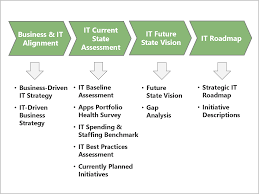
Understand the Business
The process begins with the organization’s goals, challenges, customers, and operating model. Technology recommendations are most useful when they address real business needs.
Assess the Current Environment
Consultants review existing systems, processes, costs, skills, and risks. This assessment establishes a baseline and highlights areas that may need attention.
Define Priorities
Business and IT stakeholders work together to identify desired outcomes and rank potential initiatives. This helps distinguish essential projects from those that can wait.
Develop the Roadmap
The roadmap translates priorities into actionable steps. It may include project sequencing, estimated resources, dependencies, milestones, and measures of success.
Support Implementation and Review
Some consulting engagements include support as the organization puts the plan into action. Regular reviews help confirm that initiatives remain aligned with business needs and adjust the roadmap as conditions change.
Choosing an IT Strategy Consulting Partner
Look for a consulting partner that takes time to understand your organization rather than starting with a predetermined solution. Useful questions include:
- How will you learn about our business goals and constraints?
- What will the final strategy and roadmap include?
- How will you prioritize recommendations and estimate their impact?
- How will you involve our internal teams?
- Can you support implementation, or will you provide a plan for our team to execute?
- How will progress and success be measured?
Build a Technology Plan for What Comes Next
IT strategy consulting is not just about choosing new technology. It is about making deliberate decisions that connect systems, people, processes, and investment to the organization’s goals. With a practical strategy and a clear roadmap, businesses can make better use of technology today while preparing for tomorrow.
9 Essential Tips for Effective IT Strategy Consulting Services
- Align IT strategy with business goals.
- Assess current systems and capabilities.
- Prioritize initiatives by value and risk.
- Build a realistic technology roadmap.
- Plan for cybersecurity from the start.
- Include stakeholders across the organization.
- Set clear metrics for success.
- Address change management early.
- Review and update the strategy regularly.
Align IT strategy with business goals.
Aligning your IT strategy with business goals ensures that technology investments support the outcomes that matter most to your organization. Start by understanding priorities such as growth, customer experience, efficiency, or risk reduction, then evaluate how IT systems and projects can help achieve them. This connection makes it easier to set priorities, allocate budgets, and measure results—so technology serves as a practical driver of business success rather than an end in itself.
Assess current systems and capabilities.
Assessing your current systems and capabilities is a crucial first step in IT strategy consulting. Review your applications, infrastructure, data, security practices, processes, and team skills to understand what’s working well and where gaps exist. This clear picture helps identify outdated or overlapping technology, uncover risks, and determine whether your organization has the resources to support future initiatives. With an accurate baseline, you can prioritize practical improvements and build an IT roadmap aligned with your business goals.
Prioritize initiatives by value and risk.
Prioritize IT initiatives by weighing the value each one can deliver against the risks of delaying or undertaking it. Consider factors such as business impact, customer and employee needs, security exposure, compliance requirements, cost, and implementation complexity. This helps leaders focus resources on the work that matters most—addressing urgent risks while advancing projects with the clearest benefits—and avoid spreading teams and budgets across too many competing priorities.
Build a realistic technology roadmap.
A realistic technology roadmap turns your business priorities into clear, achievable steps. Start by assessing your current systems, budget, team capacity, and dependencies, then rank initiatives by business value and urgency. Break larger projects into manageable phases, set practical timelines, and account for training, maintenance, and potential disruptions. Review the roadmap regularly so it can adapt as your goals, resources, and technology needs change.
Plan for cybersecurity from the start.
Plan for cybersecurity from the start of your IT strategy—not as an add-on after key decisions are made. Build security and privacy requirements into technology selection, system design, vendor reviews, and implementation planning. This helps your organization identify risks early, protect sensitive data, and avoid costly rework. A proactive approach also makes it easier to meet relevant compliance requirements and respond to threats as your technology environment evolves.
Include stakeholders across the organization.
Include stakeholders from across the organization when developing an IT strategy. Leaders, IT teams, and employees who use the systems every day can offer different perspectives on business goals, challenges, and priorities. Their input helps ensure the strategy addresses real needs, earns broader support, and is more practical to implement.
Set clear metrics for success.
Set clear metrics for success before starting an IT strategy initiative. Choose measurable indicators tied to business goals, such as reducing operating costs, improving system uptime, speeding up customer response times, or strengthening security. Establish a baseline, assign responsibility for tracking results, and review progress regularly. Clear metrics help teams understand whether the strategy is delivering value and where adjustments may be needed.
Address change management early.
Address change management early in an IT strategy consulting engagement to help people understand what’s changing, why it matters, and how it will affect their work. Involve employees and leaders in planning, communicate clearly, and identify training and support needs before implementation begins. This can reduce uncertainty, encourage adoption, and help ensure that new technology delivers its intended business benefits.
Review and update the strategy regularly.
Review and update your IT strategy regularly to ensure it continues to support your business goals. As your organization grows, new technologies emerge, and risks change, priorities that once made sense may need to be adjusted. Schedule periodic reviews with business and IT leaders to assess progress, revisit assumptions, and update timelines, investments, and priorities. Regular check-ins help keep the strategy practical, relevant, and responsive to change.