
cfchris.com

Loading

spark java

Mastering Web Development with Spark Java: A Lightweight Framework for Java Applications

Exploring Spark Java: A Powerful Framework for Web Applications

Exploring Spark Java: A Powerful Framework for Web Applications

Spark Java is a lightweight web framework that allows developers to quickly create web applications in Java with minimal effort. Despite its simplicity, Spark Java is powerful and versatile, making it a popular choice for building RESTful APIs, web services, and more.

Key Features of Spark Java:

  • Simplicity: Spark Java follows a simple and intuitive syntax, making it easy to learn and use.
  • Minimalistic: The framework provides just the essentials for building web applications without unnecessary complexity.
  • Embedded Server: Spark Java comes with an embedded Jetty server, eliminating the need for external server setups.
  • Routing: Developers can define routes easily using expressive syntax for handling HTTP requests.
  • Extensibility: Spark Java supports plugins and middleware to extend its functionality as needed.

Getting Started with Spark Java:

To start building web applications with Spark Java, developers can add the framework as a dependency in their project using tools like Maven or Gradle. They can then create routes, handle requests, and define responses using the framework’s API.

An Example of Using Spark Java:

import static spark.Spark.*;

public class HelloWorld {

public static void main(String[] args) {

get("/hello", (req, res) -> "Hello World");

}

}

In this simple example, a GET request to “/hello” will return the text “Hello World.” This demonstrates how concise and straightforward it is to create routes in Spark Java.

The Future of Spark Java:

Despite facing competition from other popular frameworks like Spring Boot and Micronaut, Spark Java continues to be favored by developers who value its simplicity and efficiency. The community around Spark Java remains active, providing support and updates to keep the framework relevant in the ever-evolving landscape of web development.

In conclusion, Spark Java offers a refreshing approach to building web applications in Java. Its minimalist design and powerful features make it an excellent choice for developers looking to streamline their development process without sacrificing functionality.

© 2023 – Exploring Spark Java


6 Essential Tips for Mastering Spark Java in Web Development

  1. Use Spark Java’s simple and intuitive syntax to quickly create web applications.
  2. Take advantage of Spark Java’s lightweight nature for fast development and deployment.
  3. Utilize the built-in web server in Spark Java for easy testing of your applications.
  4. Explore the various plugins available for extending the functionality of Spark Java.
  5. Follow best practices such as organizing routes and handling exceptions effectively in Spark Java applications.
  6. Stay updated with the latest releases and community support to make the most of Spark Java.

Use Spark Java’s simple and intuitive syntax to quickly create web applications.

By leveraging Spark Java’s simple and intuitive syntax, developers can efficiently build web applications with ease. The framework’s straightforward approach allows for rapid development, enabling users to focus on creating robust solutions without getting bogged down by unnecessary complexities. Spark Java’s user-friendly syntax empowers developers to streamline the application development process, making it an ideal choice for those seeking a hassle-free yet powerful framework for web development projects.

Take advantage of Spark Java’s lightweight nature for fast development and deployment.

Take advantage of Spark Java’s lightweight nature for fast development and deployment. With its minimalistic design and powerful features, Spark Java allows developers to quickly create web applications without unnecessary complexity. By leveraging the framework’s simplicity and efficiency, developers can streamline their development process, leading to rapid prototyping and deployment of web applications. Spark Java’s lightweight nature not only speeds up development but also ensures that the resulting applications are agile and performant, making it an ideal choice for projects that require quick turnaround times and scalable solutions.

Utilize the built-in web server in Spark Java for easy testing of your applications.

By utilizing the built-in web server in Spark Java, developers can easily test their applications without the need for external server setups. This feature streamlines the testing process, allowing developers to quickly validate their code and functionality within the framework itself. The convenience of the built-in web server in Spark Java enhances the overall development experience and ensures efficient testing of web applications.

Explore the various plugins available for extending the functionality of Spark Java.

Explore the various plugins available for extending the functionality of Spark Java. By leveraging these plugins, developers can enhance the capabilities of their web applications and streamline development processes. Whether it’s adding authentication mechanisms, integrating with databases, or optimizing performance, utilizing plugins in Spark Java opens up a world of possibilities to tailor applications to specific needs and requirements.

Follow best practices such as organizing routes and handling exceptions effectively in Spark Java applications.

In Spark Java applications, it is crucial to follow best practices such as organizing routes and handling exceptions effectively. By structuring routes logically and handling exceptions gracefully, developers can enhance the maintainability and reliability of their applications. Properly organizing routes helps in improving code readability and scalability, making it easier to manage different endpoints efficiently. Additionally, effective exception handling ensures that errors are caught and managed appropriately, preventing unexpected crashes and providing a better user experience. Adhering to these best practices in Spark Java development contributes to building robust and well-structured web applications.

Stay updated with the latest releases and community support to make the most of Spark Java.

Staying updated with the latest releases and actively engaging with the community support are crucial steps to maximize the potential of Spark Java. By keeping abreast of new features, enhancements, and bug fixes in each release, developers can take advantage of improved functionalities and performance optimizations. Additionally, being part of the vibrant community surrounding Spark Java provides valuable insights, best practices, and solutions to common challenges, ultimately empowering developers to leverage the full capabilities of the framework in their web applications.
java servlet

Harnessing the Power of Java Servlets for Dynamic Web Development

Article: Java Servlet

The Power of Java Servlets in Web Development

Java Servlets are an essential part of Java-based web development. They provide a robust and efficient way to handle server-side requests and generate dynamic web content.

Servlets are Java classes that extend the capabilities of servers that host applications accessed by means of a request-response programming model. They are platform-independent as they follow the Write Once, Run Anywhere (WORA) principle.

Key Features of Java Servlets:

  • Efficiency: Servlets are efficient in handling multiple requests concurrently, making them suitable for high-traffic websites.
  • Extensibility: They can be extended to support various protocols and technologies through interfaces like HttpServlet.
  • Session Management: Servlets enable developers to manage user sessions and maintain state across multiple requests.
  • Security: They provide built-in security features to protect web applications from common vulnerabilities.
  • MVC Architecture: Servlets can be used within the Model-View-Controller (MVC) architecture to separate concerns and enhance code maintainability.

Working Principle of Java Servlets:

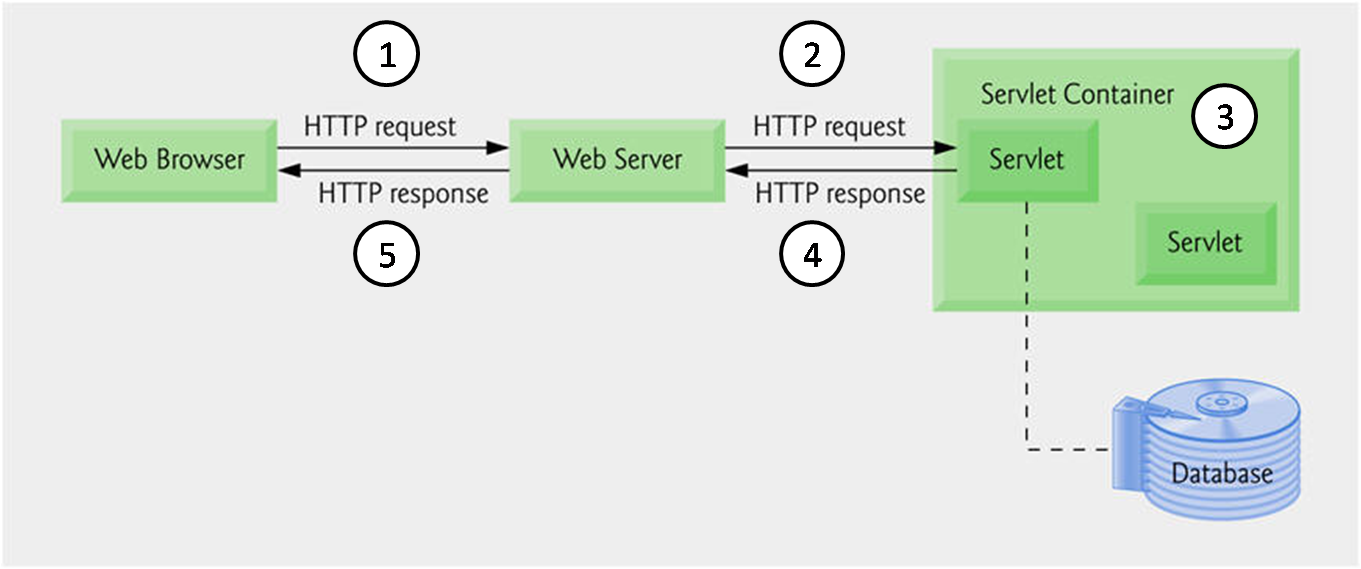
A servlet receives requests from clients, processes them, and generates responses dynamically. It interacts with web containers like Apache Tomcat or Jetty, which manage servlet lifecycle and handle communication with clients over HTTP.

Benefits of Using Java Servlets:

  • Scalability: Servlet-based applications can scale easily to accommodate growing user bases.
  • Cross-Platform Compatibility: Since servlets are written in Java, they can run on any platform that supports the Java Virtual Machine (JVM).
  • Flexibility: Developers have full control over request processing, allowing for customized solutions tailored to specific requirements.
  • In-depth Debugging: Servlet containers provide tools for debugging and monitoring servlet behavior during development and deployment phases.

In Conclusion

In conclusion, Java Servlets play a crucial role in modern web development by providing a powerful server-side technology for building dynamic and interactive web applications. Their versatility, efficiency, and scalability make them a preferred choice for developers looking to create robust web solutions. By mastering servlet programming, developers can unlock endless possibilities for creating feature-rich websites that meet the evolving demands of users in today’s digital landscape.


Top 7 Advantages of Java Servlets: Efficiency, Security, and Scalability in Web Development

  1. Efficient handling of multiple requests concurrently
  2. Platform-independent with Write Once, Run Anywhere (WORA) principle
  3. Extensibility to support various protocols and technologies
  4. Built-in session management for user state maintenance
  5. Incorporation into MVC architecture for code maintainability
  6. Enhanced security features to protect against vulnerabilities
  7. Scalability for accommodating growing user bases


Challenges with Java Servlets: Navigating Complexity, Memory Management, and Modern Development Needs

  1. Steep learning curve for beginners due to its complex nature
  2. Requires manual memory management, leading to potential memory leaks
  3. Limited support for asynchronous programming compared to newer technologies
  4. Can be verbose and boilerplate-heavy, increasing development time
  5. Tightly coupled with the HTTP protocol, limiting flexibility in handling other protocols
  6. Difficulty in unit testing servlets independently without a web container
  7. May not be the best choice for microservices architecture due to monolithic design

Efficient handling of multiple requests concurrently

One of the key advantages of Java Servlets is their efficient handling of multiple requests concurrently. This capability allows servlets to process numerous client requests simultaneously, making them well-suited for high-traffic websites and applications where responsiveness and scalability are crucial. By efficiently managing concurrent requests, Java Servlets ensure optimal performance and responsiveness, providing users with a seamless and uninterrupted experience while interacting with web-based services.

Platform-independent with Write Once, Run Anywhere (WORA) principle

One of the standout advantages of Java Servlets is their platform independence, adhering to the Write Once, Run Anywhere (WORA) principle. This means that servlets can be developed and deployed on any platform that supports Java without the need for modification, ensuring seamless compatibility across different operating systems and environments. This feature simplifies the development process and allows developers to focus on creating robust web applications without worrying about platform-specific intricacies, ultimately saving time and effort in the software development lifecycle.

Extensibility to support various protocols and technologies

Java Servlets offer a significant advantage in their extensibility to support various protocols and technologies. By leveraging interfaces like HttpServlet, servlets can be extended to seamlessly integrate with different communication protocols and technologies, allowing developers to adapt and enhance their web applications based on specific requirements. This flexibility enables Java Servlets to stay relevant in a rapidly evolving technological landscape, ensuring that developers can incorporate new features and functionalities efficiently while maintaining the core stability of their applications.

Built-in session management for user state maintenance

One significant advantage of Java Servlets is their built-in session management capability, which allows developers to maintain user state across multiple requests seamlessly. By leveraging this feature, developers can easily store and retrieve user-specific information during a user’s interaction with a web application. This ensures a personalized and consistent experience for users as they navigate through different pages or perform various actions on the website without losing their context. The built-in session management of Java Servlets simplifies the task of handling user sessions, enhancing the overall usability and functionality of web applications while streamlining the development process.

Incorporation into MVC architecture for code maintainability

Java Servlets offer a significant advantage by seamlessly integrating into the Model-View-Controller (MVC) architecture, enhancing code maintainability. By following the MVC design pattern, developers can separate the application’s logic (Model), presentation (View), and user interaction (Controller) layers. This separation of concerns not only improves code organization but also facilitates easier updates and modifications to individual components without affecting the entire application. The incorporation of Java Servlets into the MVC architecture promotes clean, structured code that is easier to understand, maintain, and scale as the project evolves.

Enhanced security features to protect against vulnerabilities

Java Servlets offer enhanced security features that play a vital role in safeguarding web applications against vulnerabilities. By incorporating built-in security mechanisms, such as input validation, authentication, and access control, servlets help prevent common threats like SQL injection and cross-site scripting attacks. This proactive approach to security not only protects sensitive data but also ensures the integrity and reliability of the application, instilling trust among users and maintaining a secure online environment.

Scalability for accommodating growing user bases

Java Servlets offer exceptional scalability, making them ideal for accommodating growing user bases. As the number of users accessing a web application increases, servlet-based applications can easily scale to meet the demand without compromising performance or user experience. This scalability feature allows developers to design robust and reliable web solutions that can seamlessly handle increased traffic and deliver consistent service quality to a growing audience.

Steep learning curve for beginners due to its complex nature

One notable drawback of Java Servlets is the steep learning curve that beginners may encounter due to its complex nature. The intricacies of servlet programming, including understanding servlet lifecycle, request handling, and session management, can be challenging for those new to web development. As a result, novice developers may require additional time and effort to grasp the concepts and best practices associated with Java Servlets, potentially slowing down their initial progress in utilizing this technology effectively.

Requires manual memory management, leading to potential memory leaks

One significant drawback of Java Servlets is that they require manual memory management, which can lead to potential memory leaks. Developers need to explicitly allocate and deallocate memory within servlet code, increasing the risk of memory leaks if not handled properly. Memory leaks can result in inefficient memory usage, degraded application performance, and even system crashes over time. This manual memory management aspect of Java Servlets poses a challenge for developers in ensuring proper memory allocation and deallocation to prevent such issues from occurring.

Limited support for asynchronous programming compared to newer technologies

One of the drawbacks of Java Servlets is their limited support for asynchronous programming when compared to newer technologies. Asynchronous programming allows applications to perform multiple tasks concurrently, improving performance and responsiveness. While servlets can handle concurrent requests, they rely on traditional thread-based models, which may not be as efficient as modern asynchronous frameworks that utilize non-blocking I/O operations. This limitation can impact the scalability and responsiveness of web applications, especially in high-traffic scenarios where efficient handling of multiple requests is crucial. Developers exploring asynchronous programming may find that newer technologies offer more robust solutions for building responsive and scalable web applications.

Can be verbose and boilerplate-heavy, increasing development time

One drawback of Java Servlets is that they can be verbose and boilerplate-heavy, which may lead to increased development time. Due to the nature of servlet programming, developers often need to write a significant amount of code to handle even simple tasks, resulting in redundant or repetitive code segments. This verbosity can make the codebase harder to maintain and extend, potentially slowing down the development process as developers navigate through the excess boilerplate code.

Tightly coupled with the HTTP protocol, limiting flexibility in handling other protocols

One significant drawback of Java Servlets is their tight coupling with the HTTP protocol, which restricts their flexibility in handling other protocols. Since servlets are specifically designed to work with HTTP requests and responses, integrating them with alternative communication protocols can be challenging and may require additional workarounds. This limitation can hinder developers who need to support diverse network protocols in their applications, leading to potential complexities and inefficiencies in the system architecture.

Difficulty in unit testing servlets independently without a web container

One significant drawback of Java servlets is the challenge of unit testing them independently without relying on a web container. Servlets are tightly coupled with the servlet container environment, making it difficult to isolate and test their functionality in isolation. This dependency on a web container can hinder the efficiency of unit testing processes, as developers may need to set up complex testing environments or resort to using specialized frameworks to simulate servlet behavior outside of a container. Overcoming this obstacle requires careful design considerations and the adoption of strategies that enable effective unit testing while maintaining the integrity and functionality of Java servlets.

May not be the best choice for microservices architecture due to monolithic design

When considering the use of Java Servlets in a microservices architecture, one potential drawback to keep in mind is their monolithic design. Java Servlets, being traditionally used in more monolithic applications, may not always align well with the principles of microservices architecture, which emphasize modularity and independent deployability of services. The monolithic nature of Java Servlets could introduce challenges in scaling and maintaining microservices-based systems where lightweight and decoupled components are preferred for easier management and scalability. In such cases, alternative technologies that better support the distributed nature of microservices might be more suitable choices.