cfchris.com

Loading

cyber security services

Enhancing Data Protection with Comprehensive Cyber Security Services

The Importance of Cyber Security Services

The Importance of Cyber Security Services

In today’s digital age, where businesses and individuals rely heavily on technology, the need for robust cyber security services has never been more critical. With the increasing number of cyber threats and attacks targeting sensitive data and systems, investing in cyber security services is essential to safeguarding your information and maintaining trust with your customers.

Benefits of Cyber Security Services:

  • Protection Against Cyber Threats: Cyber security services help prevent unauthorized access, data breaches, malware attacks, and other cyber threats that can disrupt your operations and compromise sensitive information.
  • Compliance with Regulations: Many industries have strict regulations regarding data protection and privacy. By implementing robust cyber security measures, you ensure compliance with these regulations and avoid potential legal consequences.
  • Enhanced Data Security: Cyber security services provide encryption, secure authentication methods, network monitoring, and other tools to enhance the overall security of your data and systems.
  • Protection of Reputation: A data breach or cyber attack can severely damage your reputation and erode customer trust. Investing in cyber security services demonstrates your commitment to protecting customer data and maintaining a secure environment.

Types of Cyber Security Services:

There are various types of cyber security services available to address different aspects of online security:

  1. Network Security: Protecting networks from unauthorized access through firewalls, intrusion detection systems, and virtual private networks (VPNs).
  2. Data Loss Prevention (DLP): Implementing policies and technologies to prevent the accidental or intentional loss of sensitive data.
  3. Endpoint Security: Securing individual devices such as computers, laptops, smartphones, and tablets from malware and other threats.
  4. Incident Response: Developing protocols for responding to security incidents promptly to minimize damage and recover quickly.

In Conclusion

Cyber security services play a crucial role in protecting businesses, organizations, and individuals from the growing threat landscape in cyberspace. By investing in comprehensive cyber security measures, you can mitigate risks, safeguard valuable information, and maintain a secure digital environment for all stakeholders.


Top 8 FAQs About Cyber Security Services: Costs, Companies, Types, and More

  1. What is the average cost of cyber security services?
  2. What are the top 3 cybersecurity companies?
  3. What are the cybersecurity services?
  4. Does Moringa offer cyber security?
  5. What are cyber security services?
  6. What are the 5 types of cyber security?
  7. What are examples of cyber services?
  8. What does cyber security do?

What is the average cost of cyber security services?

The average cost of cyber security services can vary significantly depending on several factors, such as the size and complexity of the organization, the specific services required, and the level of protection needed. Generally, cyber security services are tailored to meet the unique needs of each client, which can impact pricing. Some companies offer subscription-based models or tiered packages that provide different levels of protection at varying costs. It is essential for organizations to conduct a thorough assessment of their security requirements and budget constraints to determine the most suitable and cost-effective cyber security services for their operations.

What are the top 3 cybersecurity companies?

When it comes to cybersecurity services, there are several reputable companies known for their expertise and innovation in the field. Some of the top cybersecurity companies that are frequently recognized for their comprehensive solutions and advanced technologies include Palo Alto Networks, CrowdStrike, and Symantec (now part of Broadcom). These companies have established themselves as industry leaders in providing robust cybersecurity services to businesses and organizations worldwide, helping them defend against evolving cyber threats and safeguard their digital assets effectively.

What are the cybersecurity services?

Cybersecurity services encompass a wide range of solutions and strategies designed to protect digital assets, systems, and networks from cyber threats and attacks. These services include but are not limited to network security, data encryption, threat detection and prevention, incident response, vulnerability assessments, security audits, compliance management, and employee training. By leveraging cybersecurity services, organizations can strengthen their defenses against evolving cyber threats and ensure the confidentiality, integrity, and availability of their critical information assets.

Does Moringa offer cyber security?

Moringa does not offer cyber security services. It is important for individuals and businesses seeking cyber security solutions to partner with reputable and experienced providers who specialize in this field. Cyber security is a critical aspect of protecting sensitive data and systems from cyber threats, and organizations should carefully evaluate and select trusted professionals to ensure the security of their digital assets.

What are cyber security services?

Cyber security services encompass a range of solutions and strategies designed to protect digital systems, networks, and data from cyber threats. These services include but are not limited to network security, endpoint protection, data encryption, threat detection and response, vulnerability assessments, and security awareness training. By leveraging cyber security services, organizations can proactively defend against malicious activities such as hacking, malware attacks, phishing attempts, and data breaches. These services are essential in safeguarding sensitive information, maintaining regulatory compliance, and preserving the trust of customers and stakeholders in an increasingly interconnected digital landscape.

What are the 5 types of cyber security?

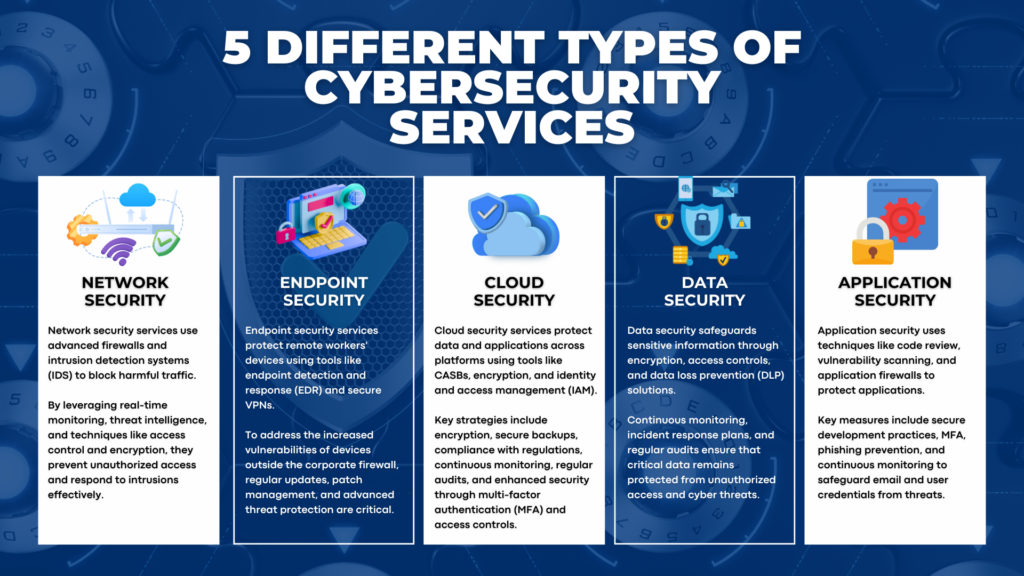
When it comes to cyber security services, understanding the different types of cyber security is essential for implementing a comprehensive defense strategy. The five main types of cyber security include network security, endpoint security, application security, cloud security, and data security. Each type focuses on protecting specific aspects of digital assets and systems from cyber threats, emphasizing the importance of a multi-layered approach to safeguarding sensitive information and maintaining a secure online environment.

What are examples of cyber services?

Cyber security services encompass a wide range of solutions designed to protect digital assets and information from cyber threats. Examples of cyber security services include network security, which involves safeguarding networks from unauthorized access through firewalls and intrusion detection systems; endpoint security, which focuses on securing individual devices like computers and smartphones from malware; incident response services that help organizations respond to and recover from security breaches effectively; and data loss prevention (DLP) solutions that aim to prevent the accidental or intentional loss of sensitive data. These are just a few examples of the diverse cyber security services available to address different aspects of online security and ensure comprehensive protection against cyber threats.

What does cyber security do?

Cyber security plays a vital role in safeguarding digital assets and information from various cyber threats and attacks. It encompasses a range of practices, technologies, and processes designed to protect networks, systems, and data from unauthorized access, data breaches, malware infections, and other malicious activities. By implementing robust cyber security measures, organizations can ensure the confidentiality, integrity, and availability of their critical information assets. Cyber security services help identify vulnerabilities, mitigate risks, detect and respond to security incidents promptly, and establish a secure environment that instills trust among customers and stakeholders.

cybersecurity service

Enhancing Your Security: Comprehensive Cybersecurity Services for Your Business

The Importance of Cybersecurity Services in Today’s Digital World

In today’s interconnected world, cybersecurity has become a critical aspect of any organization’s operations. With the increasing number of cyber threats and attacks, businesses need to prioritize their cybersecurity measures to protect sensitive data and maintain the trust of their customers.

What Are Cybersecurity Services?

Cybersecurity services encompass a range of practices and technologies designed to protect networks, devices, programs, and data from unauthorized access or attacks. These services aim to ensure the confidentiality, integrity, and availability of information systems.

The Role of Cybersecurity Services

Effective cybersecurity services play a crucial role in safeguarding organizations against various cyber threats, including malware, phishing attacks, ransomware, and data breaches. By implementing robust cybersecurity measures, businesses can prevent unauthorized access to their systems and mitigate potential risks.

Benefits of Cybersecurity Services

Investing in cybersecurity services offers numerous benefits to organizations, such as:

  • Data Protection: Secure sensitive information from unauthorized access or theft.
  • Threat Detection: Identify and respond to potential security threats in real-time.
  • Compliance: Ensure compliance with industry regulations and standards related to data security.
  • Business Continuity: Minimize disruptions to operations caused by cyber incidents.
  • Customer Trust: Build trust with customers by demonstrating a commitment to protecting their data.

Cybersecurity Service Providers

Many organizations rely on specialized cybersecurity service providers to enhance their security posture. These providers offer a range of services, including:

  • Network Security: Implement firewalls, intrusion detection systems, and secure VPNs.
  • Endpoint Security: Protect individual devices from malware and other cyber threats.
  • Incident Response: Develop strategies for responding to security incidents effectively.
  • Vulnerability Management: Identify and address vulnerabilities in systems and applications.

In Conclusion

In conclusion, cybersecurity services are essential for safeguarding organizations against evolving cyber threats. By investing in robust cybersecurity measures and working with reputable service providers, businesses can protect their valuable assets and maintain a secure digital environment for their operations.

Contact us today to learn more about how our cybersecurity services can help secure your organization’s digital infrastructure.


9 Essential Benefits of Cybersecurity Services for Protecting Your Business

  1. Protect sensitive data from unauthorized access
  2. Prevent malware infections and cyber attacks
  3. Ensure compliance with industry regulations and standards
  4. Detect and respond to security threats in real-time
  5. Minimize disruptions to business operations caused by cyber incidents
  6. Enhance customer trust by demonstrating a commitment to data security
  7. Safeguard financial information and transactions
  8. Mitigate risks of data breaches and identity theft
  9. Provide peace of mind knowing that your digital assets are secure


Challenges of Cybersecurity Services: High Costs, Complexity, False Positives, and User Resistance

  1. Costly Investment
  2. Complexity
  3. False Positives
  4. User Resistance

Protect sensitive data from unauthorized access

One significant advantage of cybersecurity services is their ability to protect sensitive data from unauthorized access. By implementing robust security measures, organizations can safeguard confidential information, such as customer data, financial records, and intellectual property, from cyber threats. This proactive approach not only helps prevent data breaches and unauthorized disclosures but also ensures the integrity and confidentiality of critical assets, fostering trust with customers and stakeholders.

Prevent malware infections and cyber attacks

One of the key benefits of cybersecurity services is their ability to prevent malware infections and cyber attacks. By implementing robust security measures, organizations can proactively safeguard their networks, systems, and data from malicious software and cyber threats. This proactive approach not only helps prevent costly downtime and data breaches but also ensures the continuity of business operations without disruptions caused by malware infections or cyber attacks.

Ensure compliance with industry regulations and standards

Ensuring compliance with industry regulations and standards is a crucial benefit of cybersecurity services. By implementing robust security measures, organizations can meet the requirements set forth by regulatory bodies and industry standards. Compliance not only helps in avoiding potential legal repercussions but also demonstrates a commitment to data security and privacy, building trust with customers and stakeholders. Cybersecurity services play a vital role in guiding businesses towards adherence to relevant regulations, ensuring that sensitive information is handled in accordance with best practices and legal mandates.

Detect and respond to security threats in real-time

One significant advantage of cybersecurity services is the ability to detect and respond to security threats in real-time. By leveraging advanced monitoring tools and threat detection technologies, organizations can swiftly identify suspicious activities or potential breaches within their networks. This proactive approach allows for immediate action to be taken to mitigate the impact of security incidents, minimizing potential damage and ensuring the continuity of business operations. Real-time threat detection and response are crucial components of a comprehensive cybersecurity strategy that helps organizations stay one step ahead of cyber threats.

Minimize disruptions to business operations caused by cyber incidents

One significant advantage of cybersecurity services is their ability to minimize disruptions to business operations caused by cyber incidents. By implementing robust security measures and proactive monitoring, organizations can effectively identify and mitigate potential cyber threats before they escalate into major disruptions. This proactive approach not only helps maintain the continuity of business operations but also reduces the risk of financial losses and reputational damage associated with cyber incidents. Investing in cybersecurity services can provide businesses with the peace of mind that their operations are protected against unforeseen disruptions, allowing them to focus on their core activities without interruption.

Enhance customer trust by demonstrating a commitment to data security

By investing in cybersecurity services, organizations can enhance customer trust by demonstrating a strong commitment to data security. When customers know that their sensitive information is protected from cyber threats and unauthorized access, they are more likely to have confidence in the organization’s ability to safeguard their data. This commitment to data security not only helps build trust with existing customers but also attracts new customers who prioritize the protection of their personal information. Ultimately, prioritizing cybersecurity measures sends a clear message that the organization values the privacy and security of its customers’ data, fostering long-term relationships built on trust and reliability.

Safeguard financial information and transactions

Cybersecurity services play a crucial role in safeguarding financial information and transactions from unauthorized access and fraud. By implementing robust security measures, organizations can protect sensitive financial data, such as bank account details, credit card information, and transaction records. Encryption techniques, secure payment gateways, and multi-factor authentication help ensure the confidentiality and integrity of financial transactions, reducing the risk of cyber attacks and financial losses. With cybersecurity services in place, businesses can instill trust in their customers and partners by demonstrating a commitment to protecting their financial information.

Mitigate risks of data breaches and identity theft

Cybersecurity services play a crucial role in mitigating the risks of data breaches and identity theft. By implementing robust security measures, organizations can protect sensitive information from unauthorized access and prevent cybercriminals from stealing valuable data. Proactive cybersecurity strategies, such as encryption, multi-factor authentication, and regular security audits, help safeguard against potential threats and ensure that personal and confidential data remains secure. By investing in cybersecurity services, businesses can significantly reduce the likelihood of data breaches and identity theft, thereby safeguarding their reputation and maintaining the trust of their customers.

Provide peace of mind knowing that your digital assets are secure

Cybersecurity services offer a valuable benefit by providing peace of mind to individuals and organizations, knowing that their digital assets are secure. By implementing robust security measures and proactive monitoring, cybersecurity services help prevent unauthorized access, data breaches, and other cyber threats. This assurance allows businesses to focus on their core activities without constantly worrying about the safety of their sensitive information, ultimately enhancing trust with customers and stakeholders.

Costly Investment

Implementing comprehensive cybersecurity services can pose a significant financial challenge for many organizations, particularly small businesses operating with constrained budgets. The cost of acquiring and maintaining sophisticated security measures, along with the need for ongoing monitoring and updates, can strain financial resources and divert funds from other essential areas of operation. Balancing the necessity of robust cybersecurity with the financial constraints faced by some organizations remains a persistent conundrum in the realm of digital security.

Complexity

The complexity of managing cybersecurity services poses a significant challenge for organizations lacking dedicated IT security teams. Securing networks, identifying vulnerabilities, and responding to cyber threats demand specialized knowledge and expertise that may be beyond the capabilities of general IT staff. Without the necessary skills and resources in place, organizations risk leaving their systems vulnerable to attacks and data breaches. As cyber threats continue to evolve, navigating the intricate landscape of cybersecurity becomes increasingly daunting for businesses without access to dedicated security professionals.

False Positives

False positives are a significant con of cybersecurity services as they can create unnecessary challenges for organizations. Security tools used in cybersecurity services may occasionally produce alerts that mistakenly identify benign activities as potential threats. This can result in wasted time and resources as teams investigate false alarms, diverting their attention from genuine security issues. Moreover, false positives can cause disruptions to normal business operations, leading to productivity losses and increased frustration among employees. Addressing the issue of false positives is crucial for organizations to streamline their cybersecurity efforts and ensure that genuine threats are promptly identified and addressed.

User Resistance

User Resistance can pose a significant challenge to cybersecurity services within an organization. When employees resist security measures, such as complex password requirements or multi-factor authentication, it can weaken the overall security posture and leave the organization vulnerable to cyber threats. User resistance may stem from inconvenience, lack of awareness about the importance of cybersecurity, or simply a desire for convenience over security. Addressing user resistance requires effective communication, training, and engagement to ensure that employees understand the rationale behind security measures and are motivated to comply with them for the greater protection of the organization’s data and systems.

cybersecurity services

Enhancing Security: The Vital Role of Cybersecurity Services

The Importance of Cybersecurity Services

The Importance of Cybersecurity Services

In today’s digital age, cybersecurity has become a critical aspect of protecting sensitive information and maintaining the integrity of businesses and individuals online. Cyber threats are constantly evolving, making it essential for organizations to invest in robust cybersecurity services to safeguard their data and systems.

Types of Cybersecurity Services

Cybersecurity services encompass a wide range of solutions designed to detect, prevent, and respond to cyber threats. Some common cybersecurity services include:

  • Network Security: Securing networks from unauthorized access and ensuring data confidentiality.
  • Endpoint Security: Protecting individual devices such as computers, laptops, and mobile devices from malware and other cyber threats.
  • Incident Response: Developing plans to address security incidents promptly and minimize their impact.
  • Security Audits: Evaluating existing security measures to identify vulnerabilities and areas for improvement.
  • Cloud Security: Ensuring data stored in cloud environments is protected from unauthorized access.

The Benefits of Cybersecurity Services

Investing in cybersecurity services offers numerous benefits, including:

  • Data Protection: Safeguarding sensitive information from theft or unauthorized access.
  • Breach Prevention: Proactively identifying and mitigating potential security risks before they result in a breach.
  • Compliance: Ensuring that organizations comply with industry regulations and standards related to data security.
  • Reputation Management: Building trust with customers by demonstrating a commitment to protecting their data.

The Future of Cybersecurity Services

As cyber threats continue to evolve, the demand for advanced cybersecurity services will only increase. Organizations must stay vigilant and adapt their security measures to combat emerging threats effectively. By partnering with reputable cybersecurity service providers, businesses can enhance their security posture and minimize the risk of cyber attacks.

In conclusion, cybersecurity services play a crucial role in safeguarding digital assets and maintaining trust in an increasingly interconnected world. By prioritizing cybersecurity measures, organizations can protect themselves against evolving cyber threats and ensure the resilience of their operations in the face of potential security breaches.


8 Essential Cybersecurity Tips to Protect Your Digital Life

  1. Regularly update your software and operating systems to patch security vulnerabilities.
  2. Use strong, unique passwords for each online account and consider using a password manager.
  3. Enable two-factor authentication whenever possible for an added layer of security.
  4. Be cautious of phishing emails and never click on suspicious links or download attachments from unknown sources.
  5. Secure your home network with a strong password and encryption to prevent unauthorized access.
  6. Backup your data regularly to protect against data loss in case of a cyber attack or system failure.
  7. Educate yourself and your employees about cybersecurity best practices to create a security-conscious culture.
  8. Consider investing in cybersecurity services such as antivirus software, firewall protection, and intrusion detection systems.

Regularly update your software and operating systems to patch security vulnerabilities.

Regularly updating your software and operating systems is a crucial step in maintaining strong cybersecurity defenses. By installing the latest patches and updates, you can address known security vulnerabilities that cyber attackers may exploit. These updates often include important security fixes that help protect your devices and data from potential threats. Making software updates a routine practice can significantly enhance the overall security posture of your systems and reduce the risk of falling victim to cyber attacks.

Use strong, unique passwords for each online account and consider using a password manager.

In the realm of cybersecurity services, a crucial tip is to utilize strong, unique passwords for every online account and contemplate employing a password manager. By creating complex and distinct passwords for each account, individuals can significantly enhance their overall online security. A password manager offers a convenient solution for securely storing and managing multiple passwords, reducing the risk of password reuse and enhancing protection against unauthorized access to sensitive information. Embracing this practice can fortify one’s digital defenses and mitigate the potential risks associated with compromised credentials in today’s interconnected digital landscape.

Enable two-factor authentication whenever possible for an added layer of security.

Enabling two-factor authentication whenever possible is a highly recommended practice in cybersecurity services. This additional layer of security provides an extra barrier against unauthorized access by requiring users to provide a second form of verification, such as a code sent to their mobile device or a biometric scan. By implementing two-factor authentication, individuals and organizations can significantly enhance their defense against cyber threats and reduce the risk of unauthorized account access or data breaches.

It is crucial to exercise caution when it comes to cybersecurity services, particularly in dealing with phishing emails. One essential tip is to be wary of suspicious emails and refrain from clicking on any links or downloading attachments from unknown sources. Phishing attacks often disguise themselves as legitimate communications to trick individuals into revealing sensitive information or installing malware on their devices. By staying vigilant and avoiding interactions with suspicious email content, individuals can significantly reduce the risk of falling victim to cyber threats and protect their personal and organizational data from potential breaches.

Secure your home network with a strong password and encryption to prevent unauthorized access.

To enhance the security of your home network, it is crucial to secure it with a strong password and encryption. By setting up a robust password that combines letters, numbers, and special characters, you can significantly reduce the risk of unauthorized access to your network. Additionally, enabling encryption protocols such as WPA2 or WPA3 adds an extra layer of protection by encoding data transmitted over the network, making it more challenging for cybercriminals to intercept sensitive information. Taking these simple yet effective steps can go a long way in safeguarding your home network from potential security threats.

Backup your data regularly to protect against data loss in case of a cyber attack or system failure.

Regularly backing up your data is a crucial tip in cybersecurity services to mitigate the risk of data loss due to cyber attacks or system failures. By maintaining up-to-date backups of your important information, you can ensure that even if your systems are compromised, you have a secure copy of your data that can be restored quickly, minimizing the impact of potential security incidents. Backup strategies are an essential component of a comprehensive cybersecurity plan, providing an added layer of protection against unforeseen events that could jeopardize the integrity and availability of your critical data.

Educate yourself and your employees about cybersecurity best practices to create a security-conscious culture.

Creating a security-conscious culture within your organization begins with education. By taking the time to educate yourself and your employees about cybersecurity best practices, you can empower everyone to play a proactive role in protecting sensitive information and preventing cyber threats. From recognizing phishing emails to implementing strong password policies, knowledge is key to building a resilient defense against potential security breaches. By fostering a culture of awareness and vigilance, you can strengthen your overall cybersecurity posture and mitigate risks effectively.

Consider investing in cybersecurity services such as antivirus software, firewall protection, and intrusion detection systems.

When it comes to safeguarding your digital assets, it is crucial to consider investing in cybersecurity services such as antivirus software, firewall protection, and intrusion detection systems. These tools form the backbone of a robust cybersecurity strategy by providing essential layers of defense against malware, unauthorized access, and suspicious activities. Antivirus software helps detect and remove malicious programs, while firewall protection acts as a barrier against unauthorized network traffic. Intrusion detection systems monitor network activity for signs of potential threats, enabling proactive responses to mitigate risks effectively. By incorporating these cybersecurity services into your security framework, you can enhance your overall defense posture and better protect your valuable data from cyber threats.