
cfchris.com

Loading

artificial intelligence and machine learning

Exploring the Synergy of Artificial Intelligence and Machine Learning

Artificial Intelligence and Machine Learning

Understanding Artificial Intelligence and Machine Learning

Artificial Intelligence (AI) and Machine Learning (ML) are two of the most transformative technologies in today’s digital age. They are reshaping industries, enhancing efficiencies, and paving the way for innovations that were once considered science fiction.

What is Artificial Intelligence?

Artificial Intelligence refers to the simulation of human intelligence processes by machines, especially computer systems. These processes include learning (the acquisition of information and rules for using it), reasoning (using rules to reach approximate or definite conclusions), and self-correction. AI can be categorized into two types:

  • Narrow AI: Also known as weak AI, this type is designed to perform a narrow task (like facial recognition or internet searches) and operates under a limited set of constraints.
  • General AI: Also known as strong AI, this type possesses the ability to perform any intellectual task that a human can do. It remains largely theoretical at this point.

The Role of Machine Learning

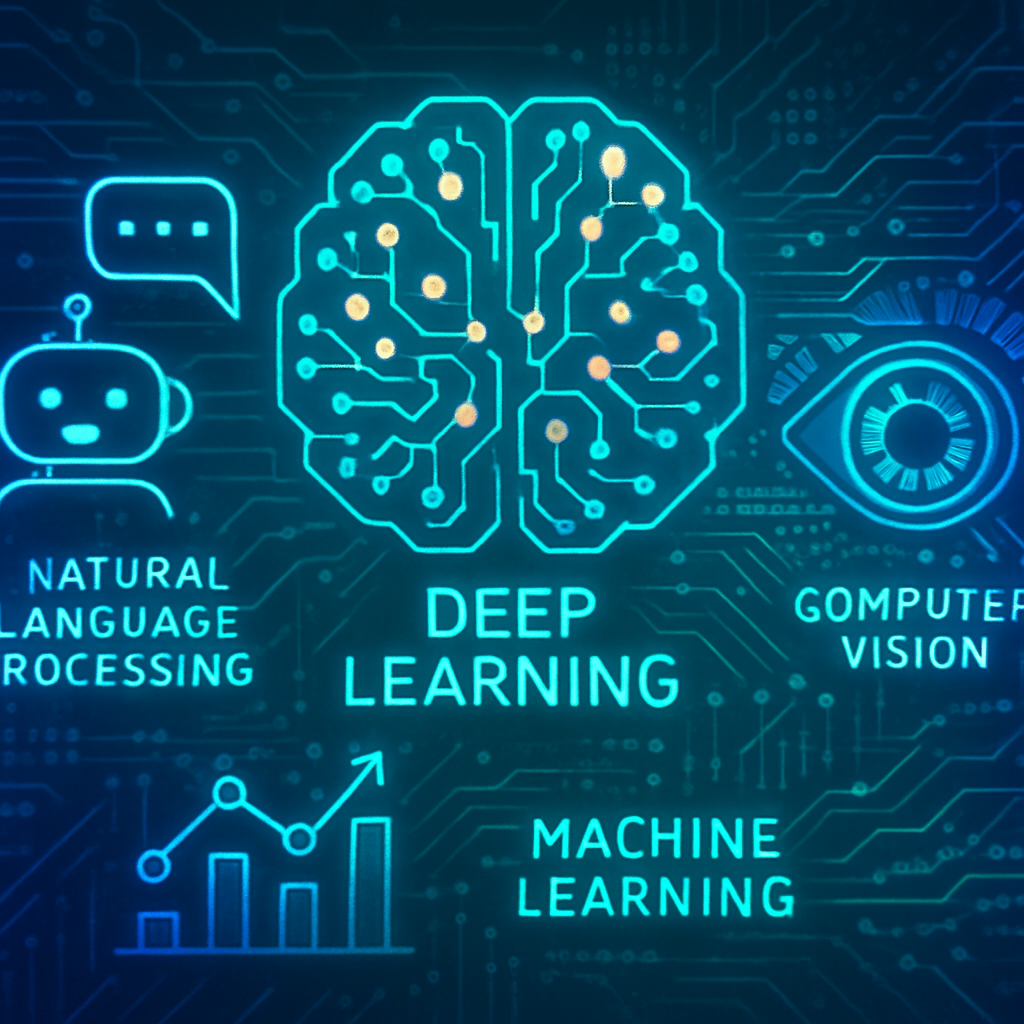
Machine Learning is a subset of AI that involves the use of algorithms and statistical models to enable computers to improve their performance on tasks through experience. Instead of being explicitly programmed to carry out a specific task, ML systems use data-driven approaches to learn patterns from data.

Types of Machine Learning

  1. Supervised Learning: The algorithm is trained on labeled data. It’s like teaching a child with examples. For instance, teaching an algorithm to recognize cats by showing it thousands of labeled cat images.
  2. Unsupervised Learning: The algorithm works with unlabeled data and tries to identify patterns or groupings without any guidance. Clustering algorithms fall under this category.
  3. Semi-supervised Learning: This approach uses both labeled and unlabeled data for training. It’s useful when acquiring a fully labeled dataset is expensive or time-consuming.
  4. Reinforcement Learning: Here, an agent learns how to achieve a goal in an uncertain environment by taking actions and receiving feedback from those actions in terms of rewards or penalties.

The Impact on Industries

The implications of AI and ML are vast across various sectors:

  • Healthcare: From predictive analytics for patient care to advanced imaging techniques, AI helps in diagnosing diseases faster and more accurately.
  • Finance: Algorithms detect fraudulent transactions in real-time while personalized banking experiences enhance customer satisfaction.
  • Agriculture: Precision farming powered by AI optimizes crop yield predictions based on weather conditions, soil health, etc.
  • E-commerce: Personalized recommendations improve user experience while inventory management becomes more efficient through demand forecasting.

The Future Ahead

The future holds immense potential for further advancements in artificial intelligence and machine learning. As these technologies evolve, ethical considerations around privacy, security, bias, and employment must be addressed responsibly. Collaboration between policymakers, technologists, businesses, and society will be crucial in harnessing these powerful tools for the greater good.

The journey ahead is exciting as we continue exploring the possibilities that artificial intelligence and machine learning offer in transforming our world into a smarter place.


Understanding AI and Machine Learning: Key Questions Answered

  1. What is artificial intelligence?
  2. How does machine learning differ from artificial intelligence?
  3. What are the real-world applications of artificial intelligence and machine learning?
  4. What are the different types of machine learning algorithms?
  5. How do artificial intelligence and machine learning impact job roles and industries?
  6. What ethical considerations are associated with the use of AI and ML technologies?
  7. How can businesses leverage artificial intelligence and machine learning to gain a competitive advantage?

What is artificial intelligence?

Artificial Intelligence (AI) is a branch of computer science focused on creating systems capable of performing tasks that typically require human intelligence. These tasks include understanding natural language, recognizing patterns, solving problems, and making decisions. AI systems are designed to simulate human cognitive processes by learning from data and adapting to new inputs. They can be categorized into narrow AI, which is specialized for specific tasks like facial recognition or voice assistants, and general AI, which remains largely theoretical and would possess the ability to perform any intellectual task a human can do. The development of AI has profound implications across various sectors, from healthcare to finance, as it enhances efficiency and opens up new possibilities for innovation.

How does machine learning differ from artificial intelligence?

Machine learning is a subset of artificial intelligence that focuses on enabling machines to learn from data without being explicitly programmed. While artificial intelligence encompasses a broader concept of simulating human intelligence in machines, machine learning specifically deals with algorithms that improve their performance over time through experience. In essence, artificial intelligence represents the overarching goal of creating intelligent machines, whereas machine learning serves as a key technique within the field of AI, emphasizing the ability of systems to learn and adapt autonomously.

What are the real-world applications of artificial intelligence and machine learning?

Artificial intelligence and machine learning have numerous real-world applications that are transforming industries and enhancing everyday life. In healthcare, AI is used for predictive analytics, improving diagnostic accuracy, and personalizing patient care plans. In finance, algorithms help detect fraudulent activities and automate trading processes. The automotive industry benefits from AI through the development of autonomous vehicles and advanced driver-assistance systems. In retail, machine learning enhances customer experience by enabling personalized recommendations and optimizing inventory management. Additionally, AI-powered chatbots are revolutionizing customer service across various sectors by providing instant support and handling routine inquiries efficiently. These technologies are also making significant strides in agriculture with precision farming techniques that increase crop yields while minimizing resource usage. Overall, AI and machine learning are driving innovation across multiple domains, making processes more efficient and opening up new possibilities for growth and development.

What are the different types of machine learning algorithms?

Machine learning algorithms can be broadly categorized into several types, each serving different purposes depending on the nature of the task and the data available. The main types include supervised learning, where algorithms are trained on labeled data to make predictions or classifications; unsupervised learning, which involves finding patterns or groupings in data without predefined labels; and reinforcement learning, where an agent learns to make decisions by receiving feedback in the form of rewards or penalties from its environment. Additionally, there is semi-supervised learning that combines both labeled and unlabeled data to improve learning accuracy, and deep learning, a subset of machine learning that utilizes neural networks with many layers to model complex patterns in large datasets. Each type has its own strengths and is selected based on the specific problem being addressed.

How do artificial intelligence and machine learning impact job roles and industries?

Artificial intelligence and machine learning are significantly transforming job roles and industries by automating routine tasks, enhancing decision-making processes, and creating new opportunities. In many sectors, AI and ML technologies streamline operations, allowing employees to focus on more strategic and creative tasks rather than repetitive ones. For instance, in manufacturing, AI-driven robots handle assembly lines with precision, reducing the need for manual labor while increasing productivity. In finance, algorithms analyze vast datasets to detect fraud or predict market trends faster than human analysts could. While some fear that automation might lead to job displacement, these technologies also generate demand for new roles in AI development, data analysis, and system maintenance. Industries are evolving as they integrate AI and ML into their workflows, fostering innovation and requiring a workforce skilled in digital literacy to adapt to these technological advancements.

What ethical considerations are associated with the use of AI and ML technologies?

The ethical considerations associated with the use of AI and ML technologies are multifaceted and crucial to address as these technologies become more integrated into daily life. One major concern is privacy, as AI systems often rely on large datasets that include personal information, raising questions about data security and consent. Additionally, there is the potential for bias in AI algorithms, which can lead to unfair or discriminatory outcomes if the data used to train these systems is not representative or contains inherent biases. Transparency is another significant issue, as the decision-making processes of complex AI models can be opaque, making it difficult for users to understand how conclusions are reached. Moreover, the impact of AI on employment must be considered, as automation could displace jobs without adequate measures for workforce transition. Finally, ensuring accountability in AI systems is essential to determine who is responsible when these technologies fail or cause harm. Addressing these ethical challenges requires a collaborative effort among technologists, policymakers, and society to develop frameworks that promote fair and responsible use of AI and ML.

How can businesses leverage artificial intelligence and machine learning to gain a competitive advantage?

Businesses can leverage artificial intelligence (AI) and machine learning (ML) to gain a competitive advantage by optimizing operations, enhancing customer experiences, and driving innovation. AI and ML can automate routine tasks, freeing up valuable human resources for more strategic activities. By analyzing vast amounts of data, these technologies provide insights into consumer behavior, allowing companies to tailor products and services to meet customer needs more effectively. Predictive analytics powered by AI can improve decision-making processes, enabling businesses to anticipate market trends and adjust strategies proactively. Additionally, AI-driven tools can enhance product development cycles by identifying inefficiencies and suggesting improvements. By integrating AI and ML into their operations, businesses not only increase efficiency but also foster innovation that sets them apart in the marketplace.
application developer

Mastering the Art of Becoming an Application Developer

Article: Application Developer

The Role of an Application Developer

An application developer is a professional responsible for creating, testing, and programming applications for computers, mobile devices, and other digital platforms. These skilled individuals play a crucial role in the software development process, turning ideas into functional and user-friendly applications that meet specific requirements.

Key Responsibilities of an Application Developer:

  • Designing Applications: Application developers collaborate with stakeholders to understand project requirements and design software solutions that address those needs.
  • Coding and Programming: They write code using various programming languages such as Java, C++, Python, or JavaScript to develop the application’s functionality.
  • Testing and Debugging: Developers conduct thorough testing to identify and fix any issues or bugs in the application before deployment.
  • Collaborating with Teams: They work closely with designers, project managers, and other developers to ensure seamless integration of different components within the application.
  • Maintaining Applications: Developers provide ongoing support, updates, and maintenance to ensure the application continues to function effectively over time.

Skills Required for Application Developers:

To excel in this role, application developers need a combination of technical skills and soft skills. Some essential skills include:

  • Proficiency in Programming Languages: Knowledge of programming languages such as Java, Python, C#, or Swift is essential for developing applications.
  • Problem-Solving Abilities: Developers must be able to analyze complex problems and devise effective solutions efficiently.
  • Attention to Detail: Precision is crucial when writing code and conducting testing to ensure the application functions flawlessly.
  • Communication Skills: Effective communication is key when collaborating with team members and conveying technical information to non-technical stakeholders.
  • Creativity: Developing innovative solutions and thinking outside the box can set a developer apart in creating unique applications.

In conclusion, application developers are instrumental in shaping the digital landscape by creating cutting-edge software solutions that enhance user experiences across various platforms. Their expertise in coding, testing, and problem-solving makes them indispensable contributors to the world of technology.


Top 7 FAQs About Becoming an Application Developer

  1. What is an application developer called?
  2. Is application developer a good career?
  3. Is an application developer the same as a software engineer?
  4. What skills does an app developer need?
  5. What does an application developer do?
  6. How much money do you make as an app developer?
  7. What skills do you need to be a app developer?

What is an application developer called?

An individual who specializes in creating, testing, and programming applications for computers, mobile devices, and other digital platforms is commonly referred to as an “application developer.” This skilled professional plays a critical role in the software development process, translating project requirements into functional and user-friendly applications that cater to specific needs. Application developers are adept at coding, testing, debugging, and collaborating with cross-functional teams to deliver high-quality software solutions that meet the demands of modern technology.

Is application developer a good career?

Many individuals considering a career in technology often wonder, “Is application developer a good career?” The answer is a resounding yes. Application development offers a rewarding and promising career path for those with a passion for coding and problem-solving. As technology continues to advance rapidly, the demand for skilled application developers remains high across industries. With opportunities for growth, competitive salaries, and the chance to work on innovative projects, pursuing a career as an application developer can lead to a fulfilling and successful professional journey.

Is an application developer the same as a software engineer?

When considering the distinction between an application developer and a software engineer, it’s important to note that while there is some overlap in their roles, they are not exactly the same. An application developer typically focuses on creating specific applications for computers, mobile devices, or other digital platforms. They are often involved in the design, coding, testing, and maintenance of applications to meet particular user needs. On the other hand, a software engineer has a broader scope of responsibilities that may include designing entire software systems, developing algorithms, and optimizing system performance. While both roles involve programming and problem-solving skills, a software engineer often works at a more strategic level compared to an application developer.

What skills does an app developer need?

To excel as an application developer, a diverse set of skills is essential. Proficiency in programming languages like Java, Python, C#, or Swift forms the foundation for creating functional applications. Problem-solving abilities are crucial for analyzing and resolving complex issues efficiently. Attention to detail is paramount in writing code and conducting thorough testing to ensure the application operates flawlessly. Effective communication skills are necessary for collaborating with team members and conveying technical concepts to non-technical stakeholders. Creativity plays a significant role in developing innovative solutions that set app developers apart in creating unique and user-friendly applications.

What does an application developer do?

An application developer is responsible for creating, testing, and programming software applications for computers, mobile devices, and other digital platforms. Their primary role involves designing and developing applications that meet specific requirements and provide valuable solutions to users. Application developers write code using various programming languages to build the functionality of the applications, conduct testing to ensure their performance and quality, and collaborate with cross-functional teams to integrate different components seamlessly. Additionally, they are involved in maintaining and updating applications to ensure they continue to meet user needs effectively. Overall, an application developer plays a pivotal role in the software development process by bringing ideas to life through functional and user-friendly applications.

How much money do you make as an app developer?

One frequently asked question among individuals considering a career as an application developer is, “How much money do you make as an app developer?” The salary of an application developer can vary based on factors such as experience, location, industry, and specific skills. Entry-level developers may start with a lower salary and see increases as they gain more experience and expertise in the field. Experienced developers with specialized skills or working in high-demand industries may command higher salaries. Overall, app developers have the potential to earn competitive salaries that reflect their level of skill and the demand for their expertise in the ever-evolving technology sector.

What skills do you need to be a app developer?

To become an app developer, a combination of technical and soft skills is essential. Proficiency in programming languages like Java, Python, C#, or Swift is crucial for developing applications. Problem-solving abilities are also key, as developers need to analyze and solve complex issues efficiently. Attention to detail is vital when writing code and conducting testing to ensure the app functions flawlessly. Effective communication skills are necessary for collaborating with team members and conveying technical information to non-technical stakeholders. Additionally, creativity plays a significant role in developing innovative solutions that set app developers apart in creating unique and user-friendly applications.

software and application development

Exploring the Dynamics of Software and Application Development

Software and Application Development

The World of Software and Application Development

Software and application development have become integral parts of our daily lives. From the apps on our smartphones to the programs we use on our computers, the process of creating software and applications is crucial in today’s digital age.

What is Software Development?

Software development is the process of designing, programming, testing, and maintaining software applications. It involves a combination of technical skills, creativity, and problem-solving abilities to create functional and user-friendly software solutions.

The Importance of Application Development

Application development focuses on creating specific software programs that serve particular purposes. Whether it’s a mobile app for tracking fitness goals or a web application for managing finances, applications enhance productivity and provide new opportunities for businesses and individuals.

The Software Development Lifecycle

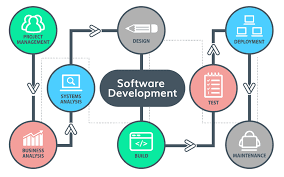
The software development lifecycle (SDLC) consists of several phases, including:

  • Planning: Defining project requirements and objectives.
  • Design: Creating a blueprint for the software’s structure and features.
  • Development: Writing code to build the software according to the design specifications.
  • Testing: Identifying and fixing bugs or issues in the software.
  • Deployment: Releasing the software for users to access.
  • Maintenance: Providing updates and support to ensure the software remains functional over time.

The Future of Software Development

As technology continues to evolve rapidly, the field of software development is constantly adapting to meet new challenges and opportunities. Emerging trends such as artificial intelligence, cloud computing, and Internet of Things (IoT) are shaping the future of software development, offering innovative solutions for various industries.

In Conclusion

Software and application development play a vital role in shaping our digital world. With continuous innovation and collaboration among developers, we can expect to see even more advanced and user-friendly software solutions that enhance our lives in meaningful ways.


Top 8 Frequently Asked Questions About Software and Application Development

  1. What is programming and application development?
  2. What is software and application development?
  3. What is app and software development?
  4. Does app development require coding?
  5. What are the 4 types of application software?
  6. What does a software application developer do?
  7. Is application development the same as software engineering?
  8. What degree do you need to be an app developer?

What is programming and application development?

Programming and application development are fundamental aspects of creating software solutions that power our digital world. Programming involves writing code using specific languages to instruct computers to perform tasks and solve problems. Application development, on the other hand, focuses on designing, building, and maintaining software applications tailored to meet specific user needs. It encompasses the entire process from conceptualization to deployment, ensuring that the final product is functional, user-friendly, and meets the desired objectives. In essence, programming and application development are the building blocks that enable us to bring innovative ideas to life through technology.

What is software and application development?

Software and application development encompass the process of creating, designing, testing, and maintaining software programs tailored to meet specific needs and functionalities. In essence, software development involves the conceptualization and implementation of digital solutions, while application development focuses on crafting specialized programs to address particular tasks or requirements. These disciplines require a blend of technical expertise, creative problem-solving skills, and a keen understanding of user experience to deliver efficient and user-friendly software products that cater to diverse industries and individual users alike.

What is app and software development?

App and software development refer to the process of creating computer programs and applications that serve specific functions or purposes. This involves designing, coding, testing, and maintaining software solutions to meet the needs of users in various industries. App development typically focuses on creating applications for mobile devices, while software development encompasses a broader range of programs for desktops, servers, and other platforms. Both disciplines require a combination of technical expertise, creativity, and problem-solving skills to deliver efficient and user-friendly solutions that enhance productivity and streamline operations.

Does app development require coding?

In the realm of software and application development, a commonly asked question is whether app development necessitates coding. The answer is yes, app development typically involves coding to create the functionalities and features of an application. Coding serves as the foundation for designing and building apps across various platforms, allowing developers to customize and optimize the user experience. While there are tools and platforms that offer no-code or low-code options for app development, a fundamental understanding of coding languages remains essential for creating robust and tailored applications that meet specific requirements.

What are the 4 types of application software?

In the realm of software and application development, one frequently asked question revolves around the classification of application software into four main types. These types include productivity software, entertainment software, business software, and utilities software. Productivity software encompasses tools like word processors and spreadsheets that aid in everyday tasks. Entertainment software includes games, multimedia players, and virtual reality applications designed for leisure and enjoyment. Business software is tailored for organizational purposes, such as accounting programs and customer relationship management (CRM) systems. Utilities software consists of tools like antivirus programs and disk cleaners that optimize system performance. Understanding these distinct categories helps developers tailor their solutions to meet specific user needs effectively.

What does a software application developer do?

A software application developer is responsible for designing, coding, testing, and maintaining software applications to meet specific user needs and requirements. They work closely with clients or stakeholders to understand the desired functionality of the application and translate those requirements into technical solutions. Software application developers use programming languages and development tools to create efficient and user-friendly applications that enhance productivity and provide solutions to various challenges. Additionally, they stay updated on industry trends and best practices to deliver high-quality software products that meet the evolving demands of users in today’s digital landscape.

Is application development the same as software engineering?

When it comes to software and application development, a common question that arises is whether application development is the same as software engineering. While both disciplines involve creating software solutions, they have distinct differences. Application development typically focuses on designing and building specific applications to meet particular needs or tasks. On the other hand, software engineering encompasses a broader approach that involves the systematic application of engineering principles to develop robust, scalable, and maintainable software systems. Software engineers not only design and build applications but also consider the entire software development lifecycle, including requirements analysis, system design, testing, and maintenance. Both application development and software engineering are essential aspects of creating functional and efficient software solutions in today’s technology-driven world.

What degree do you need to be an app developer?

To pursue a career as an app developer, a degree in computer science, software engineering, or a related field is typically recommended. While having a formal degree can provide a strong foundation in programming languages, software development principles, and problem-solving skills, it is not the only path to becoming an app developer. Many successful developers also acquire relevant skills through self-study, online courses, coding bootcamps, and practical experience. Ultimately, what matters most in app development is a passion for coding, continuous learning, and the ability to create innovative and user-friendly applications that meet market demands.