
cfchris.com

Loading

java for beginners

Java for Beginners: A Step-by-Step Guide to Learning Programming

Java for Beginners

Java for Beginners: A Comprehensive Guide

If you are new to programming and looking to learn a versatile and widely-used language, Java is an excellent choice. Java is known for its simplicity, readability, and vast community support, making it ideal for beginners to start their coding journey.

Why Learn Java?

Java is a high-level programming language that is platform-independent, meaning you can write code once and run it on any device that supports Java. This feature makes Java versatile and widely used in various applications, from web development to mobile apps.

Key Concepts in Java

As a beginner learning Java, you will come across essential concepts such as:

  • Variables: Used to store data values.
  • Control Structures: Including loops and conditional statements.
  • Classes and Objects: The building blocks of Java programs.
  • Inheritance and Polymorphism: Important concepts in object-oriented programming.
  • Exception Handling: Dealing with errors in your code.

Resources for Learning Java

If you are eager to start your journey into Java programming, there are plenty of resources available online. Websites like Codecademy, Coursera, and Oracle’s official Java tutorials offer step-by-step lessons tailored for beginners.

Your First Java Program

To get started with coding in Java, begin by writing a simple “Hello World” program. This classic program prints the text “Hello World” on the screen and serves as an excellent introduction to basic syntax in Java.


public class HelloWorld {

public static void main(String[] args) {

System.out.println("Hello World");

}

}

Coding Challenges

To enhance your skills and understanding of Java, consider participating in coding challenges on platforms like LeetCode or HackerRank. These challenges provide real-world problems that can help you practice your coding skills and improve your problem-solving abilities.

In Conclusion

Learning Java as a beginner can open up a world of opportunities in the programming field. With dedication, practice, and the right resources, you can master this powerful language and embark on a rewarding career as a software developer or programmer.


Top 8 Frequently Asked Questions About Learning Java for Beginners

  1. Can you learn Java as a beginner?
  2. Will Java be replaced by AI?
  3. What are the 4 pillars of Java?
  4. How can I start to learn Java?
  5. Can I teach myself Java?
  6. Which is harder, C++ or Java?
  7. What is Java basics for beginners?
  8. Is Java easy to learn for beginners?

Can you learn Java as a beginner?

For beginners looking to delve into the world of programming, learning Java is not only possible but highly recommended. Java’s user-friendly syntax, extensive documentation, and robust community support make it an excellent choice for those starting their coding journey. With dedication, practice, and access to various online resources tailored for beginners, mastering Java can be a rewarding experience that lays a solid foundation for further exploration in the field of software development.

Will Java be replaced by AI?

While artificial intelligence is advancing rapidly and influencing many aspects of technology, it is unlikely that AI will replace Java in the foreseeable future. Java is a robust and versatile programming language that has been widely adopted across various industries for its reliability, scalability, and platform independence. AI technologies often rely on programming languages like Java to build applications and frameworks. Instead of replacing Java, AI is more likely to complement it by enhancing development processes and creating more sophisticated tools that can streamline coding tasks. As a result, Java remains an essential skill for developers, especially as they integrate AI capabilities into their projects.

What are the 4 pillars of Java?

The four pillars of Java are key concepts that form the foundation of the language and are essential for beginners to understand. These pillars include: Object-Oriented Programming (OOP), which emphasizes the use of classes and objects for organizing code; Inheritance, allowing classes to inherit attributes and methods from other classes; Encapsulation, which involves bundling data and methods into a single unit; and Polymorphism, enabling objects to take on multiple forms based on their context. Mastery of these pillars is crucial for building robust and efficient Java programs.

How can I start to learn Java?

For beginners looking to start learning Java, a great way to begin is by familiarizing yourself with the basic syntax and concepts of the language. Online tutorials, courses, and books dedicated to Java programming can provide a structured approach to learning. Setting up a development environment on your computer and practicing writing simple programs can help reinforce your understanding of Java fundamentals. Additionally, engaging in coding challenges and projects can further enhance your skills and confidence in using Java. Remember that consistent practice, patience, and a willingness to explore and experiment are key to mastering Java as a beginner.

Can I teach myself Java?

Teaching yourself Java is absolutely possible for beginners. With the abundance of online resources, tutorials, and practice exercises available, you can learn Java at your own pace and convenience. Many successful programmers have started by teaching themselves Java through self-study and hands-on practice. By dedicating time and effort to understanding the key concepts of Java programming, you can build a solid foundation and gradually advance your skills in this versatile language. Remember, persistence and a passion for learning are key to mastering Java on your own.

Which is harder, C++ or Java?

When it comes to comparing the difficulty level between C++ and Java for beginners, opinions may vary. Both C++ and Java are powerful programming languages with their own complexities and learning curves. Some beginners find C++ more challenging due to its low-level features and strict syntax, while others may perceive Java as easier to grasp because of its simpler syntax and automatic memory management. Ultimately, the difficulty of learning C++ or Java depends on individual preferences, prior programming experience, and the specific goals of the learner. It is recommended for beginners to explore both languages and determine which one aligns better with their interests and objectives in the field of programming.

What is Java basics for beginners?

For beginners diving into Java programming, understanding the basics is crucial to building a strong foundation. Java basics encompass fundamental concepts such as variables, control structures, classes and objects, inheritance, polymorphism, and exception handling. These core principles form the building blocks of Java programs and are essential for beginners to grasp in order to write efficient and functional code. By mastering these Java basics, beginners can progress confidently in their learning journey and unlock the full potential of this versatile programming language.

Is Java easy to learn for beginners?

For beginners diving into the world of programming, the question of whether Java is easy to learn often arises. Java, known for its simplicity and readability, is considered beginner-friendly due to its straightforward syntax and vast community support. While mastering any programming language requires dedication and practice, Java’s clear structure and extensive resources tailored for beginners make it a popular choice for those starting their coding journey. With commitment and the right guidance, beginners can find Java to be an accessible and rewarding language to learn.
object oriented software engineering

Mastering Object-Oriented Software Engineering Principles

Object-Oriented Software Engineering

Object-Oriented Software Engineering

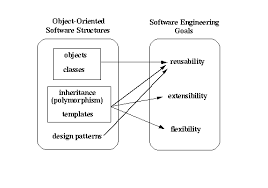
Object-oriented software engineering is a methodology that focuses on designing and developing software systems based on the concept of objects. In this approach, software components are modeled as objects that have attributes (data) and behaviors (methods).

Key Concepts of Object-Oriented Software Engineering:

  • Classes and Objects: Classes are blueprints for creating objects. Objects are instances of classes that encapsulate data and behavior.
  • Inheritance: Inheritance allows classes to inherit attributes and behaviors from other classes, promoting code reusability and modularity.
  • Polymorphism: Polymorphism enables objects of different classes to be treated as objects of a common superclass, allowing for flexibility in design and implementation.
  • Encapsulation: Encapsulation hides the internal state of an object and only exposes necessary interfaces for interacting with the object, promoting data security and abstraction.
  • Abstraction: Abstraction focuses on modeling real-world entities as simplified representations in software systems, emphasizing essential characteristics while hiding unnecessary details.

Benefits of Object-Oriented Software Engineering:

The object-oriented approach offers several advantages, including:

  • Modularity: Objects can be developed independently, promoting code organization and maintenance.
  • Reusability: Objects can be reused in different contexts, reducing development time and effort.
  • Maintainability: Changes to one part of the system have minimal impact on other parts, enhancing system scalability and adaptability.
  • Simplicity: Object-oriented design simplifies complex systems by breaking them down into manageable components with well-defined interactions.

In conclusion, object-oriented software engineering provides a structured approach to software development that emphasizes flexibility, scalability, and maintainability. By leveraging key concepts such as classes, inheritance, polymorphism, encapsulation, and abstraction, developers can create robust and efficient software systems that meet the evolving needs of users and businesses.


8 Essential Tips for Mastering Object-Oriented Software Engineering

  1. Encapsulate data to restrict direct access and enforce data integrity.
  2. Use inheritance to promote code reuse and establish relationships between classes.
  3. Favor composition over inheritance to maintain flexibility and avoid deep class hierarchies.
  4. Implement polymorphism to allow objects of different classes to be treated as objects of a common superclass.
  5. Follow the SOLID principles (Single Responsibility, Open/Closed, Liskov Substitution, Interface Segregation, Dependency Inversion) for better design and maintainability.
  6. Apply design patterns like Factory, Singleton, Observer, Strategy, etc., to solve common design problems efficiently.
  7. Use interfaces or abstract classes to define contracts that classes must adhere to.
  8. Practice good naming conventions and create clear documentation for your classes and methods.

Encapsulate data to restrict direct access and enforce data integrity.

Encapsulating data in object-oriented software engineering is a crucial practice that restricts direct access to data and enforces data integrity within a system. By encapsulating data, developers can control how data is accessed and modified, reducing the risk of unintended errors or unauthorized changes. This approach promotes security and robustness by ensuring that data manipulation occurs through defined interfaces and methods, enhancing the overall reliability and maintainability of the software system.

Use inheritance to promote code reuse and establish relationships between classes.

Using inheritance in object-oriented software engineering is a powerful technique to promote code reuse and establish relationships between classes. By creating a hierarchy of classes where subclasses inherit attributes and behaviors from their superclasses, developers can avoid redundant code and build upon existing functionality. This approach not only streamlines development but also enhances the maintainability and scalability of the software system by fostering a modular and structured design. Inheritance allows for the creation of specialized classes that inherit common characteristics from more general classes, enabling developers to efficiently model real-world relationships and dependencies within the software architecture.

Favor composition over inheritance to maintain flexibility and avoid deep class hierarchies.

When practicing object-oriented software engineering, it is advisable to prioritize composition over inheritance to uphold flexibility and prevent the creation of complex class hierarchies. By favoring composition, developers can construct classes by combining existing functionalities rather than relying solely on inheritance. This approach promotes code reusability, simplifies maintenance, and allows for greater adaptability in the system design. Emphasizing composition over inheritance helps avoid the pitfalls of deep class hierarchies, leading to more modular and scalable software solutions that are easier to manage and extend over time.

Implement polymorphism to allow objects of different classes to be treated as objects of a common superclass.

Implementing polymorphism in object-oriented software engineering is a powerful technique that enables objects of different classes to be treated as objects of a common superclass. By utilizing polymorphism, developers can write code that is more flexible and adaptable, allowing for seamless interaction between diverse objects while promoting code reusability and simplifying system design. This approach not only enhances the modularity and scalability of software systems but also facilitates the creation of more maintainable and extensible codebases.

Follow the SOLID principles (Single Responsibility, Open/Closed, Liskov Substitution, Interface Segregation, Dependency Inversion) for better design and maintainability.

Adhering to the SOLID principles—Single Responsibility, Open/Closed, Liskov Substitution, Interface Segregation, and Dependency Inversion—can significantly enhance the design and maintainability of object-oriented software engineering projects. By following these principles, developers ensure that each class has a single responsibility, making the codebase easier to understand and modify. The Open/Closed principle encourages extending functionality without modifying existing code, promoting scalability and reducing the risk of introducing bugs. Liskov Substitution emphasizes substitutability of objects derived from a base class, enhancing code reusability and flexibility. Interface Segregation advocates for specific client interfaces rather than one general-purpose interface, leading to more cohesive and manageable code structures. Finally, Dependency Inversion promotes decoupling between modules by depending on abstractions rather than concrete implementations, facilitating easier testing and maintenance of software systems. By incorporating these SOLID principles into software design practices, developers can achieve more robust, adaptable, and maintainable solutions.

Apply design patterns like Factory, Singleton, Observer, Strategy, etc., to solve common design problems efficiently.

In object-oriented software engineering, applying design patterns such as Factory, Singleton, Observer, Strategy, and others is a valuable practice to efficiently solve common design problems. These design patterns provide proven solutions to recurring challenges in software development, offering structured approaches that enhance code reusability, maintainability, and scalability. By incorporating these design patterns into the development process, developers can streamline their workflow, improve system architecture, and create more robust and flexible software solutions that align with best practices in the industry.

Use interfaces or abstract classes to define contracts that classes must adhere to.

In object-oriented software engineering, it is advisable to utilize interfaces or abstract classes to establish contracts that classes must follow. By defining these contracts, developers can enforce consistency and ensure that implementing classes adhere to specific guidelines and behaviors. Interfaces and abstract classes serve as blueprints for defining common methods and properties that participating classes must implement or inherit, promoting code reusability, modularity, and maintainability in software systems. This practice not only enhances the structure and organization of the codebase but also facilitates easier integration of new components while maintaining a clear separation of concerns.

Practice good naming conventions and create clear documentation for your classes and methods.

When practicing object-oriented software engineering, it is crucial to adhere to good naming conventions and maintain clear documentation for your classes and methods. By choosing descriptive and meaningful names for classes and methods, you enhance code readability and maintainability. Clear documentation provides insights into the purpose, functionality, and usage of each component, aiding developers in understanding and utilizing them effectively. These practices not only facilitate collaboration among team members but also contribute to the overall quality of the software system by promoting consistency and clarity in its design and implementation.