
IT Infrastructure and Services: Building a Reliable Foundation for Business Growth
IT Infrastructure and Services: The Foundation of a Modern Business
Reliable IT infrastructure helps businesses operate efficiently, protect important information, and adapt to change. From employee devices and business applications to networks and cloud platforms, each part of an organization’s technology environment plays a role in keeping work moving.
IT services help plan, manage, and support that environment. Together, infrastructure and services give businesses the tools they need to serve customers, collaborate, and grow.
What Is IT Infrastructure?
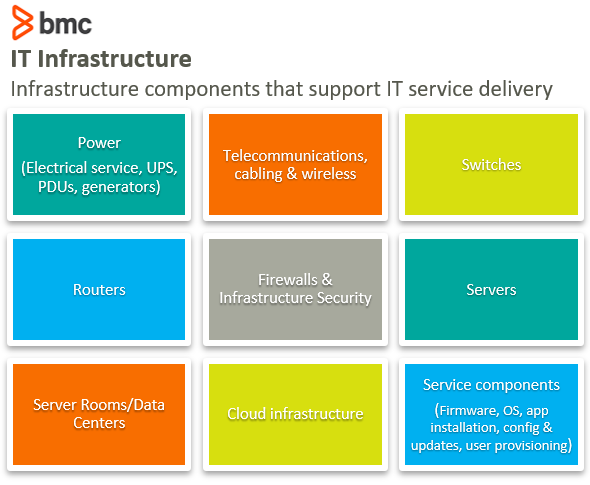
IT infrastructure is the collection of technology resources that supports an organization’s operations. It can include physical equipment, software, networks, cloud services, and the processes used to manage them.
- Hardware: Computers, servers, storage systems, printers, and other devices.
- Networks: Wired and wireless connections that link users, devices, and systems.
- Software: Operating systems, business applications, databases, and collaboration tools.
- Cloud platforms: Online computing, storage, and software services.
- Security systems: Tools and controls that help protect accounts, devices, networks, and data.
These components work together. A problem with one part—such as an unreliable network or outdated software—can affect productivity across the organization.
What Do IT Services Include?
IT services cover the expertise and ongoing support needed to keep technology useful, secure, and dependable. The right mix depends on an organization’s size, goals, industry, and existing systems.
IT Planning and Consulting
Technology planning connects IT decisions to business priorities. A review of existing systems can help identify risks, unnecessary costs, and opportunities to improve performance. A practical IT plan can also guide upgrades and future investments.
Network Management
Network services help maintain the connections that employees rely on every day. This may include configuring equipment, monitoring performance, managing wireless access, and troubleshooting interruptions.
Cybersecurity
Cybersecurity combines technology, policies, and user awareness to reduce the risk of data loss and unauthorized access. Common measures include multifactor authentication, access controls, security updates, endpoint protection, and employee training.
Cloud Services
Cloud services can provide flexible access to computing resources, storage, and software. Moving workloads to the cloud may simplify some operations, but it requires careful planning. Businesses should consider security, costs, performance, data location, and how cloud systems will work with existing tools.
Backup and Recovery
Backups help organizations restore important data after accidental deletion, hardware failure, or a cyber incident. A backup plan should specify what gets backed up, how often backups run, where copies are stored, and how restoration is tested.
Help Desk and Technical Support
Support services help employees resolve technology issues and return to work quickly. Clear procedures for reporting problems, prioritizing requests, and communicating updates can make support more effective.
Why a Strong IT Foundation Matters
Well-managed IT infrastructure can support productivity, business continuity, and better decision-making. It can also help organizations:
- Reduce disruptions and respond to technical issues more quickly.
- Protect business information and manage access appropriately.
- Support remote and hybrid work.
- Keep systems updated and compatible.
- Scale technology as business needs change.
- Plan technology spending with fewer surprises.
Technology alone does not guarantee these results. Systems need to be configured, maintained, monitored, and reviewed over time.
Choosing the Right IT Services
Before selecting IT services, consider the organization’s current environment and priorities. Useful questions include:
- Which systems are essential to daily operations?
- Where are the largest security or reliability risks?
- What support do employees need most often?
- Are backups and recovery procedures tested regularly?
- Which technology costs are predictable, and which are difficult to manage?
- What changes are likely in the next one to three years?
Some organizations manage IT internally, while others work with outside specialists or use a combination of both. The best arrangement is one that provides the right expertise, response times, and oversight for the organization’s needs.
Build for Reliability and Growth
IT infrastructure is not a one-time project. Devices age, software changes, security threats evolve, and business requirements shift. Regular reviews help ensure that systems remain useful and that technology decisions continue to support organizational goals.
With thoughtful planning and dependable IT services, businesses can create a technology environment that is more secure, resilient, and ready for what comes next.
9 Essential Tips for Reliable and Secure IT Infrastructure and Services
- Document your infrastructure and keep it up to date.
- Back up critical data regularly and test restores.
- Use multi-factor authentication for administrative access.
- Apply security patches promptly.
- Monitor services for uptime, errors, and capacity.
- Automate repetitive deployment and maintenance tasks.
- Separate production, test, and development environments.
- Set clear recovery targets for critical services.
- Review access permissions regularly.
Document your infrastructure and keep it up to date.
Documenting your IT infrastructure gives your team a clear view of how systems, devices, networks, applications, and services fit together. Keep records of configurations, software versions, vendors, access details, dependencies, and recovery procedures, and update them whenever something changes. Accurate, current documentation makes troubleshooting faster, supports security and compliance efforts, and helps your organization recover more effectively from outages or staff transitions.
Back up critical data regularly and test restores.
Back up critical data regularly, and test your restore process to make sure files can be recovered when needed. A backup is only useful if it works, so verify that copies are complete, protected, and stored separately from your primary systems. Set a schedule based on how often your data changes, and periodically practice restoring files or systems to catch problems before an emergency.
Use multi-factor authentication for administrative access.
Use multi-factor authentication (MFA) for all administrative accounts to add an extra layer of protection to your IT infrastructure. Admin accounts have powerful permissions, so a stolen password could let an attacker change systems, access sensitive data, or create new accounts. MFA requires an additional verification step—such as an authenticator app or security key—making unauthorized access much harder, even if a password is compromised.
Apply security patches promptly.
Apply security patches promptly to fix known vulnerabilities before attackers can exploit them. Prioritize updates for internet-facing systems, operating systems, business applications, and security tools. Test critical patches when practical, then install them promptly and verify that updates were successful. For systems that cannot be patched right away, use temporary safeguards—such as restricting access or isolating the device—and track the remaining risk until the update is complete.
Monitor services for uptime, errors, and capacity.
Monitor IT services regularly for uptime, errors, and capacity to catch problems before they disrupt work. Uptime monitoring can reveal outages or slowdowns, error tracking can help pinpoint recurring issues, and capacity monitoring can show when systems are nearing their limits. Together, these insights help teams resolve issues sooner, plan upgrades, and keep services reliable as business needs grow.
Automate repetitive deployment and maintenance tasks.
Automating repetitive deployment and maintenance tasks can save time, reduce human error, and make IT operations more consistent. Scripts and automation tools can handle routine work such as provisioning systems, applying updates, running backups, and checking configurations. Start with well-documented processes, test automation in a safe environment, and monitor results so issues are caught quickly. With the right safeguards, teams can spend less time on manual upkeep and more time improving the services their organization depends on.
Separate production, test, and development environments.
Separating production, test, and development environments helps protect live systems while giving teams room to build and validate changes safely. Production should serve real users and use tightly controlled access, while development supports day-to-day coding and testing provides a place to check changes before release. Keeping these environments distinct—with appropriate permissions, configurations, and data safeguards—reduces the risk that unfinished work or experiments will disrupt business operations.
Set clear recovery targets for critical services.
Set clear recovery targets for critical services so everyone knows how quickly systems must be restored after an outage and how much data loss is acceptable. Define a recovery time objective (RTO) for the maximum downtime and a recovery point objective (RPO) for the maximum period of data that can be lost. Prioritize targets based on each service’s business impact, then make sure your backups, recovery plans, and available resources can meet them. Test the plan regularly to confirm those targets are realistic.
Review access permissions regularly.
Review access permissions regularly to make sure employees and service providers can reach only the systems and information they need. Remove access promptly when someone changes roles or leaves the organization, and review shared, administrative, and inactive accounts for unnecessary privileges. Regular permission checks help reduce the risk of accidental exposure, misuse, and unauthorized access.