


How Cyber Incident Response Companies Help Organizations Recover from Attacks
Cyber Incident Response Companies: What They Do and How to Choose One
When a cyberattack disrupts business operations, every minute matters. Cyber incident response companies help organizations investigate security events, limit damage, restore systems, and reduce the risk of a repeat attack. Engaging the right partner before an incident occurs can make response faster and more coordinated.
What Is a Cyber Incident Response Company?
A cyber incident response company provides specialized support when an organization experiences—or suspects—a cybersecurity incident. These firms may work alongside an internal security team, an IT provider, legal counsel, and cyber insurance representatives.
Incident response is not limited to fixing compromised computers. It can involve identifying how an attacker gained access, determining which data or systems were affected, preserving evidence, and helping the organization make informed decisions under pressure.
Common Services
Services vary by provider, but many cyber incident response companies offer some combination of the following:
- Emergency response: Rapid assistance to assess an active incident, contain threats, and coordinate immediate actions.
- Digital forensics: Examination of computers, servers, cloud environments, and network activity to understand what happened.
- Threat containment and eradication: Steps to isolate affected systems, remove malicious access, and address vulnerabilities.
- Recovery support: Guidance for restoring systems and data safely, validating backups, and returning to normal operations.
- Ransomware response: Analysis and containment of ransomware incidents, with support for evaluating recovery options. Outcomes depend on the circumstances; no provider can guarantee recovery or a particular result.
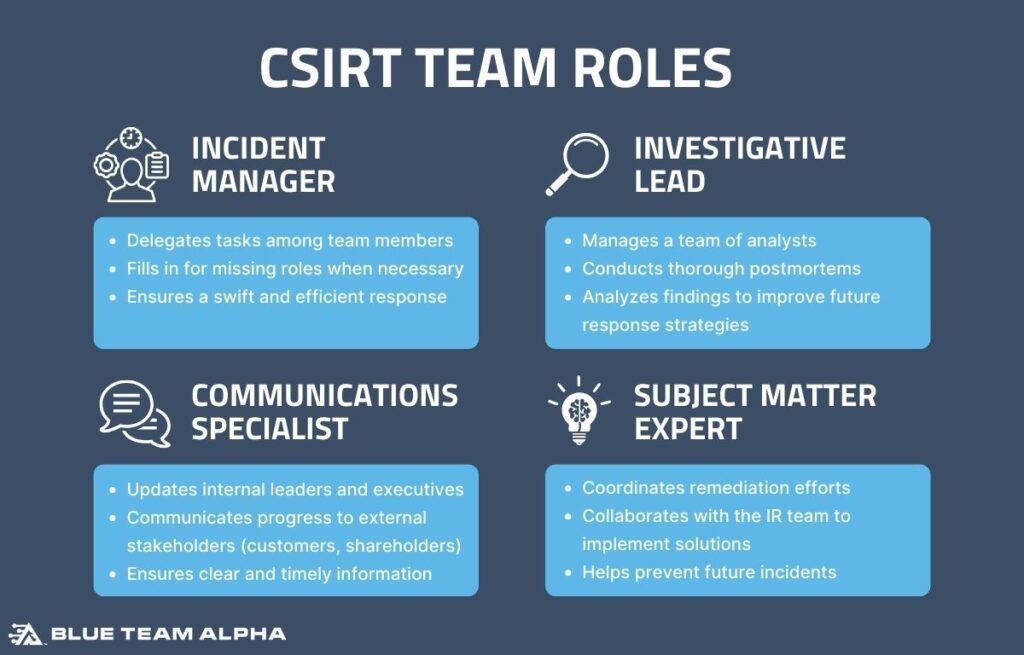
- Incident coordination: Support in organizing communication among technical teams, executives, legal advisors, insurers, and other stakeholders.
- Readiness planning: Development or review of incident response plans, playbooks, escalation procedures, and exercises.
- Post-incident review: Recommendations to address security gaps and strengthen future response capabilities.
When to Contact a Response Firm
Organizations may contact a response provider after detecting ransomware, unauthorized account access, suspicious data transfers, business email compromise, malware, or unexplained system outages. A company may also seek help when it cannot determine whether an alert is a false alarm or a serious compromise.
It is often useful to establish a relationship before an emergency. Pre-arranged agreements can clarify how to reach responders, what services are covered, how access will be granted, and how fees are calculated. During an active incident, those details can otherwise slow down the response.
How to Choose a Cyber Incident Response Company
Look for relevant experience
Ask about the provider’s experience with incidents similar to those that could affect the organization, including its industry, technology environment, and regulatory obligations. Request examples of capabilities and processes without relying solely on marketing claims.
Confirm response availability
Incidents do not always occur during business hours. Ask whether emergency support is available around the clock, how quickly the company can begin work, and whether response is remote, on-site, or both. Clarify what “24/7” means in the service agreement.
Understand the scope and pricing
Review exactly what the engagement includes, such as initial triage, forensic analysis, containment advice, recovery assistance, and reporting. Ask about hourly rates, minimum charges, retainers, travel costs, and any expenses that may be billed separately.
Check independence and potential conflicts
Some providers also sell security products or ongoing services. That may be appropriate, but the organization should understand how recommendations are made and whether any conflicts of interest could affect the investigation.
Review confidentiality and evidence handling
Cyber investigations can involve sensitive business, employee, and customer information. Discuss data handling, access controls, retention, confidentiality, and how evidence will be preserved. Legal counsel can help determine what protections and procedures are appropriate.
Coordinate with insurers and legal counsel
Cyber insurance policies may specify reporting requirements or approved service providers. Before signing an agreement or beginning major response work, check the policy and consult the insurer and legal counsel when practical. Requirements differ by policy and jurisdiction.
Questions to Ask Before Hiring
- What is the process for contacting the response team during an emergency?
- How quickly can the team begin an assessment?
- Which services are included in the proposed engagement?
- How does the company preserve forensic evidence and document its work?
- What information or access will the team need?
- How will progress and urgent decisions be communicated?
- Can the provider coordinate with internal IT, legal counsel, and the insurer?
- What are the fees, billing rules, and cancellation terms?
Preparation Makes a Difference
A response company can provide specialized expertise, but effective incident management also depends on preparation inside the organization. Maintain current backups, protect administrative accounts with multifactor authentication, keep an accurate inventory of critical systems, and establish a clear way to report suspicious activity. Assign decision-makers and document how employees should reach them if email or other usual channels are unavailable.
Organizations should also review their incident response plan regularly and conduct exercises. A tabletop exercise can help leaders and technical staff practice decisions before an actual event creates time pressure.
Choosing a Partner Before an Emergency
Cyber incident response companies can help organizations navigate the technical and operational challenges of a security event. The best fit depends on the organization’s size, risks, technology, insurance requirements, and internal capabilities. Evaluating providers in advance—and agreeing on clear procedures—can help reduce confusion when a suspected incident needs immediate attention.
9 Tips for Choosing the Right Cyber Incident Response Company
- Check the company’s incident response experience.
- Verify 24/7 emergency availability.
- Ask about response times and service levels.
- Review certifications and staff expertise.
- Confirm experience in your industry.
- Check references and case studies.
- Clarify pricing and retainer terms.
- Ensure strong data confidentiality practices.
- Test communication and escalation plans.
Check the company’s incident response experience.
Check the company’s incident response experience before hiring. Ask whether it has handled incidents similar to yours, such as ransomware, data breaches, or business email compromise, and whether it understands your industry and technology environment. Look for clear examples of its response process, including how it investigates incidents, preserves evidence, communicates findings, and supports recovery. Relevant experience can help the team respond more effectively when time is critical.
Verify 24/7 emergency availability.
Before hiring a cyber incident response company, verify that its emergency support is truly available 24/7—not just through an after-hours voicemail or ticketing system. Ask how to reach an on-call responder, how quickly the team can begin triage, and whether support is available on weekends and holidays. Clarify whether rapid response, remote assistance, or on-site help is included in the agreement, so there are no surprises when every minute counts.
Ask about response times and service levels.
Ask potential cyber incident response companies about their response times and service levels before an incident occurs. Find out how quickly they can acknowledge an emergency, begin an investigation, and provide updates, including whether support is available 24/7. Review the service agreement for clear commitments, escalation procedures, and any conditions that could affect response. Knowing what to expect can help your organization choose a provider that meets its needs and act with greater confidence during a cyber incident.
Review certifications and staff expertise.
Review a cyber incident response company’s certifications and staff expertise before hiring. Relevant credentials can indicate that team members have demonstrated knowledge in areas such as digital forensics, incident handling, and cybersecurity, but certifications are only one part of the evaluation. Ask who would work on your case, what experience they have with incidents like yours, and how their skills match your organization’s systems and industry.
Confirm experience in your industry.
Confirm that a cyber incident response company has experience in your industry. Familiarity with your sector’s technology, common threats, regulatory requirements, and business operations can help the team assess an incident more efficiently and offer relevant guidance. Ask about similar cases they’ve handled and how they tailor their response to organizations like yours.
Check references and case studies.
Before hiring a cyber incident response company, check its references and case studies to understand how it has handled situations similar to yours. Look for clear examples of its process, communication, and results, and ask references about responsiveness, expertise, and any challenges during an engagement. Since every incident is different and client details may be confidential, treat case studies as useful context—not a guarantee of future outcomes.
Clarify pricing and retainer terms.
Clarify pricing and retainer terms before hiring a cyber incident response company. Ask what the retainer covers, whether it guarantees access to responders or a specific response time, and how unused hours are handled. Confirm rates for work beyond the retainer, minimum charges, after-hours fees, travel expenses, and any separate costs for forensic analysis or recovery support. A clear written agreement can prevent billing surprises and help your organization make faster decisions during an incident.
Ensure strong data confidentiality practices.
When choosing a cyber incident response company, make sure it follows strong data confidentiality practices. The provider may need access to sensitive business records, customer information, employee data, and forensic evidence, so ask how it controls access, encrypts and stores data, limits sharing, and handles information after the engagement ends. Review confidentiality terms, data retention policies, and breach notification procedures before work begins, and involve legal counsel when appropriate.
Test communication and escalation plans.
Test communication and escalation plans before an incident occurs so everyone knows whom to contact, what information to share, and who has authority to make key decisions. Include your cyber incident response company, internal IT and security teams, executives, legal counsel, and cyber insurer where appropriate. Practice backup communication methods in case email, phones, or other systems are unavailable, and update contact lists and procedures after each exercise.