
cfchris.com

Loading

top cybersecurity companies 2022

Top Cybersecurity Companies 2022: Leading Firms to Know

Top Cybersecurity Companies of 2022

Cybersecurity was a major priority for organizations in 20

Ransomware, phishing, cloud misconfigurations, and attacks on remote workers pushed businesses to strengthen their defenses. As a result, companies sought security partners that could help protect networks, devices, cloud environments, identities, and sensitive data.

There is no single “best” cybersecurity company for every organization. The right choice depends on an organization’s size, risk profile, existing technology, budget, and in-house expertise. The companies below stood out in 2022 for their widely used products, broad security portfolios, or strong presence in key areas of the market. They are presented as a selection, not a definitive ranking.

Palo Alto Networks

Palo Alto Networks offered a broad range of security products in 2022, including next-generation firewalls, cloud security, and threat detection and response tools. Its portfolio appealed to organizations looking to manage several security functions through an integrated platform. The company was especially prominent in network and cloud security.

Fortinet

Fortinet was widely known for its FortiGate firewalls and its broader Fortinet Security Fabric. Its products covered network security, endpoint protection, secure access, and cloud security. Fortinet was a familiar choice for businesses seeking a range of security tools from one vendor.

CrowdStrike

CrowdStrike built its reputation around cloud-delivered endpoint security and threat intelligence. Its Falcon platform brought together endpoint protection, detection, and response capabilities. In 2022, the company was a prominent option for organizations seeking to detect and investigate threats across computers and servers.

Microsoft

Microsoft expanded its security offerings across identity, email, endpoints, cloud services, and threat protection. Products such as Microsoft Defender and Microsoft Sentinel were part of its broader security ecosystem. Organizations already using Microsoft 365 or Azure often considered these tools for their integration with existing systems.

Cisco

Cisco’s security portfolio included network protection, secure access, email security, and threat intelligence. Its established role in enterprise networking made it a significant security provider for organizations looking to connect network infrastructure with security controls.

Zscaler

Zscaler focused on cloud-based security and secure access, including technologies associated with zero-trust architecture. Its services helped organizations connect users to applications without relying solely on traditional network perimeters. This approach was particularly relevant as more employees worked remotely and more applications moved to the cloud.

Check Point Software Technologies

Check Point offered security products for networks, cloud environments, endpoints, and mobile devices. Its firewall and threat-prevention technologies were used by organizations seeking established protections across multiple parts of their IT environments.

Trend Micro

Trend Micro provided security tools for endpoints, networks, email, and cloud workloads. The company served organizations of different sizes and emphasized protection against threats such as ransomware, malware, and targeted attacks.

SentinelOne

SentinelOne’s Singularity platform focused on endpoint security, including automated threat detection and response. The company gained attention as businesses looked for ways to identify and contain attacks quickly, particularly across distributed workforces.

Okta

Okta specialized in identity and access management. Its services helped organizations manage user authentication and control access to applications. As identity-based attacks became a growing concern, identity management became an increasingly important part of many cybersecurity strategies.

Other Notable Providers

Several other companies also played important roles in the cybersecurity market in 20

IBM Security offered consulting and security operations services, while Sophos served businesses with endpoint, network, and managed security products. Mandiant was known for incident response and threat intelligence; Google completed its acquisition of Mandiant in September 2022.

How to Choose a Cybersecurity Company

Before selecting a provider, organizations should identify their most important security needs. A company focused on endpoint protection may not be the best fit for a business primarily seeking identity management or cloud security. Consider the following factors:

  • Coverage: Confirm that the provider can protect the systems, users, and data that matter most.
  • Integration: Check whether its products work with your existing infrastructure and security tools.
  • Threat response: Ask how the provider helps detect, investigate, and contain incidents.
  • Ease of management: Evaluate whether your team has the skills and time to operate the products effectively.
  • Support and services: Review the available technical support, consulting, and managed security options.
  • Total cost: Compare licensing, implementation, training, and ongoing operational costs—not just the initial price.

Conclusion

The top cybersecurity companies of 2022 served different needs, from network and endpoint protection to cloud security and identity management. Rather than choosing a vendor based on name recognition alone, organizations benefit from matching security capabilities to their specific risks and operational requirements. A well-designed cybersecurity program combines appropriate technology with clear policies, trained employees, and a plan for responding to incidents.


Top Cybersecurity Companies of 2022: 9 Tips for Comparing Your Options

  1. Compare 2022 leaders such as Palo Alto Networks, Fortinet, and Check Point by your security needs.
  2. Consider CrowdStrike or SentinelOne for endpoint detection and response.
  3. Look at Zscaler for cloud-delivered security and zero-trust access.
  4. Review Cisco and Microsoft for broad security portfolios and existing-tool integration.
  5. Check each company’s 2022 threat research and incident-response record.
  6. Compare independent test results, not just vendor rankings or marketing claims.
  7. Evaluate deployment effort, support quality, and compatibility with your systems.
  8. Review total cost, including licensing, training, and ongoing operations.
  9. Treat 2022 rankings as historical; verify current products and performance before buying.

Compare 2022 leaders such as Palo Alto Networks, Fortinet, and Check Point by your security needs.

When comparing 2022 cybersecurity leaders such as Palo Alto Networks, Fortinet, and Check Point, start with your organization’s specific security needs rather than choosing by name alone. Consider which areas matter most—such as network protection, cloud security, endpoint defense, or ease of managing multiple tools—then compare each company’s capabilities, compatibility with your existing systems, support options, and total cost.

Consider CrowdStrike or SentinelOne for endpoint detection and response.

For endpoint detection and response in 2022, consider CrowdStrike or SentinelOne. Both offer cloud-based platforms designed to help organizations monitor devices, detect suspicious activity, and respond to threats such as malware and ransomware. Compare their detection and response features, integrations, ease of management, support options, and total cost to find the best fit for your organization’s needs.

Look at Zscaler for cloud-delivered security and zero-trust access.

In 2022, consider Zscaler if your organization needs cloud-delivered security and zero-trust access. Its services are designed to help connect users securely to applications, whether they’re working in the office or remotely, while reducing reliance on traditional network perimeters. Before choosing Zscaler, assess how well its offerings fit your existing systems, security requirements, and budget.

Review Cisco and Microsoft for broad security portfolios and existing-tool integration.

When evaluating the top cybersecurity companies of 2022, consider Cisco and Microsoft for their broad security portfolios and ability to integrate with tools many organizations already use. Cisco offers security solutions across networks, email, cloud, and user access, while Microsoft provides security features for identities, endpoints, email, and cloud environments. Assess how well each provider fits your existing systems, security needs, and team’s capacity to manage its products before making a decision.

Check each company’s 2022 threat research and incident-response record.

Check each company’s 2022 threat research and incident-response record to see how effectively it identified emerging attacks and supported customers during security incidents. Look for timely, detailed research; clear guidance for containing threats and recovering systems; and evidence of experience handling incidents similar to the risks your organization faces. A strong record can indicate practical expertise, but compare sources carefully and consider your own security needs before choosing a provider.

Compare independent test results, not just vendor rankings or marketing claims.

When evaluating the top cybersecurity companies of 2022, compare independent test results rather than relying only on vendor rankings or marketing claims. Look for recent assessments from reputable testing organizations, and check what was tested, how the results were measured, and whether the scenarios match your needs. Independent results can reveal differences in detection, accuracy, performance, and usability—but they’re only one part of the decision. Consider how well each product fits your environment, budget, and team’s ability to manage it.

Evaluate deployment effort, support quality, and compatibility with your systems.

When comparing top cybersecurity companies in 2022, look beyond product features and evaluate how each solution will work in your organization. Consider the time, expertise, and resources required to deploy and maintain it, as well as the quality and availability of customer support when issues arise. Check compatibility with your existing systems, applications, and security tools to avoid costly integration problems and ensure the solution fits smoothly into your environment.

Review total cost, including licensing, training, and ongoing operations.

When comparing cybersecurity companies, look beyond the initial price and review the total cost of ownership. Include licensing fees, implementation, employee training, support, and the ongoing staff time needed to manage the tools. A solution that seems affordable upfront may cost more over time, while a higher-priced option could offer better value if it reduces complexity or operational effort.

Treat 2022 rankings as historical; verify current products and performance before buying.

Treat 2022 cybersecurity rankings as a historical snapshot, not a guide to today’s best options. Companies regularly change their products, pricing, capabilities, and support, while new threats and independent test results can shift the market. Before buying, verify that a provider’s current offerings meet your needs, review recent performance and security evaluations, and compare up-to-date pricing and customer support.
cyber security threats 2022

Cyber Security Threats 2022: Key Risks and How to Stay Protected

Cybersecurity Threats in 2022: What Businesses and Individuals Needed to Know

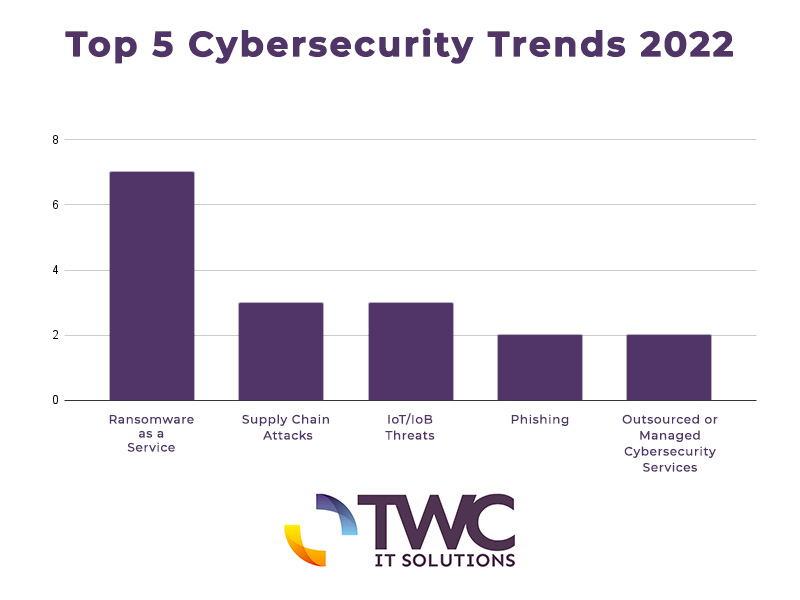
Cybersecurity remained a major challenge in 2022. Criminal groups and state-sponsored actors targeted organizations of every size, while everyday users faced scams, account theft, and data breaches. The year’s attacks showed that threats do not rely on a single weakness: attackers often combine stolen credentials, unpatched software, social engineering, and inadequate security practices to reach their goals.

Ransomware and Data Extortion

Ransomware continued to disrupt businesses, schools, hospitals, and government services in 2022. In many cases, attackers did more than encrypt files. They also stole sensitive information and threatened to publish it unless the victim paid. This “double extortion” approach put pressure on organizations even when they had reliable backups.

Ransomware incidents also affected organizations indirectly. An attack on a service provider or business partner could interrupt operations for customers who were not directly targeted. These incidents underscored the importance of maintaining tested backups and preparing a response plan before an attack occurs.

Phishing and Stolen Credentials

Phishing remained one of the most common ways attackers gained access to systems. Messages might impersonate an employer, supplier, bank, or popular online service, urging recipients to open an attachment, follow a link, or approve a login. Some scams were carefully tailored to a specific person or organization.

Stolen usernames and passwords were also valuable to attackers. Reusing passwords across sites made the problem worse: a password exposed in one breach could be used to attempt access to other accounts. Multi-factor authentication (MFA) helped reduce this risk, but attackers sometimes tried to defeat it through repeated approval requests or by tricking users into sharing verification codes.

Software Vulnerabilities and Supply-Chain Risks

Attackers looked for unpatched software and newly disclosed security flaws. Vulnerabilities in widely used products could expose many organizations at once, especially when systems were connected to the internet or updates were delayed. The continued exploitation of Log4Shell, first disclosed in late 2021, was one reminder that a vulnerability can remain a serious concern well beyond the year it is discovered.

Supply-chain attacks posed another challenge. Rather than targeting every victim individually, attackers could seek weaknesses in a software provider, service company, or other trusted partner. A compromise in one part of the supply chain could create risks for many downstream organizations.

Cloud and Remote-Work Security

Cloud services and remote work remained essential for many organizations, but they also expanded the number of accounts, devices, and systems that needed protection. Misconfigured storage, overly broad access permissions, weak account security, and unmanaged devices could expose sensitive data or provide attackers with a foothold.

Using a cloud service did not automatically make information secure. Organizations still needed to understand their responsibilities, configure services carefully, limit access to what each user required, and monitor accounts for unusual activity.

Cyber Activity Linked to Geopolitical Conflict

The war in Ukraine heightened concerns about cyber operations connected to geopolitical conflict. Wiper malware, which is designed to destroy data rather than demand payment, and other disruptive activity affected organizations in the region. The conflict also prompted warnings that attacks could have consequences beyond their intended targets, particularly when networks and service providers crossed national borders.

Practical Steps to Reduce Risk

No single tool can prevent every attack, but a combination of basic safeguards can make organizations and individuals more resilient:

  • Install security updates promptly, especially for internet-facing systems and business-critical software.
  • Use unique, strong passwords and store them in a reputable password manager.
  • Enable MFA, preferably with phishing-resistant methods where available, and never approve unexpected login requests.
  • Back up important information regularly, keep a protected copy separate from the main network, and test recovery procedures.
  • Train employees to recognize suspicious messages and provide a simple way to report them.
  • Limit user and application permissions to what is necessary, and remove access that is no longer needed.
  • Secure cloud settings, monitor important accounts, and review activity for signs of compromise.
  • Maintain an incident-response plan that identifies who to contact and how to restore essential services.

Lessons from 2022

Cybersecurity threats in 2022 highlighted the close connection between technology, people, and preparedness. Attackers exploited both technical weaknesses and human trust, while disruptions at suppliers and service providers showed how far the effects of one incident could spread. Regular patching, strong account protection, reliable backups, and practiced response plans remain essential defenses against these evolving risks.


9 Benefits of Understanding Cybersecurity Threats in 2022

  1. Raises awareness of evolving cyber risks.
  2. Encourages stronger passwords and MFA.
  3. Promotes timely software updates.
  4. Highlights the value of secure backups.
  5. Improves phishing awareness.
  6. Strengthens incident-response planning.
  7. Encourages careful cloud security.
  8. Reveals supply-chain vulnerabilities.
  9. Supports better cybersecurity investment.


6 Major Cybersecurity Threats and Their Impacts in 2022

  1. Ransomware disrupted essential services.
  2. Phishing scams stole passwords and data.
  3. Unpatched software exposed systems to attacks.
  4. Supply-chain breaches affected many organizations.
  5. Cloud misconfigurations exposed sensitive information.
  6. Cyberattacks caused costly downtime and recovery.

Raises awareness of evolving cyber risks.

One positive outcome of the cybersecurity threats seen in 2022 was increased awareness of how quickly online risks evolve. High-profile ransomware attacks, phishing scams, and software vulnerabilities encouraged individuals and organizations to take cybersecurity more seriously. Many began reviewing their security practices, updating software more promptly, using stronger authentication, and preparing plans for responding to incidents. This greater awareness helped make cybersecurity a more visible and ongoing priority.

Encourages stronger passwords and MFA.

One positive outcome of the cybersecurity threats seen in 2022 was greater awareness of the need for stronger account security. As phishing, data breaches, and stolen credentials continued to put accounts at risk, more people and organizations began using unique, complex passwords and password managers. Many also adopted multi-factor authentication (MFA), which adds an extra verification step beyond a password. While these measures cannot prevent every attack, they make it harder for criminals to access accounts with stolen or guessed credentials.

Promotes timely software updates.

One positive outcome of the cybersecurity threats seen in 2022 was greater awareness of the need for timely software updates. High-profile attacks that exploited known vulnerabilities showed how quickly unpatched systems can become targets. In response, organizations and individuals were encouraged to install security updates promptly, helping close vulnerabilities, protect sensitive information, and reduce the risk of disruption.

Highlights the value of secure backups.

The cybersecurity threats of 2022 highlighted the value of secure, regularly tested backups. Ransomware attacks often encrypted victims’ files and threatened to expose stolen data, disrupting businesses and critical services. Organizations with protected, up-to-date backups could restore important information and resume operations more quickly, reducing reliance on paying a ransom. Backups are not a complete defense, but keeping copies separate from everyday systems and testing recovery plans can make a major difference when an attack occurs.

Improves phishing awareness.

The cybersecurity threats seen in 2022 helped improve phishing awareness by making people more alert to suspicious emails, texts, and login requests. As phishing scams became more convincing and targeted, organizations increased employee training and encouraged users to verify unexpected messages before clicking links, opening attachments, or sharing sensitive information. This greater awareness can help people recognize common warning signs and reduce the risk of stolen credentials, financial loss, and data breaches.

Strengthens incident-response planning.

The cybersecurity threats of 2022 underscored the importance of preparing for incidents before they happen. Ransomware, phishing, and attacks on service providers showed how quickly a security issue can disrupt operations, expose data, or affect customers. In response, organizations strengthened incident-response plans by clarifying roles, improving communication, practicing recovery procedures, and testing backups. These preparations can help teams act faster, limit damage, and restore essential services when an incident occurs.

Encourages careful cloud security.

The cybersecurity threats of 2022 encouraged organizations to take a closer look at cloud security. As businesses relied more heavily on cloud services, incidents involving misconfigured storage, exposed accounts, and excessive access permissions showed that moving data online did not make it secure automatically. These risks prompted companies to review their cloud settings, strengthen authentication, limit access to sensitive information, and monitor accounts for suspicious activity. While the threats were serious, they helped make careful cloud security a higher priority.

Reveals supply-chain vulnerabilities.

One unexpected benefit of the cyberattacks seen in 2022 was that they exposed vulnerabilities across software and business supply chains. Incidents showed how a weakness in one provider, product, or service could put many connected organizations at risk. This greater awareness encouraged businesses to review third-party access, assess vendor security practices, and strengthen monitoring and response plans. While the attacks caused serious harm, the lessons helped organizations better understand and address risks that might otherwise have gone unnoticed.

Supports better cybersecurity investment.

The cybersecurity threats of 2022 highlighted the real costs of data breaches, ransomware, and service disruptions, encouraging many organizations to invest more in protecting their systems. In response, businesses strengthened security tools, improved employee training, updated outdated software, and developed more effective incident-response plans. Although the threats themselves were harmful, the increased awareness they created helped make cybersecurity a higher priority.

Ransomware disrupted essential services.

In 2022, ransomware attacks disrupted essential services, affecting organizations such as hospitals, schools, local governments, and critical infrastructure providers. When systems were locked or taken offline, staff could lose access to important records and tools, delaying services and forcing some operations to rely on manual work. These disruptions showed that ransomware can harm more than a company’s finances: it can interfere with services people depend on every day and create serious risks for communities.

Phishing scams stole passwords and data.

One major cybersecurity threat in 2022 was phishing, which tricked people into clicking deceptive links or sharing sensitive information. Fraudulent emails, text messages, and websites often impersonated trusted companies or coworkers to steal passwords, financial details, and personal data. Stolen credentials could then let criminals access accounts, expose confidential information, or launch further attacks.

Unpatched software exposed systems to attacks.

Unpatched software exposed systems to attacks in 2022 because known security flaws gave cybercriminals a way to break into devices, networks, and online services. When organizations delayed installing updates, attackers could exploit vulnerabilities to steal data, install malware, or disrupt operations. This risk was especially serious for internet-connected systems and widely used software, where a single unaddressed flaw could put many users at risk. Regularly applying security updates helps close these gaps before attackers can take advantage of them.

Supply-chain breaches affected many organizations.

Supply-chain breaches were a major cybersecurity concern in 2022 because attackers could compromise a software provider, contractor, or other trusted partner and potentially reach many organizations at once. Instead of attacking each victim directly, criminals exploited a shared service or product to spread malicious software, steal data, or disrupt operations across multiple customers. These incidents showed that an organization’s security depends not only on its own defenses, but also on the practices and resilience of the third parties it relies on.

Cloud misconfigurations exposed sensitive information.

In 2022, cloud misconfigurations exposed sensitive information when organizations left storage, databases, or other services improperly secured. Public access settings, weak permissions, and overlooked security controls could allow unauthorized people to view or download confidential data. These incidents highlighted that moving information to the cloud does not automatically make it secure; organizations must configure services carefully, regularly review access, and monitor for exposure.

Cyberattacks caused costly downtime and recovery.

Cyberattacks in 2022 often caused costly downtime and recovery for affected organizations. When ransomware, data breaches, or service disruptions made systems unavailable, businesses could lose sales, delay essential work, and struggle to serve customers. Recovery added further expenses, including restoring data, investigating the incident, hiring security specialists, and strengthening systems to prevent another attack. For some organizations, the disruption also damaged customer trust and interrupted relationships with suppliers and partners.