
cfchris.com

Loading

it strategy consulting

Maximizing Business Success Through IT Strategy Consulting Services

Article: IT Strategy Consulting

The Importance of IT Strategy Consulting in Today’s Business Environment

In the fast-paced and ever-evolving world of technology, businesses need to stay ahead of the curve to remain competitive. This is where IT strategy consulting plays a crucial role. IT strategy consulting involves working with experts to develop a comprehensive plan that aligns technology with business goals and objectives.

Benefits of IT Strategy Consulting

Alignment with Business Objectives: IT strategy consulting ensures that technology initiatives are in line with the overall business strategy. This alignment helps maximize efficiency and productivity.

Risk Management: By identifying potential risks and vulnerabilities in the IT infrastructure, consultants can help businesses mitigate these risks and enhance security measures.

Cost Optimization: Consultants analyze existing systems and processes to identify areas where cost savings can be achieved through optimization or consolidation of resources.

Key Components of IT Strategy Consulting

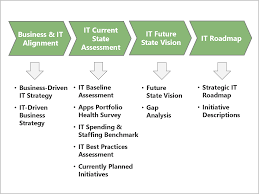
Assessment: Consultants conduct a thorough assessment of the current IT infrastructure, processes, and systems to identify strengths, weaknesses, opportunities, and threats.

Planning: Based on the assessment, consultants develop a strategic plan that outlines goals, objectives, timelines, and resource requirements for implementing new technologies or improving existing ones.

Implementation: Consultants work closely with businesses to implement the strategic plan, ensuring a smooth transition and minimal disruption to operations.

The Future of IT Strategy Consulting

In an increasingly digital world, the demand for IT strategy consulting services is only expected to grow. Businesses that invest in developing robust IT strategies will have a competitive edge and be better positioned to adapt to changing market dynamics.

Contact us today to learn more about how our IT strategy consulting services can help your business thrive in the digital age.


9 Essential Tips for Effective IT Strategy Consulting

  1. Understand the client’s business goals and objectives thoroughly before proposing any IT strategy.
  2. Stay updated with the latest trends and technologies in the IT industry to provide innovative solutions.
  3. Collaborate closely with key stakeholders to ensure alignment between IT strategy and overall business strategy.
  4. Consider scalability and flexibility when designing IT strategies to accommodate future growth and changes.
  5. Evaluate risks associated with implementing new IT strategies and develop mitigation plans accordingly.
  6. Communicate complex technical concepts in a clear and concise manner to non-technical stakeholders.
  7. Regularly review and adjust IT strategies based on feedback, performance metrics, and market dynamics.
  8. Ensure that proposed IT strategies are cost-effective and provide measurable value to the client’s business.
  9. Encourage a culture of continuous learning within the organization to adapt to evolving technology landscapes.

Understand the client’s business goals and objectives thoroughly before proposing any IT strategy.

It is essential in IT strategy consulting to thoroughly understand the client’s business goals and objectives before proposing any IT strategy. By gaining a deep understanding of the client’s specific needs and desired outcomes, consultants can tailor their recommendations to align technology solutions with the overarching business objectives. This approach ensures that the proposed IT strategy is not only technically sound but also directly contributes to the client’s success and long-term growth.

To excel in IT strategy consulting, it is essential to stay updated with the latest trends and technologies in the industry. By keeping abreast of emerging innovations, consultants can offer cutting-edge solutions that address clients’ evolving needs and challenges. Embracing new technologies allows for the development of innovative strategies that drive business growth and competitive advantage.

Collaborate closely with key stakeholders to ensure alignment between IT strategy and overall business strategy.

Collaborating closely with key stakeholders is a crucial tip in IT strategy consulting to ensure alignment between IT strategy and overall business strategy. By engaging with stakeholders from various departments and levels of the organization, IT consultants can gain valuable insights into the business’s goals, challenges, and priorities. This collaboration helps in developing an IT strategy that not only meets the technological needs of the organization but also directly contributes to achieving its broader business objectives. Effective communication and collaboration with key stakeholders foster a unified vision and ensure that technology initiatives are strategically aligned with the company’s long-term success.

Consider scalability and flexibility when designing IT strategies to accommodate future growth and changes.

When engaging in IT strategy consulting, it is essential to consider scalability and flexibility in the design of strategies to accommodate future growth and changes. By incorporating scalability, businesses can ensure that their IT infrastructure can expand seamlessly as the organization grows. Flexibility allows for adjustments and adaptations to meet evolving technology trends and business requirements. This proactive approach not only prepares businesses for future challenges but also enables them to leverage opportunities for innovation and efficiency.

Evaluate risks associated with implementing new IT strategies and develop mitigation plans accordingly.

When embarking on new IT strategies, it is crucial to evaluate the potential risks that come with implementation. By identifying and understanding these risks, businesses can proactively develop mitigation plans to address them effectively. This proactive approach not only helps in minimizing potential disruptions but also ensures a smoother transition to the new IT strategies, ultimately leading to successful outcomes and improved business performance.

Communicate complex technical concepts in a clear and concise manner to non-technical stakeholders.

When engaging in IT strategy consulting, it is essential to effectively communicate complex technical concepts to non-technical stakeholders in a clear and concise manner. By translating intricate IT jargon into easily understandable language, consultants can ensure that all stakeholders, regardless of their technical expertise, grasp the significance and implications of proposed strategies. This streamlined communication approach fosters better collaboration, alignment of goals, and informed decision-making within the organization.

Regularly review and adjust IT strategies based on feedback, performance metrics, and market dynamics.

Regularly reviewing and adjusting IT strategies based on feedback, performance metrics, and market dynamics is essential for ensuring the continued relevance and effectiveness of the technology initiatives within a business. By staying attuned to feedback from stakeholders, monitoring key performance metrics, and staying informed about market trends, organizations can proactively adapt their IT strategies to meet evolving needs and seize new opportunities. This iterative approach not only fosters agility and innovation but also helps align technology investments with overall business objectives for sustained success in today’s dynamic business environment.

Ensure that proposed IT strategies are cost-effective and provide measurable value to the client’s business.

It is essential in IT strategy consulting to ensure that any proposed IT strategies are not only cost-effective but also deliver measurable value to the client’s business. By focusing on cost-effectiveness, businesses can optimize their resources and investments, maximizing the return on their IT initiatives. Additionally, emphasizing measurable value ensures that the impact of the proposed strategies can be quantified and aligned with the client’s business objectives, ultimately leading to tangible benefits and a more successful IT implementation.

Encourage a culture of continuous learning within the organization to adapt to evolving technology landscapes.

To thrive in today’s rapidly changing technology landscape, it is essential for organizations to foster a culture of continuous learning. By encouraging employees to stay updated on the latest technological advancements and trends, businesses can adapt more effectively to the evolving IT environment. This proactive approach not only enhances the organization’s competitiveness but also empowers individuals to contribute meaningfully to innovation and growth.
ai

Unlocking the Potential of AI: A Journey into Intelligent Technologies

The Rise of Artificial Intelligence

The Rise of Artificial Intelligence

Artificial Intelligence (AI) has rapidly evolved from a futuristic concept to an integral part of our daily lives. From virtual assistants like Siri and Alexa to advanced data analytics and autonomous vehicles, AI is transforming the way we live and work.

What is Artificial Intelligence?

Artificial Intelligence refers to the simulation of human intelligence in machines that are programmed to think and learn like humans. These intelligent systems can perform tasks that typically require human intelligence, such as visual perception, speech recognition, decision-making, and language translation.

Types of AI

AI can be broadly categorized into three types:

  • Narrow AI: Also known as Weak AI, it is designed to perform a narrow task (e.g., facial recognition or internet searches).
  • General AI: Also known as Strong AI, it possesses the ability to understand, learn, and apply knowledge across a broad range of tasks—much like a human being.
  • Superintelligent AI: This hypothetical form of AI surpasses human intelligence in all aspects. While still theoretical, it raises significant ethical and existential questions.

Applications of AI

The applications of AI are vast and varied. Some notable examples include:

Healthcare

AI is revolutionizing healthcare by providing tools for early diagnosis, personalized treatment plans, and advanced research capabilities. Machine learning algorithms can analyze medical data to detect patterns and predict outcomes more accurately than traditional methods.

Finance

In the financial sector, AI is used for fraud detection, risk management, algorithmic trading, and personalized banking services. By analyzing large datasets quickly and accurately, AI helps financial institutions make better decisions.

Transportation

The development of autonomous vehicles relies heavily on AI technologies such as computer vision and machine learning. These vehicles use sensors and algorithms to navigate roads safely without human intervention.

The Future of AI

The future of artificial intelligence holds immense potential but also presents challenges that need addressing. Ethical considerations such as privacy concerns, job displacement due to automation, and the need for robust regulatory frameworks are critical areas that require attention.

Sustainability:

  • Sustainable Development Goals (SDGs):
    • No Poverty: Utilizing AI-driven tools for economic forecasting can help identify regions at risk of poverty before crises occur.
    • Zero Hunger: Predictive analytics can optimize food distribution networks ensuring no one goes hungry even during supply chain disruptions.

Conclusion

The rise of artificial intelligence marks one of the most significant technological advancements in recent history. As we continue to explore its possibilities responsibly while addressing associated risks diligently—AI promises not just incremental improvements but transformative changes across all sectors globally enhancing overall quality-of-life standards exponentially over time!

© 2023 The Rise of Artificial Intelligence | All rights reserved.


8 Benefits of AI: From Increased Efficiency to Driving Innovation

  1. 1. Increased Efficiency
  2. 2. Improved Accuracy
  3. 3. Enhanced Decision-Making
  4. 4. Personalization
  5. 5. Predictive Capabilities
  6. 6. Scalability
  7. 7. Safety Enhancement
  8. 8. Innovation Catalyst


Challenges of AI: Job Displacement, Bias, Privacy, and Ethical Issues

  1. Job Displacement
  2. Bias and Discrimination
  3. Privacy Concerns
  4. Ethical Dilemmas

1. Increased Efficiency

Artificial Intelligence significantly boosts efficiency by automating repetitive and mundane tasks, allowing businesses to save both time and resources. By leveraging AI technologies, companies can streamline operations such as data entry, customer service inquiries, and routine maintenance tasks. This automation not only reduces the likelihood of human error but also frees up employees to focus on more strategic and creative endeavors. As a result, organizations can achieve higher productivity levels, faster turnaround times, and ultimately, a more competitive edge in their respective markets.

2. Improved Accuracy

Artificial Intelligence (AI) offers the significant advantage of improved accuracy in data processing. AI systems are capable of analyzing vast amounts of data with exceptional precision, far surpassing human capabilities. By leveraging machine learning algorithms and advanced computational techniques, AI can identify patterns, detect anomalies, and make predictions with a high degree of accuracy. This enhanced precision is particularly beneficial in fields such as healthcare, finance, and engineering, where even minor errors can have substantial consequences. As a result, AI-driven solutions are not only more reliable but also contribute to better decision-making and increased efficiency across various industries.

3. Enhanced Decision-Making

Artificial Intelligence significantly enhances decision-making by leveraging advanced algorithms to process and analyze complex datasets with remarkable speed and accuracy. These AI-driven insights enable businesses and organizations to make more informed, data-backed decisions that can lead to improved outcomes. By identifying patterns, trends, and correlations within vast amounts of information, AI helps reduce human error and biases, ultimately facilitating more strategic planning and operational efficiency. This capability is particularly valuable in fields such as finance, healthcare, and logistics, where timely and precise decision-making is crucial for success.

4. Personalization

Artificial Intelligence (AI) significantly enhances personalization across various domains, notably in marketing and healthcare. In marketing, AI algorithms analyze consumer behavior and preferences to deliver tailored content, product recommendations, and targeted advertisements, thereby improving customer engagement and satisfaction. In healthcare, AI-driven tools can customize treatment plans based on individual patient data, such as genetic information and medical history, leading to more effective and efficient care. This level of personalization not only optimizes outcomes but also fosters a more individualized approach that meets the unique needs of each person.

5. Predictive Capabilities

Artificial Intelligence’s predictive capabilities are revolutionizing various industries by leveraging historical data to forecast trends and outcomes with remarkable accuracy. By analyzing vast amounts of past data, AI algorithms can identify patterns and correlations that might be missed by human analysts. This enables businesses to make informed decisions, anticipate market shifts, and optimize operations. For instance, in finance, AI can predict stock market trends, helping investors make strategic choices. In healthcare, predictive models can foresee disease outbreaks or patient health trajectories, allowing for proactive measures. Overall, the ability of AI to predict future events based on historical data is a powerful tool that drives efficiency and innovation across multiple sectors.

6. Scalability

Artificial Intelligence (AI) excels in scalability, allowing systems to effortlessly expand and manage increasing demands without requiring extensive manual intervention. This capability is particularly beneficial for businesses experiencing rapid growth or fluctuating workloads. AI solutions can dynamically adjust their processing power and resources to accommodate larger datasets, more complex tasks, or higher volumes of transactions. By automating these adjustments, AI ensures consistent performance and efficiency, enabling organizations to meet customer needs and market demands seamlessly. This scalability not only enhances operational agility but also reduces the need for additional human resources, leading to significant cost savings and improved productivity.

7. Safety Enhancement

Artificial Intelligence significantly enhances safety across various sectors, particularly in transportation. By leveraging predictive maintenance, AI systems can anticipate equipment failures before they occur, ensuring timely repairs and reducing the risk of accidents. Additionally, AI-driven risk analysis helps identify potential hazards and implement preventative measures, thereby increasing overall operational safety. This proactive approach not only minimizes downtime but also protects lives by preventing dangerous situations from arising in the first place.

8. Innovation Catalyst

AI serves as an innovation catalyst by empowering the creation of novel products, services, and solutions. By harnessing the capabilities of artificial intelligence, businesses and industries can explore uncharted territories, uncover hidden insights, and pioneer groundbreaking advancements that drive progress and transform the way we live and work. AI’s ability to analyze vast amounts of data, identify patterns, and generate valuable predictions opens up a realm of possibilities for innovation, sparking creativity and propelling organizations towards a future defined by ingenuity and forward-thinking approaches.

Job Displacement

AI automation poses a significant challenge in the form of job displacement. As machines and algorithms become increasingly capable of performing tasks that were once the domain of human workers, many traditional roles are at risk of becoming obsolete. This shift can lead to widespread unemployment and economic instability, particularly in industries heavily reliant on manual labor and routine tasks. While AI has the potential to create new job opportunities in emerging sectors, the transition period may be difficult for displaced workers who must adapt to new skill requirements and job markets. Addressing this issue requires proactive measures such as retraining programs, educational initiatives, and supportive policies to ensure a smooth transition for affected individuals.

Bias and Discrimination

AI algorithms, while powerful, are not immune to the biases present in their training data. When these algorithms are trained on datasets that reflect historical prejudices or societal inequalities, they can inadvertently perpetuate and even amplify these biases. This can lead to discriminatory outcomes in critical decision-making processes such as hiring, lending, and law enforcement. For instance, an AI system used in recruitment might favor candidates from certain demographics if the training data predominantly includes successful applicants from those groups. Similarly, predictive policing algorithms can disproportionately target minority communities if they are based on biased crime data. Addressing these issues requires a concerted effort to ensure diverse and representative datasets, as well as ongoing scrutiny and adjustment of AI models to mitigate bias and promote fairness.

Privacy Concerns

The integration of AI in data analysis brings significant privacy concerns to the forefront. As AI systems process vast amounts of personal information, there is an increased risk of unauthorized access and data breaches. These sophisticated algorithms can potentially exploit sensitive data without individuals’ consent, leading to privacy violations. Moreover, the lack of transparency in how AI models operate makes it difficult for users to understand how their information is being used or shared. This growing concern emphasizes the need for robust security measures and regulatory frameworks to protect personal data from misuse and ensure that privacy rights are upheld in the age of artificial intelligence.

Ethical Dilemmas

The development of superintelligent AI presents significant ethical dilemmas that society must address. One primary concern is control: who will govern these powerful systems, and how can we ensure they act in humanity’s best interest? Accountability also poses a challenge, as it becomes difficult to determine who is responsible for the actions and decisions made by an autonomous AI. Moreover, the potential existential risks associated with superintelligent AI cannot be overlooked; if these systems surpass human intelligence, they could make unpredictable decisions that might threaten our very existence. Addressing these ethical issues is crucial to harnessing the benefits of AI while mitigating its risks.