cfchris.com

Loading

symbolic ai

Exploring the Future of Symbolic AI: Bridging Logic and Learning

Understanding Symbolic AI

Understanding Symbolic AI

Symbolic AI, often referred to as “Good Old-Fashioned Artificial Intelligence” (GOFAI), is a branch of artificial intelligence that focuses on the use of high-level symbolic representations to enable machines to perform reasoning and problem-solving tasks. Unlike other forms of AI that rely heavily on data-driven approaches, such as neural networks in machine learning, symbolic AI emphasizes the use of explicit rules and logic.

The Foundations of Symbolic AI

The core idea behind symbolic AI is to represent human knowledge in a way that computers can process and manipulate. This involves using symbols to represent various concepts and employing logical rules to manipulate these symbols. The approach is based on the notion that human intelligence can be modeled through the manipulation of symbols.

Key Components

  • Knowledge Representation: This involves encoding information about the world in a form that a computer system can utilize to solve complex tasks. Common methods include semantic networks, frames, and ontologies.
  • Inference Engines: These are systems designed to apply logical rules to the knowledge base in order to derive new information or make decisions.
  • Rule-Based Systems: These systems use sets of “if-then” rules for decision-making processes. They are particularly useful in expert systems where domain-specific knowledge is crucial.

Applications of Symbolic AI

Symbolic AI has been successfully applied in various domains where structured reasoning and expert knowledge are essential:

  • Expert Systems: These systems emulate the decision-making ability of a human expert. They have been used extensively in areas such as medical diagnosis, financial services, and technical support.
  • NLP (Natural Language Processing): Early NLP systems relied heavily on symbolic approaches for understanding syntax and semantics.
  • Theorem Proving: Symbolic AI techniques are used in automated theorem proving where logical proofs are generated by machines.

The Evolution and Challenges

While symbolic AI was dominant during the early years of artificial intelligence research, it faced significant challenges due to its limitations in handling uncertainty and learning from data. This led to the rise of machine learning techniques which excel at pattern recognition and learning from large datasets.

The main challenges faced by symbolic AI include:

  • Lack of Learning Capability: Traditional symbolic systems do not learn from experience or adapt over time without manual intervention.
  • Difficulties with Uncertainty: Handling ambiguous or uncertain information is challenging for rule-based systems without probabilistic reasoning extensions.

The Future of Symbolic AI

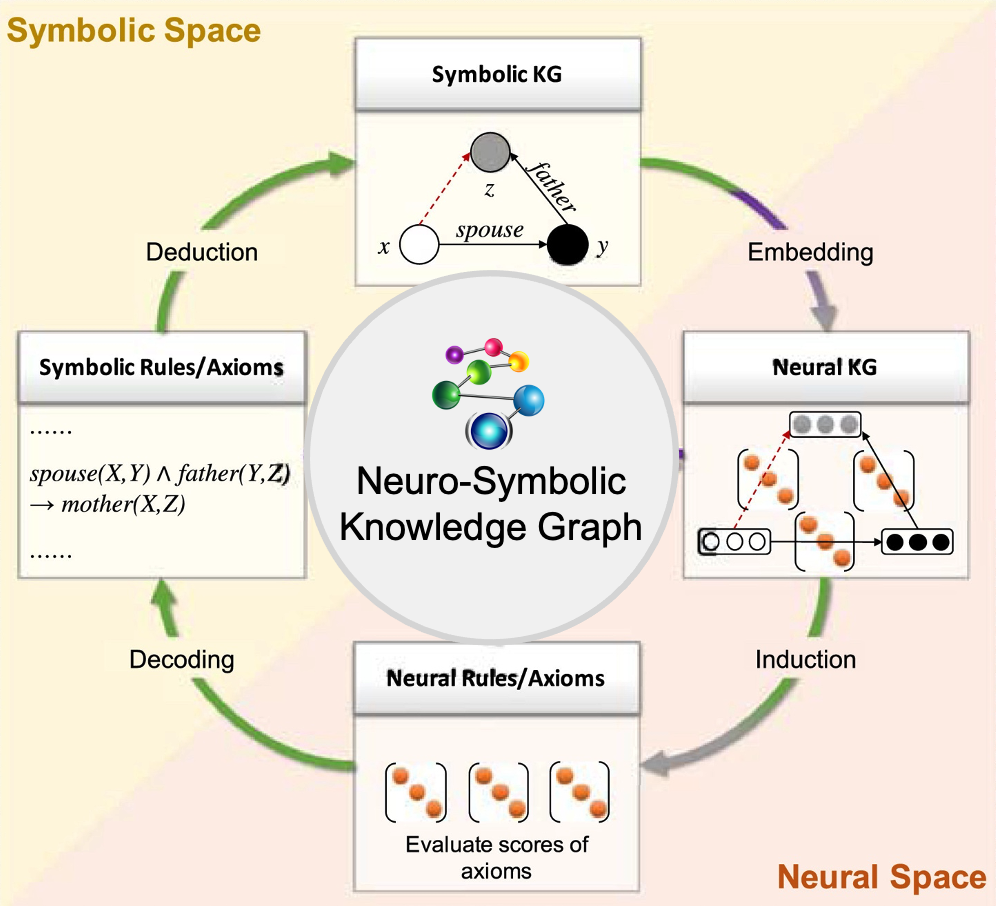
Todays’ advancements in hybrid models aim to combine the strengths of both symbolic and sub-symbolic (e.g., machine learning) approaches. By integrating explicit reasoning with data-driven insights, researchers hope to create more robust AI systems capable of complex decision-making while maintaining interpretability.

This synergy could lead to breakthroughs across various fields by leveraging structured knowledge representations alongside adaptive learning capabilities offered by modern machine learning techniques.

© 2023 Understanding Symbolic AI – All Rights Reserved


Mastering Symbolic AI: 7 Essential Tips for Navigating Knowledge Representation, Expert Systems, and Hybrid Approaches

  1. Understand the principles of symbolic AI, which focuses on manipulating symbols to perform tasks.
  2. Learn about knowledge representation techniques used in symbolic AI, such as logic and rules.
  3. Explore expert systems, a type of symbolic AI that emulates human expertise in a specific domain.
  4. Understand how symbolic AI can handle reasoning and inference to make decisions.
  5. Study natural language processing in the context of symbolic AI for understanding and generating human language.
  6. Be aware of the limitations of symbolic AI, such as scalability issues with complex domains.
  7. Stay updated on advancements in hybrid approaches that combine symbolic AI with other AI techniques like machine learning.

Understand the principles of symbolic AI, which focuses on manipulating symbols to perform tasks.

Symbolic AI is a fascinating area of artificial intelligence that emphasizes the manipulation of symbols to perform complex tasks. At its core, symbolic AI relies on representing knowledge through symbols and applying logical rules to these representations to derive conclusions or solve problems. This approach mimics human reasoning by using explicit, interpretable rules and structured data, allowing for precise decision-making and problem-solving in well-defined domains. Understanding the principles of symbolic AI involves grasping how these symbolic systems are constructed and how they can be used to model intelligent behavior. This involves learning about knowledge representation techniques, such as semantic networks or ontologies, and understanding how inference engines apply logical operations to manipulate symbols effectively. By mastering these principles, one can appreciate how symbolic AI contributes to fields like expert systems and natural language processing, where clear logic and reasoning are crucial.

Learn about knowledge representation techniques used in symbolic AI, such as logic and rules.

Understanding knowledge representation techniques is crucial when diving into symbolic AI, as these techniques form the backbone of how machines interpret and manipulate information. Symbolic AI relies on explicit representations of knowledge, often using logic-based structures and rule-based systems to simulate human reasoning. By learning about various methods such as propositional and predicate logic, semantic networks, frames, and ontologies, one can grasp how symbolic AI systems organize complex information into understandable formats. These techniques enable computers to perform tasks like problem-solving and decision-making by applying logical rules to the structured data. Mastery of knowledge representation not only aids in building more sophisticated AI systems but also enhances one’s ability to create interpretable models that can explain their reasoning processes clearly.

Explore expert systems, a type of symbolic AI that emulates human expertise in a specific domain.

Expert systems are a fascinating application of symbolic AI, designed to replicate the decision-making abilities of a human expert within a specific domain. These systems utilize a knowledge base composed of facts and rules, often represented in “if-then” statements, to solve complex problems that typically require specialized human expertise. By processing this structured information through an inference engine, expert systems can provide solutions, recommendations, or diagnoses similar to those a human expert might offer. They have been successfully implemented in various fields such as medical diagnosis, financial analysis, and technical support, where accurate and reliable decision-making is crucial. As a type of symbolic AI, expert systems highlight the power of rule-based reasoning and structured knowledge representation in mimicking human cognitive processes.

Understand how symbolic AI can handle reasoning and inference to make decisions.

Symbolic AI excels in handling reasoning and inference, which are critical for making informed decisions. By utilizing structured representations of knowledge, such as rules and logic, symbolic AI systems can process complex information and draw logical conclusions. This capability allows these systems to simulate human-like reasoning by applying predefined rules to known facts, effectively navigating through decision trees to reach a conclusion. For instance, in expert systems, symbolic AI can analyze a set of conditions and apply its rule-based logic to diagnose problems or suggest solutions. This approach ensures that decisions are not only consistent but also explainable, as each step in the reasoning process can be traced back to specific rules and knowledge representations used by the system.

Study natural language processing in the context of symbolic AI for understanding and generating human language.

Studying natural language processing (NLP) within the context of symbolic AI offers valuable insights into understanding and generating human language. Symbolic AI, with its focus on rule-based systems and knowledge representation, provides a structured approach to tackling the complexities of language. By leveraging symbolic methods, NLP can benefit from explicit grammar rules, semantic networks, and ontologies that capture the intricacies of syntax and meaning. This approach allows for more precise language interpretation and generation, enabling machines to better mimic human-like understanding. Moreover, integrating symbolic AI with modern data-driven techniques can enhance NLP applications by combining the strengths of logical reasoning with adaptive learning capabilities. This fusion holds promise for creating more sophisticated systems capable of nuanced language processing tasks such as translation, sentiment analysis, and conversational agents.

Be aware of the limitations of symbolic AI, such as scalability issues with complex domains.

When working with symbolic AI, it’s crucial to recognize its limitations, particularly regarding scalability in complex domains. Symbolic AI systems rely on predefined rules and logic to process information, which can become cumbersome and inefficient as the complexity of the domain increases. As the number of variables and possible interactions grows, maintaining and updating the rule sets can become increasingly difficult, leading to performance bottlenecks. Additionally, symbolic AI struggles with handling ambiguous or uncertain data, which is often present in real-world applications. Understanding these limitations is essential for effectively integrating symbolic AI into broader AI strategies and ensuring that it complements rather than hinders overall system performance.

Stay updated on advancements in hybrid approaches that combine symbolic AI with other AI techniques like machine learning.

Staying updated on advancements in hybrid approaches that combine symbolic AI with other AI techniques, such as machine learning, is essential for anyone involved in the field of artificial intelligence. These hybrid models aim to leverage the strengths of both symbolic reasoning and data-driven learning to create more powerful and versatile AI systems. By integrating the structured, rule-based logic of symbolic AI with the adaptive capabilities of machine learning, researchers are developing systems that can not only reason and make decisions based on explicit knowledge but also learn from vast amounts of data. This combination enhances the ability to tackle complex problems across various domains, offering solutions that are both interpretable and capable of handling uncertainty. Keeping abreast of these developments can provide valuable insights into future trends and applications in AI technology.

Unleashing the Power of Cognitive AI: Shaping the Future of Artificial Intelligence

Understanding Cognitive AI: The Future of Artificial Intelligence

Cognitive AI represents a significant leap forward in the field of artificial intelligence, aiming to emulate human thought processes in a more sophisticated and nuanced manner. Unlike traditional AI systems that rely on pre-defined algorithms and data sets, cognitive AI seeks to understand, learn, and interact with the world similarly to how humans do.

What is Cognitive AI?

Cognitive AI refers to systems that can simulate human cognitive functions such as perception, reasoning, learning, and decision-making. These systems are designed to mimic the way the human brain works by using various technologies like machine learning, natural language processing, and neural networks.

The goal of cognitive AI is not just to process data but to understand it contextually. This allows for more dynamic interactions between machines and humans, enabling machines to adapt over time based on new information and experiences.

Key Features of Cognitive AI

  • Learning from Experience: Cognitive AI systems can learn from past interactions and improve their performance without human intervention.
  • Natural Language Processing: These systems can understand and generate human language in a way that feels natural and intuitive.
  • Contextual Understanding: Cognitive AI can grasp context beyond mere data points, allowing for more relevant responses and actions.
  • Adaptive Decision-Making: By analyzing patterns and trends, cognitive AI can make informed decisions even in complex situations.

Applications of Cognitive AI

The potential applications for cognitive AI are vast across various industries:

  • Healthcare: In healthcare, cognitive AI can assist in diagnosing diseases by analyzing medical records and imaging data with high accuracy.
  • Finance: Financial institutions use cognitive AI for fraud detection, risk assessment, and personalized customer service.
  • E-commerce: Retailers leverage cognitive AI for personalized shopping experiences through recommendation engines that understand customer preferences.
  • Education: Educational platforms utilize cognitive AI to create adaptive learning environments tailored to individual student needs.

The Future of Cognitive AI

The development of cognitive AI is still in its early stages but holds immense promise for transforming how we interact with technology. As these systems become more advanced, they will likely play an integral role in enhancing productivity across sectors while also raising important ethical considerations regarding privacy and decision-making autonomy.

Cognitive AI represents not just an evolution of technology but a revolution in how machines can augment human capabilities. As research progresses, it will be crucial to balance innovation with ethical responsibility to ensure these powerful tools benefit society as a whole.

Conclusion

Cognitive AI is poised to redefine the boundaries between humans and machines by enabling more natural interactions and smarter decision-making processes. As this technology continues to evolve, it promises exciting opportunities while also challenging us to think critically about its implications for our future world.


7 Essential Tips for Effectively Implementing Cognitive AI Solutions

  1. Understand the problem domain thoroughly before implementing a cognitive AI solution.
  2. Ensure that the data used to train cognitive AI models is of high quality and relevant to the task at hand.
  3. Regularly evaluate and update cognitive AI models to maintain their accuracy and relevance over time.
  4. Consider ethical implications, biases, and privacy concerns when developing cognitive AI systems.
  5. Provide clear explanations of how cognitive AI systems make decisions to enhance transparency and trust.
  6. Combine cognitive AI with human expertise for more effective problem-solving and decision-making.
  7. Stay informed about advancements in cognitive AI technology to leverage new tools and techniques.

Understand the problem domain thoroughly before implementing a cognitive AI solution.

Before implementing a cognitive AI solution, it’s crucial to thoroughly understand the problem domain. This involves gaining a deep insight into the specific challenges and requirements of the area where the AI will be applied. By comprehensively analyzing the context and nuances of the problem, developers can tailor AI models to address real-world needs effectively. This understanding helps in selecting the right data sets, designing appropriate algorithms, and setting realistic goals for what the cognitive AI solution should achieve. Without this foundational knowledge, there’s a risk of developing solutions that are misaligned with user needs or that fail to deliver meaningful results. Therefore, investing time in understanding the problem domain is essential for creating effective and impactful cognitive AI applications.

Ensure that the data used to train cognitive AI models is of high quality and relevant to the task at hand.

Ensuring that the data used to train cognitive AI models is of high quality and relevant to the task at hand is crucial for the success and accuracy of these systems. High-quality data provides a solid foundation for the model to learn from, minimizing errors and biases that could arise from inaccurate or irrelevant information. When data is carefully curated and directly aligned with the specific objectives of the AI application, it enhances the model’s ability to understand context, make informed decisions, and deliver reliable outcomes. This approach not only improves performance but also helps in building trust in AI systems by ensuring they operate effectively in real-world scenarios.

Regularly evaluate and update cognitive AI models to maintain their accuracy and relevance over time.

Regularly evaluating and updating cognitive AI models is crucial to maintaining their accuracy and relevance over time. As data patterns and user behaviors evolve, an AI model that was once highly effective can become outdated if not periodically reviewed. Regular updates ensure that the model adapts to new information, incorporates recent trends, and continues to perform optimally in changing environments. This process involves assessing the model’s performance metrics, identifying areas for improvement, and integrating fresh data to refine its algorithms. By doing so, organizations can ensure their cognitive AI systems remain robust, reliable, and capable of delivering accurate insights and predictions in a dynamic landscape.

Consider ethical implications, biases, and privacy concerns when developing cognitive AI systems.

When developing cognitive AI systems, it’s crucial to consider the ethical implications, biases, and privacy concerns that may arise. As these systems become more integrated into everyday life, they have the potential to impact decisions on a wide scale, influencing everything from healthcare to criminal justice. Developers must ensure that cognitive AI is designed with fairness in mind, actively working to identify and mitigate biases that could lead to unjust outcomes. Additionally, safeguarding user privacy is paramount; this involves implementing robust data protection measures and ensuring transparency in how data is collected and used. By addressing these concerns proactively, developers can build trust with users and create AI systems that are not only effective but also ethically responsible and respectful of individual rights.

Provide clear explanations of how cognitive AI systems make decisions to enhance transparency and trust.

Incorporating clear explanations of decision-making processes in cognitive AI systems is crucial for enhancing transparency and building trust with users. When AI systems can articulate the rationale behind their conclusions or actions, it demystifies the technology and allows users to understand how decisions are reached. This transparency not only fosters trust but also empowers users to make informed decisions about relying on these systems. By providing insights into the data used, the algorithms applied, and the reasoning followed, developers can create a more collaborative relationship between humans and machines. This approach ensures that cognitive AI is perceived as a reliable partner rather than an opaque tool, ultimately leading to broader acceptance and more effective integration into various aspects of daily life and business operations.

Combine cognitive AI with human expertise for more effective problem-solving and decision-making.

Combining cognitive AI with human expertise creates a powerful synergy for more effective problem-solving and decision-making. While cognitive AI can process vast amounts of data and identify patterns at an incredible speed, human experts bring intuition, creativity, and contextual understanding that machines currently cannot replicate. By leveraging the strengths of both, organizations can enhance their analytical capabilities and make more informed decisions. This collaboration allows humans to focus on strategic thinking and complex problem-solving while AI handles data-driven tasks, resulting in more efficient operations and innovative solutions. Integrating cognitive AI with human insight ultimately leads to better outcomes across various fields, from healthcare to finance and beyond.

Stay informed about advancements in cognitive AI technology to leverage new tools and techniques.

Staying informed about advancements in cognitive AI technology is crucial for individuals and businesses looking to leverage new tools and techniques effectively. As the field of cognitive AI rapidly evolves, keeping up-to-date with the latest developments can provide a competitive edge, enabling one to adopt innovative solutions that enhance efficiency and decision-making processes. By understanding emerging trends and breakthroughs, professionals can better anticipate changes in their industry, adapt strategies accordingly, and ensure they are utilizing the most advanced technologies available. This proactive approach not only fosters growth and innovation but also positions individuals and organizations as leaders in their respective fields.

Revolutionizing Industries with Innovative Tech Solutions

Innovative Tech: Shaping the Future

Innovative Tech: Shaping the Future

In today’s rapidly evolving world, innovative technology is at the forefront of transforming industries and enhancing everyday life. From artificial intelligence to blockchain, these advancements are paving the way for a future that was once only imaginable in science fiction.

The Rise of Artificial Intelligence

Artificial Intelligence (AI) has become a cornerstone of innovation in the tech industry. With its ability to process vast amounts of data and learn from it, AI is revolutionizing areas such as healthcare, finance, and transportation. In healthcare, AI algorithms can analyze medical images with precision, aiding doctors in diagnosing diseases earlier and more accurately.

Blockchain: Beyond Cryptocurrency

While blockchain technology is often associated with cryptocurrencies like Bitcoin, its potential extends far beyond digital currency. Blockchain offers a secure and transparent way to record transactions and manage data across various sectors. For instance, supply chain management can benefit from blockchain by ensuring transparency and traceability of products from origin to consumer.

The Internet of Things (IoT)

The Internet of Things (IoT) connects everyday objects to the internet, allowing them to send and receive data. This connectivity is creating smarter homes and cities. From smart thermostats that learn your temperature preferences to entire cities using IoT to monitor traffic patterns and reduce congestion, the possibilities are endless.

5G Connectivity

The rollout of 5G networks marks a significant leap forward in mobile connectivity. With faster speeds and lower latency than previous generations, 5G enables real-time communication between devices. This advancement supports innovations like autonomous vehicles and remote surgeries, where timing is critical.

Sustainable Technology

As concerns about climate change grow, sustainable technology is gaining momentum. Innovations such as renewable energy sources—solar panels, wind turbines—and electric vehicles are crucial in reducing carbon footprints globally. Moreover, tech companies are increasingly focusing on creating energy-efficient products that minimize environmental impact.

The Road Ahead

The future holds immense possibilities as these innovative technologies continue to develop. As they integrate further into our daily lives, they promise not only increased convenience but also solutions to some of society’s most pressing challenges.

In conclusion, innovative tech is more than just a trend; it is a transformative force shaping how we live and work. As we embrace these advancements responsibly, we can look forward to a future filled with unprecedented opportunities for growth and improvement.


Exploring Innovative Tech: Answers to 9 Key Questions on AI, Blockchain, IoT, and More

  1. What is artificial intelligence and how is it used in technology?
  2. How does blockchain technology work and what are its applications?
  3. What is the Internet of Things (IoT) and how does it impact daily life?
  4. What are the benefits of 5G connectivity compared to previous generations?
  5. How can innovative tech contribute to sustainability and environmental conservation?
  6. What security concerns arise with the adoption of innovative technologies?
  7. How are industries like healthcare, finance, and transportation leveraging AI for advancements?
  8. What role does augmented reality (AR) play in enhancing user experiences with tech products?
  9. How do emerging technologies like quantum computing promise to revolutionize computing power?

What is artificial intelligence and how is it used in technology?

Artificial intelligence (AI) refers to the simulation of human intelligence processes by machines, particularly computer systems. These processes include learning, reasoning, problem-solving, perception, and language understanding. AI is used in technology to enhance efficiency and decision-making across various industries. For example, in healthcare, AI algorithms can analyze medical data to assist in diagnosing diseases more accurately. In finance, AI systems can detect fraudulent activities by identifying unusual patterns in transactions. Additionally, AI powers virtual assistants like Siri and Alexa, providing users with personalized experiences by understanding and responding to voice commands. Through machine learning and deep learning techniques, AI continues to evolve, offering innovative solutions that transform how businesses operate and improve everyday life for individuals.

How does blockchain technology work and what are its applications?

Blockchain technology operates as a decentralized digital ledger that records transactions across a network of computers. Each transaction is added to a “block,” which is then linked to the previous blocks, forming a chain. This chain of blocks ensures transparency, security, and immutability of data. Blockchain’s applications extend beyond cryptocurrencies like Bitcoin; it can revolutionize various industries. For instance, in supply chain management, blockchain can enhance transparency and traceability of products. In healthcare, it can securely store patient records and enable seamless data sharing among healthcare providers. Overall, blockchain technology’s potential lies in its ability to streamline processes, reduce fraud, and increase trust in data transactions across multiple sectors.

What is the Internet of Things (IoT) and how does it impact daily life?

The Internet of Things (IoT) refers to the network of interconnected devices that can communicate and share data with each other over the internet. This technology enables everyday objects, such as smart home appliances, wearable devices, and even vehicles, to collect and exchange information to enhance efficiency and convenience. The impact of IoT on daily life is significant, as it allows for automation and remote control of various tasks, leading to streamlined processes and improved productivity. From smart thermostats that adjust temperature settings based on your preferences to fitness trackers that monitor your health in real-time, IoT has revolutionized how we interact with our surroundings, making our lives more interconnected and efficient.

What are the benefits of 5G connectivity compared to previous generations?

5G connectivity offers significant benefits compared to previous generations of wireless technology. One of the key advantages is its faster speeds, enabling quicker downloads and smoother streaming experiences. Additionally, 5G boasts lower latency, reducing the delay in data transmission and enabling real-time communication between devices. This low latency is crucial for applications like autonomous vehicles and remote surgeries where split-second decisions are vital. Furthermore, 5G networks can support a higher density of connected devices, paving the way for the Internet of Things (IoT) to flourish on a larger scale. Overall, 5G connectivity promises to revolutionize how we interact with technology, opening up new possibilities for innovation and efficiency in various industries.

How can innovative tech contribute to sustainability and environmental conservation?

Innovative technology plays a crucial role in promoting sustainability and environmental conservation by offering solutions that reduce resource consumption, minimize waste, and mitigate environmental impact. For instance, advancements in renewable energy technologies such as solar panels and wind turbines enable the generation of clean energy, reducing reliance on fossil fuels and lowering carbon emissions. Smart grid systems optimize energy distribution, leading to more efficient use of resources. Additionally, IoT devices can monitor and manage energy consumption in real-time, helping individuals and businesses make informed decisions to reduce their carbon footprint. By leveraging innovative tech solutions like these, we can work towards a more sustainable future for our planet.

What security concerns arise with the adoption of innovative technologies?

The adoption of innovative technologies, while offering numerous benefits, also brings a range of security concerns that must be addressed. As devices and systems become increasingly interconnected through the Internet of Things (IoT) and other networks, they become more vulnerable to cyberattacks. Hackers can exploit weaknesses in software or hardware to gain unauthorized access to sensitive data, leading to breaches that compromise personal information and corporate secrets. Additionally, the use of artificial intelligence raises ethical questions about data privacy, as AI systems often require vast amounts of personal information to function effectively. Blockchain technology, though secure by design, can still be susceptible to vulnerabilities if not implemented correctly. As these technologies continue to evolve, it is crucial for developers and users alike to prioritize robust security measures and stay informed about potential threats to safeguard against these risks.

How are industries like healthcare, finance, and transportation leveraging AI for advancements?

Industries such as healthcare, finance, and transportation are harnessing the power of artificial intelligence (AI) to drive significant advancements and improve efficiency. In healthcare, AI is being used to analyze medical data and images with remarkable accuracy, aiding in early diagnosis and personalized treatment plans. Financial institutions are leveraging AI for fraud detection, risk management, and automating customer service through chatbots. In the transportation sector, AI is optimizing logistics by predicting maintenance needs for vehicles and enhancing traffic management systems to reduce congestion. These applications of AI not only streamline operations but also create more personalized and safer experiences for consumers across these industries.

What role does augmented reality (AR) play in enhancing user experiences with tech products?

Augmented reality (AR) plays a pivotal role in revolutionizing user experiences with tech products by seamlessly blending digital elements into the real world. By overlaying virtual information onto the physical environment through AR technology, users can interact with products in more immersive and interactive ways. From trying on virtual clothing to visualizing furniture in a room before making a purchase, AR enhances user engagement and decision-making processes. This innovative technology not only bridges the gap between the digital and physical worlds but also opens up new possibilities for personalized and dynamic user experiences across various industries.

How do emerging technologies like quantum computing promise to revolutionize computing power?

Emerging technologies such as quantum computing hold the promise of revolutionizing computing power by leveraging the principles of quantum mechanics to perform computations at a scale and speed unimaginable with classical computers. Quantum computers have the potential to solve complex problems exponentially faster than traditional computers, thanks to their ability to process multiple calculations simultaneously through quantum bits or qubits. This advancement could lead to breakthroughs in fields like cryptography, drug discovery, and optimization, ushering in a new era of innovation and problem-solving capabilities that were previously out of reach.