
cfchris.com

Loading

deepmind ai

Exploring the Cutting-Edge Innovations of DeepMind AI

DeepMind AI: Pioneering the Future of Artificial Intelligence

DeepMind AI: Pioneering the Future of Artificial Intelligence

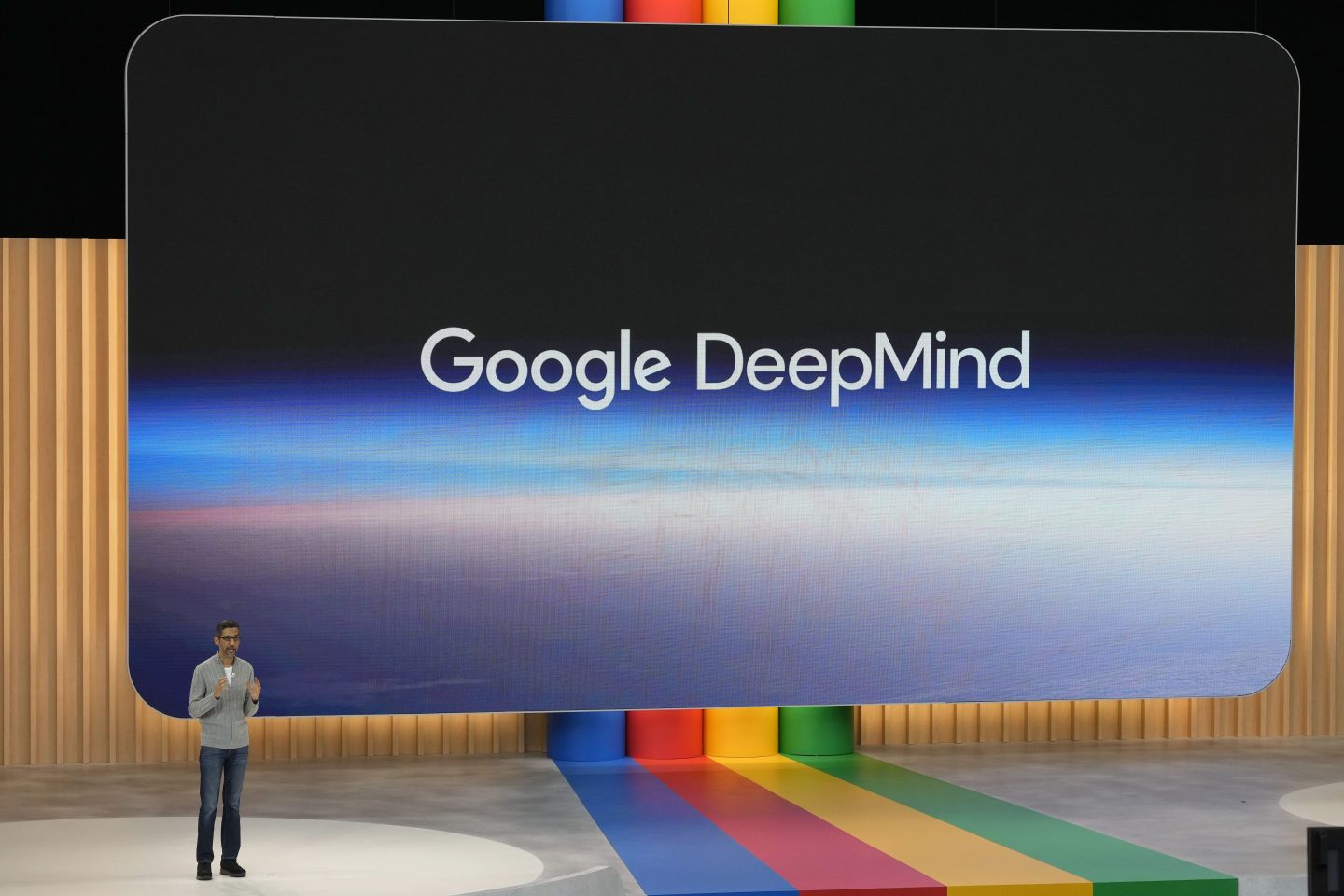
DeepMind, a leading artificial intelligence company, has been at the forefront of AI research and development since its inception in 2010. Acquired by Google in 2014, DeepMind’s mission is to “solve intelligence and then use that to solve everything else.” With groundbreaking advancements and a commitment to ethical AI, DeepMind continues to push the boundaries of what artificial intelligence can achieve.

The Origins of DeepMind

Founded by Demis Hassabis, Shane Legg, and Mustafa Suleyman, DeepMind began with a simple yet ambitious goal: to create advanced AI systems capable of learning and problem-solving like humans. The company’s early work focused on developing algorithms that could learn from raw data without human intervention.

Key Achievements

DeepMind gained international recognition with several high-profile achievements:

  • AlphaGo: In 2016, DeepMind’s AlphaGo program defeated world champion Go player Lee Sedol in a historic match. This victory demonstrated the potential of AI to tackle complex tasks previously thought beyond its reach.
  • AlphaFold: In 2020, DeepMind’s AlphaFold made significant strides in predicting protein structures—a critical challenge in biology. This breakthrough has the potential to revolutionize drug discovery and disease understanding.
  • Muzero: Muzero is an advanced reinforcement learning algorithm capable of mastering games like chess, shogi, and Go without prior knowledge of their rules. This innovation marks a step towards more generalizable AI systems.

The Ethics of Artificial Intelligence

DeepMind is committed to ensuring that its technologies are developed responsibly. The company has established an ethics board and actively engages with experts across various fields to address potential societal impacts. Transparency and collaboration are key components of DeepMind’s approach to ethical AI development.

The Future of DeepMind

As DeepMind continues its research journey, it remains focused on creating AI systems that can assist in solving some of humanity’s most pressing challenges. From healthcare innovations to climate modeling, the potential applications for DeepMind’s technologies are vast and varied.

The future promises even more exciting developments as DeepMind works towards its vision of unlocking the full potential of artificial intelligence for the betterment of society.

Conclusion

DeepMind stands as a beacon in the world of artificial intelligence research. Its achievements not only showcase technological prowess but also highlight the importance of ethical considerations in advancing AI capabilities. As we look ahead, DeepMind’s work will undoubtedly continue to shape our understanding and utilization of artificial intelligence across diverse domains.


Exploring DeepMind AI: Ownership, Functionality, and Comparisons with OpenAI

  1. Which is better OpenAI or DeepMind?
  2. Is DeepMind still owned by Google?
  3. What is DeepMind AI?
  4. Is DeepMind better than OpenAI?
  5. What does Google DeepMind do?
  6. What does DeepMind AI do?

Which is better OpenAI or DeepMind?

When comparing OpenAI and DeepMind, it’s important to recognize that both organizations are leaders in the field of artificial intelligence, each with its own strengths and focus areas. OpenAI is renowned for its work on language models, such as GPT-3, which have set new standards in natural language processing. DeepMind, on the other hand, has made significant strides in reinforcement learning and problem-solving with projects like AlphaGo and AlphaFold. The question of which is better largely depends on the specific criteria one values—be it advancements in language understanding or breakthroughs in complex problem-solving. Ultimately, both entities contribute significantly to AI research and development, driving innovation while addressing ethical considerations.

Is DeepMind still owned by Google?

Yes, DeepMind is still owned by Google. The company was acquired by Google in 2014 and has since operated as a subsidiary under the umbrella of Alphabet Inc., Google’s parent company. This acquisition has allowed DeepMind to leverage Google’s vast resources and infrastructure to advance its research and development in artificial intelligence. Despite being part of a large corporation, DeepMind maintains a degree of operational independence, focusing on its mission to solve complex problems through AI while adhering to ethical guidelines.

What is DeepMind AI?

DeepMind AI is a leading artificial intelligence research company known for its pioneering work in developing advanced AI technologies. Founded in 2010 and acquired by Google in 2014, DeepMind’s mission is to “solve intelligence and then use that to solve everything else.” The company has made significant strides in machine learning and neural networks, with notable achievements such as AlphaGo, which defeated a world champion Go player, and AlphaFold, which has revolutionized protein structure prediction. DeepMind focuses on creating AI systems that can learn and make decisions autonomously, aiming to tackle some of the world’s most complex challenges while maintaining a strong commitment to ethical considerations in AI development.

Is DeepMind better than OpenAI?

When comparing DeepMind and OpenAI, it’s important to recognize that both organizations are leaders in the field of artificial intelligence, each with its own strengths and focus areas. DeepMind, a subsidiary of Alphabet Inc., is renowned for its breakthroughs in reinforcement learning and neural networks, most notably demonstrated by its AlphaGo program. OpenAI, on the other hand, has made significant strides in natural language processing and generative models, as evidenced by its development of the GPT series. The question of which is “better” depends largely on the specific criteria being considered—whether it’s advancements in game-playing AI or innovations in language models. Both entities contribute uniquely to the AI landscape and have different research priorities and goals. Ultimately, both DeepMind and OpenAI are essential to driving forward the capabilities of artificial intelligence for a wide range of applications.

What does Google DeepMind do?

Google DeepMind is a leading artificial intelligence research lab that focuses on developing advanced AI technologies to address complex real-world problems. The team at DeepMind works on creating algorithms that can learn and make decisions in a manner similar to human cognition, with the goal of advancing the field of artificial intelligence. Their work spans various domains, including healthcare, energy efficiency, and gaming. Notable achievements include the development of AlphaGo, which defeated a world champion Go player, and AlphaFold, which has made significant strides in predicting protein structures. By leveraging cutting-edge research and innovation, DeepMind aims to create AI systems that can improve lives and contribute positively to society.

What does DeepMind AI do?

DeepMind AI is a cutting-edge artificial intelligence company that focuses on developing advanced algorithms and machine learning systems to address complex problems across various domains. The company is renowned for its innovative work in reinforcement learning, neural networks, and deep learning technologies. DeepMind’s AI systems have achieved remarkable feats, such as defeating world champions in the board game Go with AlphaGo, predicting protein structures with AlphaFold, and creating generalizable algorithms like Muzero that can learn to master games without explicit knowledge of their rules. Beyond these achievements, DeepMind applies its AI research to real-world challenges, including healthcare advancements, energy efficiency improvements, and scientific discovery, all while emphasizing ethical considerations and responsible development practices.

Exploring the Transformative Power of AI and Machine Learning

Understanding AI and Machine Learning

Understanding AI and Machine Learning

Artificial Intelligence (AI) and Machine Learning (ML) are two of the most transformative technologies of our time. They are reshaping industries, enhancing productivity, and driving innovation across various sectors.

What is Artificial Intelligence?

Artificial Intelligence refers to the simulation of human intelligence in machines that are programmed to think and learn like humans. AI systems can perform tasks such as visual perception, speech recognition, decision-making, and language translation.

The Evolution of AI

The concept of AI has been around for decades, but recent advancements in computing power and data availability have accelerated its development. From simple rule-based systems to complex neural networks, AI has evolved significantly over the years.

What is Machine Learning?

Machine Learning is a subset of AI that involves the use of algorithms and statistical models to enable computers to improve their performance on a specific task through experience. Instead of being explicitly programmed for every task, ML systems learn from data.

Types of Machine Learning

  • Supervised Learning: Involves training a model on labeled data. The model learns to make predictions or decisions based on input-output pairs.
  • Unsupervised Learning: Involves training a model on unlabeled data. The system tries to learn patterns and structures from the input data without any guidance.
  • Reinforcement Learning: Involves training an agent to make sequences of decisions by rewarding desired behaviors and punishing undesired ones.

The Impact of AI and ML

The impact of AI and ML can be seen in various fields:

  • Healthcare: These technologies assist in diagnostics, personalized medicine, and drug discovery.
  • Finance: They enhance fraud detection, algorithmic trading, and credit scoring processes.
  • Agriculture: They optimize crop yields through predictive analytics and automated monitoring systems.
  • Transportation: Autonomous vehicles rely heavily on machine learning algorithms for navigation and safety features.
  • E-commerce: Personalized recommendations improve customer experience by analyzing user behavior patterns.

The Future of AI and Machine Learning

The future holds immense potential for further advancements in AI and ML. As these technologies continue to evolve, they will likely lead to more sophisticated applications that could revolutionize industries even further. However, it is also important to address ethical considerations such as privacy concerns, job displacement, and bias in algorithms as we move forward with these innovations.

The journey into artificial intelligence promises exciting developments that could transform how we live our lives while presenting unique challenges that need careful consideration along the way.


Understanding AI and Machine Learning: Key FAQs Answered

  1. What is Artificial Intelligence (AI)?
  2. How does Machine Learning (ML) differ from AI?
  3. What are the different types of Machine Learning algorithms?
  4. How is AI being used in healthcare?
  5. What role does AI play in autonomous vehicles?
  6. Can AI and ML be applied in finance and banking sectors?
  7. What are the ethical considerations surrounding AI and ML?
  8. How can businesses leverage AI and ML for improved decision-making?

What is Artificial Intelligence (AI)?

Artificial Intelligence (AI) refers to the creation of computer systems that can perform tasks typically requiring human intelligence. These tasks include problem-solving, understanding natural language, recognizing patterns, and making decisions. AI systems are designed to learn from data and improve over time, allowing them to adapt to new information and situations. By mimicking cognitive functions such as learning and problem-solving, AI can automate complex processes and provide insights in various fields, ranging from healthcare to finance. As a rapidly evolving technology, AI has the potential to transform industries by enhancing efficiency and creating new opportunities for innovation.

How does Machine Learning (ML) differ from AI?

Machine Learning (ML) is a subset of Artificial Intelligence (AI), and while the two terms are often used interchangeably, they refer to different concepts. AI is the broader concept of machines being able to carry out tasks in a way that we would consider “smart,” encompassing everything from rule-based systems to complex decision-making algorithms. Machine Learning, on the other hand, specifically involves the use of algorithms and statistical models that enable computers to learn from data and improve their performance over time without being explicitly programmed for each task. In essence, while AI encompasses the idea of machines simulating human intelligence, ML focuses on the process by which machines can automatically learn and adapt when exposed to new data.

What are the different types of Machine Learning algorithms?

Machine Learning algorithms can be broadly categorized into three main types: supervised learning, unsupervised learning, and reinforcement learning. Supervised learning algorithms are trained on labeled data, where the input and the desired output are provided, allowing the model to learn the mapping between them. This type is commonly used for tasks like classification and regression. Unsupervised learning algorithms, on the other hand, work with unlabeled data and aim to uncover hidden patterns or structures within the input data. Techniques such as clustering and dimensionality reduction fall under this category. Lastly, reinforcement learning involves training an agent to make a sequence of decisions by rewarding desired actions and penalizing undesired ones. This approach is often used in scenarios requiring dynamic decision-making, such as robotics and game playing. Each type of algorithm serves different purposes and is chosen based on the specific requirements of a task or problem domain.

How is AI being used in healthcare?

AI is revolutionizing healthcare by enhancing diagnostics, personalizing treatment, and improving patient outcomes. In diagnostics, AI algorithms analyze medical images such as X-rays and MRIs with remarkable accuracy, often detecting anomalies that may be missed by the human eye. Personalized medicine benefits from AI through the analysis of genetic information and patient data to tailor treatments specifically to individual needs. Additionally, AI-powered virtual health assistants provide patients with 24/7 support, answering questions and managing appointments. In research, AI accelerates drug discovery by predicting how different compounds will interact with targets in the body. Overall, AI is streamlining operations in healthcare facilities, reducing costs, and ultimately leading to better care for patients.

What role does AI play in autonomous vehicles?

AI plays a crucial role in the development and operation of autonomous vehicles, serving as the brain behind their ability to navigate and make real-time decisions. Machine learning algorithms process vast amounts of data from sensors and cameras to understand the vehicle’s environment, identify obstacles, interpret traffic signals, and predict the actions of pedestrians and other vehicles. AI systems enable autonomous vehicles to continuously learn from new data, improving their accuracy and safety over time. By integrating computer vision, sensor fusion, and deep learning techniques, AI allows these vehicles to operate with minimal human intervention, aiming for safer roads and more efficient transportation systems.

Can AI and ML be applied in finance and banking sectors?

AI and Machine Learning have significant applications in the finance and banking sectors, revolutionizing how these industries operate. These technologies enhance fraud detection by analyzing vast amounts of transaction data to identify unusual patterns indicative of fraudulent activity. Additionally, AI and ML streamline customer service through chatbots and virtual assistants that provide 24/7 support, improving customer satisfaction and reducing operational costs. In investment management, machine learning algorithms analyze market trends and historical data to optimize trading strategies and portfolio management. Credit scoring has also become more accurate with AI, as it evaluates a broader range of factors to assess creditworthiness, thereby enabling more informed lending decisions. Overall, AI and ML are driving efficiency, accuracy, and innovation in finance and banking.

What are the ethical considerations surrounding AI and ML?

The ethical considerations surrounding AI and machine learning are multifaceted and critical to address as these technologies continue to evolve. One major concern is bias in algorithms, which can occur when AI systems are trained on data that reflects existing prejudices, leading to unfair or discriminatory outcomes. Privacy is another significant issue, as AI systems often require vast amounts of personal data to function effectively, raising concerns about how this data is collected, stored, and used. Additionally, the potential for job displacement due to automation poses economic and social challenges that need thoughtful solutions. The use of AI in decision-making processes also raises questions about accountability and transparency, as it can be difficult to determine how an AI system arrived at a particular decision. Ensuring that AI and ML technologies are developed and deployed responsibly requires ongoing dialogue among technologists, ethicists, policymakers, and the public.

How can businesses leverage AI and ML for improved decision-making?

Businesses can leverage AI and machine learning to enhance decision-making by utilizing data-driven insights and predictive analytics. These technologies enable companies to process vast amounts of data quickly and accurately, uncovering patterns and trends that might be missed by human analysis alone. By integrating AI and ML into their operations, businesses can forecast market trends, optimize supply chains, personalize customer experiences, and improve risk management. Additionally, AI-powered tools can automate routine tasks, freeing up human resources for more strategic initiatives. This leads to more informed decisions, increased efficiency, and a competitive edge in the marketplace.