Unleashing the Power of Deep Learning AI: A Technological Revolution
Deep Learning AI: Revolutionizing the Tech World
In recent years, deep learning has emerged as a transformative force in the world of artificial intelligence (AI). By mimicking the neural networks of the human brain, deep learning algorithms have unlocked new possibilities in technology, enabling machines to perform tasks with unprecedented accuracy and efficiency.
What is Deep Learning?
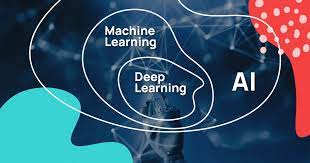
Deep learning is a subset of machine learning that focuses on using neural networks with many layers—often referred to as “deep” neural networks. These networks are designed to automatically learn complex patterns and representations from large amounts of data.
The architecture of deep learning models is inspired by the human brain’s structure, consisting of interconnected nodes or “neurons.” Each layer in a deep neural network processes input data, extracts features, and passes them on to subsequent layers for further refinement. This hierarchical approach allows deep learning models to understand intricate data patterns that simpler algorithms might miss.
Applications of Deep Learning AI
The applications of deep learning span across various industries and have revolutionized numerous fields:
- Healthcare: Deep learning algorithms are used for medical image analysis, aiding in early detection and diagnosis of diseases such as cancer.
- Automotive: Autonomous vehicles leverage deep learning for object detection and decision-making on the road.
- Finance: Fraud detection systems employ deep learning to identify suspicious transactions with high accuracy.
- E-commerce: Recommendation engines use deep learning to personalize shopping experiences for consumers.
- NLP (Natural Language Processing): Deep learning powers language translation services and virtual assistants like chatbots.
The Impact on Technology
The rise of deep learning has had a profound impact on technology development. It has enabled breakthroughs in computer vision, speech recognition, and natural language processing that were previously thought unattainable. As computational power increases and more data becomes available, the capabilities of deep learning continue to expand.
This rapid advancement has also sparked ethical discussions about AI’s role in society. Issues such as data privacy, algorithmic bias, and job displacement are at the forefront as industries integrate AI solutions more deeply into their operations.
The Future of Deep Learning AI
The future of deep learning holds immense promise. Researchers are exploring new architectures like transformer models that improve upon traditional approaches. Additionally, efforts are underway to make deep learning more accessible by reducing its computational demands through techniques like model compression and federated learning.
As we move forward, collaboration between academia, industry leaders, and policymakers will be crucial in harnessing the full potential of deep learning while addressing its challenges responsibly. The journey ahead promises exciting innovations that will shape our world in ways we can only begin to imagine.
Conclusion
Deep learning AI stands at the forefront of technological innovation. Its ability to process vast amounts of data and uncover hidden insights is transforming industries across the globe. As research progresses and new applications emerge, we can expect even greater advancements that will redefine what machines can achieve alongside humans.
Mastering Deep Learning: 6 Essential Tips for Success
- Start with the basics of neural networks and deep learning concepts.
- Understand the importance of quality data for training deep learning models.
- Experiment with different architectures like CNNs, RNNs, and Transformers to see what works best for your problem.
- Regularly update yourself with the latest research and advancements in the field of deep learning.
- Fine-tune hyperparameters such as learning rate, batch size, and activation functions to improve model performance.
- Use tools like TensorFlow or PyTorch to implement and train deep learning models efficiently.
Start with the basics of neural networks and deep learning concepts.
Starting with the basics of neural networks and deep learning concepts is crucial for anyone looking to delve into the field of artificial intelligence. Understanding the foundational elements, such as how neurons mimic the human brain’s processing capabilities, provides a solid groundwork for more advanced topics. By grasping core principles like layers, activation functions, and backpropagation, learners can better appreciate how deep learning models are structured and trained. This foundational knowledge not only aids in comprehending complex algorithms but also enhances one’s ability to innovate and apply deep learning techniques effectively across various domains.
Understand the importance of quality data for training deep learning models.
Understanding the importance of quality data for training deep learning models is crucial for achieving accurate and reliable results. High-quality data not only enhances the performance of the model but also ensures that it can generalize well to unseen examples. By feeding clean, relevant, and diverse data into the training process, deep learning algorithms can learn robust patterns and make informed predictions. Therefore, investing time and resources in acquiring and preprocessing quality data is fundamental to the success of any deep learning project.
Experiment with different architectures like CNNs, RNNs, and Transformers to see what works best for your problem.
When working with deep learning AI, it’s essential to experiment with different architectures such as Convolutional Neural Networks (CNNs), Recurrent Neural Networks (RNNs), and Transformers to determine which is most effective for your specific problem. Each architecture has its strengths: CNNs excel in image processing tasks due to their ability to capture spatial hierarchies, RNNs are well-suited for sequential data like time series or natural language thanks to their memory capabilities, and Transformers have revolutionized natural language processing with their attention mechanisms that handle long-range dependencies efficiently. By testing these various models, you can better understand which architecture aligns with the nature of your data and the goals of your project, ultimately leading to more accurate and efficient solutions.
Regularly update yourself with the latest research and advancements in the field of deep learning.
To stay ahead in the rapidly evolving field of deep learning AI, it is crucial to consistently update yourself with the latest research and advancements. By staying informed about new techniques, algorithms, and breakthroughs, you can enhance your skills, expand your knowledge base, and adapt to emerging trends. Regularly immersing yourself in the cutting-edge developments of deep learning ensures that you remain competitive and well-equipped to tackle complex challenges in this dynamic domain.
Fine-tune hyperparameters such as learning rate, batch size, and activation functions to improve model performance.
Fine-tuning hyperparameters is a crucial step in optimizing the performance of deep learning models. Key hyperparameters such as learning rate, batch size, and activation functions significantly influence how well a model learns from data. The learning rate determines the size of the steps taken during gradient descent, affecting the speed and stability of convergence. A well-chosen learning rate can prevent overshooting or slow progress. Batch size impacts memory usage and the model’s ability to generalize; smaller batches offer more updates per epoch but may introduce noise, while larger batches provide smoother updates at the cost of higher memory consumption. Activation functions, such as ReLU or sigmoid, play a vital role in introducing non-linearity into the model, enabling it to learn complex patterns. Experimenting with these hyperparameters through techniques like grid search or random search can lead to significant improvements in model accuracy and efficiency.
Use tools like TensorFlow or PyTorch to implement and train deep learning models efficiently.
To implement and train deep learning models efficiently, it is essential to utilize powerful tools like TensorFlow or PyTorch. These frameworks provide a robust infrastructure for building and optimizing neural networks, enabling developers to leverage advanced algorithms with ease. By harnessing the capabilities of TensorFlow or PyTorch, practitioners can streamline the development process, experiment with different architectures, and achieve superior performance in training deep learning models.