


Mastering Object-Oriented Software Engineering Principles
Object-Oriented Software Engineering
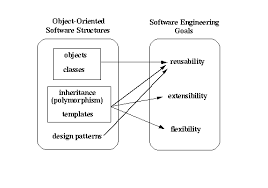
Object-oriented software engineering is a methodology that focuses on designing and developing software systems based on the concept of objects. In this approach, software components are modeled as objects that have attributes (data) and behaviors (methods).
Key Concepts of Object-Oriented Software Engineering:
- Classes and Objects: Classes are blueprints for creating objects. Objects are instances of classes that encapsulate data and behavior.
- Inheritance: Inheritance allows classes to inherit attributes and behaviors from other classes, promoting code reusability and modularity.
- Polymorphism: Polymorphism enables objects of different classes to be treated as objects of a common superclass, allowing for flexibility in design and implementation.
- Encapsulation: Encapsulation hides the internal state of an object and only exposes necessary interfaces for interacting with the object, promoting data security and abstraction.
- Abstraction: Abstraction focuses on modeling real-world entities as simplified representations in software systems, emphasizing essential characteristics while hiding unnecessary details.
Benefits of Object-Oriented Software Engineering:
The object-oriented approach offers several advantages, including:
- Modularity: Objects can be developed independently, promoting code organization and maintenance.
- Reusability: Objects can be reused in different contexts, reducing development time and effort.
- Maintainability: Changes to one part of the system have minimal impact on other parts, enhancing system scalability and adaptability.
- Simplicity: Object-oriented design simplifies complex systems by breaking them down into manageable components with well-defined interactions.
In conclusion, object-oriented software engineering provides a structured approach to software development that emphasizes flexibility, scalability, and maintainability. By leveraging key concepts such as classes, inheritance, polymorphism, encapsulation, and abstraction, developers can create robust and efficient software systems that meet the evolving needs of users and businesses.
8 Essential Tips for Mastering Object-Oriented Software Engineering
- Encapsulate data to restrict direct access and enforce data integrity.
- Use inheritance to promote code reuse and establish relationships between classes.
- Favor composition over inheritance to maintain flexibility and avoid deep class hierarchies.
- Implement polymorphism to allow objects of different classes to be treated as objects of a common superclass.
- Follow the SOLID principles (Single Responsibility, Open/Closed, Liskov Substitution, Interface Segregation, Dependency Inversion) for better design and maintainability.
- Apply design patterns like Factory, Singleton, Observer, Strategy, etc., to solve common design problems efficiently.
- Use interfaces or abstract classes to define contracts that classes must adhere to.
- Practice good naming conventions and create clear documentation for your classes and methods.
Encapsulate data to restrict direct access and enforce data integrity.
Encapsulating data in object-oriented software engineering is a crucial practice that restricts direct access to data and enforces data integrity within a system. By encapsulating data, developers can control how data is accessed and modified, reducing the risk of unintended errors or unauthorized changes. This approach promotes security and robustness by ensuring that data manipulation occurs through defined interfaces and methods, enhancing the overall reliability and maintainability of the software system.
Use inheritance to promote code reuse and establish relationships between classes.
Using inheritance in object-oriented software engineering is a powerful technique to promote code reuse and establish relationships between classes. By creating a hierarchy of classes where subclasses inherit attributes and behaviors from their superclasses, developers can avoid redundant code and build upon existing functionality. This approach not only streamlines development but also enhances the maintainability and scalability of the software system by fostering a modular and structured design. Inheritance allows for the creation of specialized classes that inherit common characteristics from more general classes, enabling developers to efficiently model real-world relationships and dependencies within the software architecture.
Favor composition over inheritance to maintain flexibility and avoid deep class hierarchies.
When practicing object-oriented software engineering, it is advisable to prioritize composition over inheritance to uphold flexibility and prevent the creation of complex class hierarchies. By favoring composition, developers can construct classes by combining existing functionalities rather than relying solely on inheritance. This approach promotes code reusability, simplifies maintenance, and allows for greater adaptability in the system design. Emphasizing composition over inheritance helps avoid the pitfalls of deep class hierarchies, leading to more modular and scalable software solutions that are easier to manage and extend over time.
Implement polymorphism to allow objects of different classes to be treated as objects of a common superclass.
Implementing polymorphism in object-oriented software engineering is a powerful technique that enables objects of different classes to be treated as objects of a common superclass. By utilizing polymorphism, developers can write code that is more flexible and adaptable, allowing for seamless interaction between diverse objects while promoting code reusability and simplifying system design. This approach not only enhances the modularity and scalability of software systems but also facilitates the creation of more maintainable and extensible codebases.
Follow the SOLID principles (Single Responsibility, Open/Closed, Liskov Substitution, Interface Segregation, Dependency Inversion) for better design and maintainability.
Adhering to the SOLID principles—Single Responsibility, Open/Closed, Liskov Substitution, Interface Segregation, and Dependency Inversion—can significantly enhance the design and maintainability of object-oriented software engineering projects. By following these principles, developers ensure that each class has a single responsibility, making the codebase easier to understand and modify. The Open/Closed principle encourages extending functionality without modifying existing code, promoting scalability and reducing the risk of introducing bugs. Liskov Substitution emphasizes substitutability of objects derived from a base class, enhancing code reusability and flexibility. Interface Segregation advocates for specific client interfaces rather than one general-purpose interface, leading to more cohesive and manageable code structures. Finally, Dependency Inversion promotes decoupling between modules by depending on abstractions rather than concrete implementations, facilitating easier testing and maintenance of software systems. By incorporating these SOLID principles into software design practices, developers can achieve more robust, adaptable, and maintainable solutions.
Apply design patterns like Factory, Singleton, Observer, Strategy, etc., to solve common design problems efficiently.
In object-oriented software engineering, applying design patterns such as Factory, Singleton, Observer, Strategy, and others is a valuable practice to efficiently solve common design problems. These design patterns provide proven solutions to recurring challenges in software development, offering structured approaches that enhance code reusability, maintainability, and scalability. By incorporating these design patterns into the development process, developers can streamline their workflow, improve system architecture, and create more robust and flexible software solutions that align with best practices in the industry.
Use interfaces or abstract classes to define contracts that classes must adhere to.
In object-oriented software engineering, it is advisable to utilize interfaces or abstract classes to establish contracts that classes must follow. By defining these contracts, developers can enforce consistency and ensure that implementing classes adhere to specific guidelines and behaviors. Interfaces and abstract classes serve as blueprints for defining common methods and properties that participating classes must implement or inherit, promoting code reusability, modularity, and maintainability in software systems. This practice not only enhances the structure and organization of the codebase but also facilitates easier integration of new components while maintaining a clear separation of concerns.
Practice good naming conventions and create clear documentation for your classes and methods.
When practicing object-oriented software engineering, it is crucial to adhere to good naming conventions and maintain clear documentation for your classes and methods. By choosing descriptive and meaningful names for classes and methods, you enhance code readability and maintainability. Clear documentation provides insights into the purpose, functionality, and usage of each component, aiding developers in understanding and utilizing them effectively. These practices not only facilitate collaboration among team members but also contribute to the overall quality of the software system by promoting consistency and clarity in its design and implementation.