
cfchris.com

Loading

java ee

Mastering Java EE: Building Enterprise Applications with Confidence

Exploring Java EE

The World of Java EE

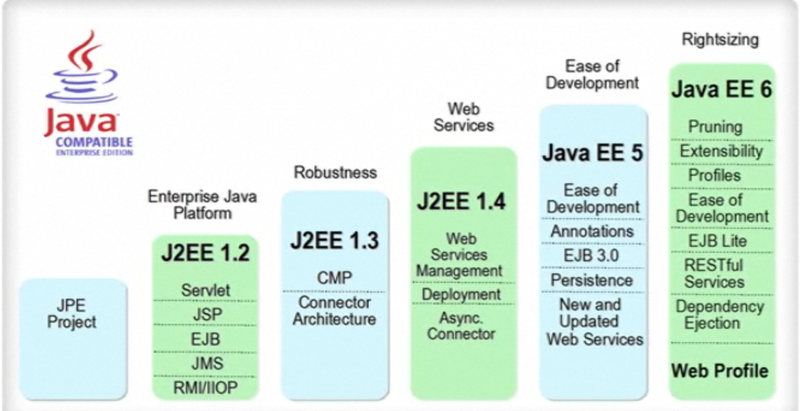
Java Platform, Enterprise Edition (Java EE), formerly known as J2EE, is a powerful platform for building enterprise-level applications. It provides a comprehensive set of APIs and services that simplify the development process and enable developers to create scalable, secure, and robust applications.

Key Features of Java EE

Java EE offers a range of features that make it a popular choice for developing enterprise applications:

  • Component-based architecture: Java EE applications are built using components such as EJBs (Enterprise JavaBeans) and servlets, making it easier to manage and maintain large-scale projects.
  • Enterprise services: Java EE provides essential services like transaction management, security, messaging, and more out of the box, saving developers time and effort in implementing these functionalities.
  • Scalability: Java EE applications can be easily scaled to accommodate increased load by leveraging features like clustering and load balancing.
  • Security: With built-in security mechanisms such as authentication and authorization, Java EE helps developers create secure applications that protect sensitive data.
  • JPA (Java Persistence API): Java EE includes JPA for simplifying database operations by providing an object-relational mapping framework.

Popular Technologies in Java EE

Some of the well-known technologies within the Java EE ecosystem include:

  • Servlets: Used for handling HTTP requests and responses in web applications.
  • JSP (JavaServer Pages): Enables the creation of dynamic web content using Java code embedded in HTML pages.
  • EJBs (Enterprise JavaBeans): Components that encapsulate business logic in enterprise applications.
  • JMS (Java Message Service): Facilitates messaging between distributed components in an application.

The Future of Java EE

In recent years, there has been a shift towards microservices architecture and cloud-native development. As a response to these trends, Jakarta EE has emerged as the successor to Java EE. Jakarta EE continues to evolve with new features and enhancements to meet the demands of modern enterprise application development.

In conclusion, Java EE remains a robust platform for building enterprise-grade applications. Its rich set of features, scalability options, and security mechanisms make it a preferred choice for developers working on complex projects. By staying updated with the latest advancements in the ecosystem, developers can leverage the power of Java EE to create innovative solutions for businesses worldwide.


9 Key Advantages of Java EE for Enterprise Application Development

  1. Comprehensive set of APIs for building enterprise applications
  2. Built-in support for essential services like transaction management and security
  3. Scalability features such as clustering and load balancing
  4. Component-based architecture simplifies application development
  5. JPA simplifies database operations with object-relational mapping
  6. Robust security mechanisms for protecting sensitive data
  7. Support for messaging services through JMS (Java Message Service)
  8. Enables creation of dynamic web content with JSP (JavaServer Pages)
  9. Continuously evolving to meet the demands of modern enterprise application development


Challenges of Java EE: Navigating Complexity, Resource Demands, and Overhead

  1. Steep learning curve
  2. Resource-intensive
  3. Overhead

Comprehensive set of APIs for building enterprise applications

Java EE’s comprehensive set of APIs for building enterprise applications is a significant advantage that simplifies and accelerates the development process. By providing a wide range of pre-built functionalities and services, developers can focus on implementing business logic rather than reinventing the wheel. These APIs cover essential aspects such as security, transaction management, messaging, and more, enabling developers to create robust and scalable enterprise solutions efficiently. The availability of these APIs in Java EE streamlines development efforts, enhances code quality, and ultimately contributes to the successful delivery of complex enterprise applications.

Built-in support for essential services like transaction management and security

Java EE’s built-in support for essential services, such as transaction management and security, significantly simplifies the development process for enterprise applications. By providing robust mechanisms for handling transactions and ensuring data security, Java EE empowers developers to focus on building core functionalities without having to implement these critical features from scratch. This inherent support enhances the reliability and integrity of applications, making them more resilient to potential risks and ensuring a smoother user experience.

Scalability features such as clustering and load balancing

One of the key advantages of Java EE is its robust scalability features, including clustering and load balancing. By utilizing clustering, Java EE applications can be distributed across multiple servers, allowing for increased performance and fault tolerance. Load balancing ensures that incoming requests are evenly distributed among servers, optimizing resource utilization and enhancing system reliability. These scalability features in Java EE empower developers to build applications that can seamlessly handle growing workloads and provide a consistent user experience even under high traffic conditions.

Component-based architecture simplifies application development

The component-based architecture of Java EE simplifies application development by breaking down complex systems into smaller, reusable components. Developers can focus on building individual components with specific functionalities, making it easier to manage and maintain the codebase. This approach promotes code reusability, modularity, and scalability, allowing developers to create robust enterprise applications efficiently. By leveraging the component-based architecture of Java EE, developers can streamline the development process and enhance the overall quality of their applications.

JPA simplifies database operations with object-relational mapping

Java EE’s Java Persistence API (JPA) stands out as a valuable asset by simplifying database operations through object-relational mapping. This feature streamlines the interaction between Java objects and relational databases, eliminating the need for developers to write complex SQL queries manually. By providing a straightforward way to map Java classes to database tables and manage data persistence, JPA enhances productivity and efficiency in application development, ultimately saving time and effort for developers.

Robust security mechanisms for protecting sensitive data

Java EE offers robust security mechanisms designed to safeguard sensitive data within enterprise applications. By incorporating features such as authentication, authorization, encryption, and secure communication protocols, Java EE empowers developers to create secure environments that protect critical information from unauthorized access or breaches. These built-in security capabilities not only ensure compliance with industry standards and regulations but also instill trust in users by maintaining the confidentiality and integrity of data throughout the application lifecycle.

Support for messaging services through JMS (Java Message Service)

Java EE’s support for messaging services through JMS (Java Message Service) is a significant advantage for developers building enterprise applications. JMS provides a reliable and asynchronous communication mechanism that allows different components of an application to exchange messages seamlessly. By leveraging JMS in Java EE, developers can design robust and scalable systems that facilitate efficient communication between distributed components, enhancing the overall performance and reliability of the application.

Enables creation of dynamic web content with JSP (JavaServer Pages)

One of the key advantages of Java EE is its ability to enable the creation of dynamic web content through JavaServer Pages (JSP). JSP allows developers to seamlessly integrate Java code within HTML pages, making it easier to generate dynamic content based on user input or system data. This feature not only enhances the user experience by providing interactive web applications but also simplifies the development process by allowing for efficient and flexible content generation.

Continuously evolving to meet the demands of modern enterprise application development

Java EE’s ability to continuously evolve to meet the demands of modern enterprise application development sets it apart as a dynamic and forward-thinking platform. By adapting to emerging technologies and trends, Java EE ensures that developers have access to the latest tools and features needed to create innovative solutions for complex business requirements. This proactive approach not only enhances the platform’s capabilities but also enables developers to stay ahead in a rapidly changing technological landscape, making Java EE a reliable choice for building scalable and future-proof enterprise applications.

Steep learning curve

One significant drawback of Java EE is its steep learning curve. The platform encompasses a complex ecosystem with a plethora of APIs and technologies, creating a daunting challenge for newcomers to fully comprehend all the intricate concepts. Navigating through the vast array of components and understanding how they interact can be overwhelming, requiring a considerable investment of time and effort to become proficient in Java EE development.

Resource-intensive

Java EE applications can pose a challenge in terms of resource consumption as they can be resource-intensive. This is primarily attributed to the overhead involved in managing components such as EJBs (Enterprise JavaBeans) and the complexities of the application server environment. The need for robust infrastructure and adequate resources to support these components may result in higher hardware requirements and operational costs, making it essential for developers to carefully optimize their Java EE applications to ensure efficient performance while balancing resource utilization.

Overhead

The comprehensive features and services offered by Java EE, while beneficial for complex enterprise applications, can introduce overhead that may be excessive for smaller or simpler projects. This additional complexity could potentially lead to performance issues as the system may be burdened with functionalities that are not essential for the project’s requirements. Careful consideration and optimization are necessary to strike a balance between leveraging the capabilities of Java EE and avoiding unnecessary overhead in order to ensure optimal performance in all types of projects.
modern software development

Exploring the Innovations in Modern Software Development

The Evolution of Modern Software Development

The Evolution of Modern Software Development

In today’s fast-paced digital world, software development has undergone a significant transformation. Modern software development practices have revolutionized the way applications are built, deployed, and maintained.

Agile Methodology

One of the key pillars of modern software development is the adoption of agile methodology. Agile emphasizes iterative development, collaboration, and flexibility in responding to change. This approach allows teams to deliver high-quality software products more efficiently and adapt to evolving requirements.

DevOps Integration

DevOps has become an integral part of modern software development processes. By combining development (Dev) and operations (Ops) functions, DevOps promotes automation, collaboration, and continuous integration/continuous delivery (CI/CD). This integration streamlines the software delivery pipeline and enhances overall product quality.

Cloud Computing

Cloud computing has revolutionized how software is developed and deployed. Cloud platforms offer scalability, flexibility, and cost-effectiveness for hosting applications. Developers can leverage cloud services for storage, computing power, and infrastructure-as-code (IaC) to build robust and scalable solutions.

Microservices Architecture

Modern software applications are increasingly adopting a microservices architecture. This approach breaks down complex monolithic applications into smaller, independent services that communicate via APIs. Microservices enable teams to work on different components simultaneously, improve fault isolation, and scale individual services independently.

AI and Machine Learning

The integration of artificial intelligence (AI) and machine learning (ML) technologies is transforming modern software development. AI-powered tools enhance automation, predictive analytics, natural language processing (NLP), and data-driven decision-making. Developers can leverage AI/ML algorithms to optimize performance, personalize user experiences, and automate repetitive tasks.

In conclusion, modern software development is characterized by agility, automation, cloud-native architectures,

microservices,

AI/ML integration,

collaboration,

continuous delivery,

and customer-centricity.

Embracing these trends empowers organizations to innovate rapidly,

deliver value to customers efficiently,

and stay competitive in today’s dynamic market landscape.

By leveraging modern software development practices

businesses can drive digital transformation

accelerate time-to-market

improve product quality

foster innovation

respond quickly to changing market demands

Stay ahead in the digital era.


Understanding Modern Software Development: Key FAQs and Methodologies Explained

  1. What is modern programming?
  2. What are modern software engineering practices?
  3. What are the seven 7 software development methodologies?
  4. What are the 5 phases of software development?
  5. What are the 7 phases of software development life cycle?
  6. What are the top five principles of modern process?
  7. What are the 6 stages of software development?
  8. How is modern software built?
  9. What is the modern software development method?

What is modern programming?

Modern programming refers to the contemporary approach and practices used in software development to create efficient, scalable, and innovative applications. It encompasses the adoption of agile methodologies, DevOps principles, cloud computing services, microservices architecture, and integration of artificial intelligence and machine learning technologies. Modern programming emphasizes collaboration, automation, continuous delivery, and customer-centricity to meet the evolving demands of today’s digital landscape. By embracing modern programming techniques, developers can build robust solutions that drive digital transformation, enhance user experiences, and stay competitive in a rapidly changing technological environment.

What are modern software engineering practices?

Modern software engineering practices encompass a range of methodologies and techniques that have evolved to meet the demands of today’s dynamic digital landscape. These practices include agile development, DevOps integration, continuous integration/continuous delivery (CI/CD), test-driven development (TDD), code reviews, version control systems, and automated testing. By embracing these modern practices, software development teams can achieve greater efficiency, collaboration, quality assurance, and responsiveness to changing requirements. Adopting these practices enables organizations to deliver high-quality software products faster, more reliably, and with enhanced customer satisfaction.

What are the seven 7 software development methodologies?

When it comes to modern software development methodologies, there are several approaches that teams can adopt based on their project requirements and organizational goals. Seven commonly recognized software development methodologies include Agile, Waterfall, Scrum, Kanban, Lean, Extreme Programming (XP), and Spiral. Each methodology offers unique principles and practices to guide the development process, emphasizing factors such as iterative development, customer collaboration, continuous improvement, flexibility in responding to changes, and efficient project management. By understanding the characteristics of these methodologies, teams can choose the most suitable approach to enhance productivity and deliver high-quality software solutions effectively.

What are the 5 phases of software development?

In modern software development, the process typically consists of five key phases: requirements gathering, design, implementation, testing, and maintenance. During the requirements gathering phase, stakeholders define and document the project’s objectives and specifications. The design phase involves creating a blueprint for the software’s architecture and functionality. Implementation is where developers write and code the actual software based on the design specifications. Testing is crucial for identifying and fixing bugs or issues in the software before deployment. Finally, maintenance involves ongoing updates, enhancements, and support to ensure the software remains efficient and effective over time. These five phases form a structured approach to developing high-quality software that meets user needs and business objectives.

What are the 7 phases of software development life cycle?

The software development life cycle consists of seven key phases that guide the process of creating software applications. These phases include planning, requirement analysis, design, implementation, testing, deployment, and maintenance. Each phase plays a crucial role in ensuring the successful development and delivery of high-quality software products. From defining project goals and requirements to coding, testing, and ongoing maintenance, following these structured phases helps teams streamline development processes, manage risks effectively, and ultimately deliver solutions that meet user needs and business objectives.

What are the top five principles of modern process?

Modern software development is guided by several key principles that ensure efficiency, quality, and adaptability. The top five principles include:

  1. **Agility**: Emphasizing iterative development and flexibility, agile methodologies allow teams to adapt quickly to changing requirements and deliver incremental improvements continuously.
  2. **Collaboration**: Effective communication and teamwork across cross-functional teams are crucial for aligning goals, sharing knowledge, and ensuring that all stakeholders are on the same page throughout the development process.
  3. **Automation**: Automating repetitive tasks such as testing, integration, and deployment enhances productivity and reduces human error, allowing developers to focus on more complex problem-solving.
  4. **Continuous Improvement**: By fostering a culture of ongoing learning and refinement through regular feedback loops and retrospectives, teams can consistently enhance their processes and products.
  5. **Customer-Centricity**: Keeping the end-user in mind at every stage of development ensures that the final product meets customer needs and expectations, leading to higher satisfaction and better market fit.

Together, these principles form a robust framework for developing high-quality software in today’s fast-paced digital landscape.

What are the 6 stages of software development?

In modern software development, the process typically consists of six key stages: requirements gathering, design, implementation, testing, deployment, and maintenance. During the requirements gathering phase, stakeholders collaborate to define project goals and specifications. The design stage involves creating a blueprint for the software architecture and user interface. Implementation is where developers write the code based on the design specifications. Testing ensures that the software functions correctly and meets quality standards. Deployment involves releasing the software to users or clients. Finally, maintenance involves ongoing support, updates, and improvements to ensure the software remains efficient and effective over time. These six stages are crucial in delivering successful software solutions that meet user needs and business objectives.

How is modern software built?

Modern software development involves a multi-faceted approach that combines innovative methodologies, cutting-edge technologies, and collaborative practices. Typically, modern software is built using agile methodologies that emphasize iterative development, continuous feedback, and adaptive planning. Development teams leverage tools and frameworks for automation, version control, and testing to streamline the development process. Cloud computing plays a crucial role in providing scalable infrastructure for deploying and hosting applications. Furthermore, the adoption of microservices architecture allows for modular design, enabling teams to work on independent components efficiently. Overall, modern software is built through a combination of agile practices, DevOps principles, cloud services, and advanced technologies to deliver high-quality applications that meet evolving user needs.

What is the modern software development method?

The modern software development method primarily revolves around agile practices, which emphasize flexibility, collaboration, and iterative progress. Unlike traditional waterfall models that follow a linear approach, modern methodologies like Agile and Scrum allow for adaptive planning and continual improvement throughout the development process. This approach encourages frequent communication among cross-functional teams, involving stakeholders at every stage to ensure that the final product aligns with user needs and expectations. Additionally, modern methods often incorporate DevOps practices to streamline deployment and operations, enabling continuous integration and delivery (CI/CD). By fostering a culture of responsiveness and innovation, these methods help teams deliver high-quality software more efficiently in today’s fast-paced technological landscape.

saas software development

Unlocking Innovation: The Evolution of SaaS Software Development

The Evolution of SaaS Software Development

The Evolution of SaaS Software Development

Software as a Service (SaaS) has revolutionized the way businesses and individuals access and use software applications. SaaS software development has seen significant growth and evolution over the years, shaping the digital landscape in profound ways.

What is SaaS?

SaaS is a cloud-based software delivery model where applications are hosted by a third-party provider and made available to users over the internet. This eliminates the need for users to install and maintain software on their own devices, offering greater convenience and scalability.

The Benefits of SaaS Software Development

SaaS software development offers numerous benefits, including:

  • Accessibility: Users can access SaaS applications from any device with an internet connection, enhancing flexibility and productivity.
  • Cost-Effectiveness: SaaS eliminates the need for upfront hardware and software investments, making it a more affordable option for businesses of all sizes.
  • Scalability: SaaS applications can easily scale up or down based on user demand, allowing businesses to adapt to changing needs quickly.
  • Automatic Updates: Providers handle maintenance and updates, ensuring that users always have access to the latest features and security enhancements.

The Evolution of SaaS Development

SaaS software development has evolved significantly since its inception. Early SaaS applications were often limited in functionality and customization options. However, advancements in technology have led to more sophisticated and feature-rich SaaS solutions.

Modern SaaS development practices emphasize agile methodologies, continuous integration, and deployment to deliver high-quality software efficiently. Developers leverage cloud infrastructure, microservices architecture, and containerization to build scalable and resilient applications that meet the demands of today’s dynamic business environment.

The Future of SaaS Software Development

The future of SaaS software development looks promising, with continued innovation driving new possibilities. Emerging technologies such as artificial intelligence, machine learning, and blockchain are being integrated into SaaS applications to enhance functionality and provide more personalized user experiences.

As businesses increasingly rely on cloud-based solutions for their operations, the demand for secure, reliable, and user-friendly SaaS applications will continue to grow. Developers will play a crucial role in shaping the future of SaaS by embracing new technologies and best practices to deliver cutting-edge solutions that meet evolving customer needs.


Top 6 Benefits of SaaS Software Development: Accessibility, Cost Savings, Scalability, and More

  1. Accessibility from any device with an internet connection
  2. Cost-effectiveness by eliminating upfront hardware and software investments
  3. Scalability to easily adjust resources based on user demand
  4. Automatic updates for the latest features and security enhancements
  5. Simplified maintenance as providers handle infrastructure management
  6. Global accessibility enabling users to access applications from anywhere


7 Drawbacks of SaaS Software Development: From Internet Dependency to Vendor Lock-In

  1. Dependency on Internet Connection
  2. Data Security Concerns
  3. Limited Customization
  4. Vendor Lock-In
  5. Cost Over Time
  6. Compliance Challenges
  7. Performance Dependency

Accessibility from any device with an internet connection

One of the key advantages of SaaS software development is its unparalleled accessibility, allowing users to access applications from any device with an internet connection. This flexibility empowers individuals and businesses to work seamlessly across various platforms, enhancing productivity and collaboration. Whether in the office, at home, or on the go, users can conveniently access SaaS applications without being tied to a specific device or location, making work more efficient and convenient.

Cost-effectiveness by eliminating upfront hardware and software investments

One of the key advantages of SaaS software development is its cost-effectiveness, achieved by eliminating the need for upfront hardware and software investments. Businesses can access and use SaaS applications without the burden of purchasing and maintaining expensive infrastructure, making it a more affordable option for organizations of all sizes. This cost-saving benefit allows businesses to allocate resources more efficiently, invest in other areas of their operations, and scale their software usage based on actual needs without incurring unnecessary expenses upfront.

Scalability to easily adjust resources based on user demand

One of the key advantages of SaaS software development is its scalability, allowing businesses to adjust resources based on user demand effortlessly. This flexibility enables organizations to efficiently scale their operations up or down in response to fluctuating needs, ensuring optimal performance and cost-effectiveness. By dynamically allocating resources as needed, SaaS applications can seamlessly accommodate varying levels of user activity, providing a responsive and adaptable solution for businesses of all sizes.

Automatic updates for the latest features and security enhancements

One of the key advantages of SaaS software development is the provision of automatic updates, ensuring that users always have access to the latest features and security enhancements. This feature eliminates the need for manual updates and maintenance, saving time and effort for both users and IT teams. By automatically delivering updates, SaaS applications can continuously improve functionality, performance, and security without causing disruptions to users’ workflow. This proactive approach to software maintenance enhances user experience and helps businesses stay competitive in a rapidly evolving digital landscape.

Simplified maintenance as providers handle infrastructure management

SaaS software development offers the advantage of simplified maintenance, as providers take on the responsibility of infrastructure management. This means that users can focus on utilizing the software without having to worry about maintaining servers, updating software, or handling technical issues related to the underlying infrastructure. By offloading these tasks to the provider, organizations can streamline their operations and ensure that their SaaS applications are always running smoothly and securely.

Global accessibility enabling users to access applications from anywhere

One key advantage of SaaS software development is its global accessibility, allowing users to access applications from anywhere with an internet connection. This feature enhances flexibility and convenience for individuals and businesses, enabling seamless collaboration and productivity across different locations. Whether working from home, traveling, or in a different time zone, users can easily access SaaS applications on various devices, ensuring continuous connectivity and efficient workflow management.

Dependency on Internet Connection

One significant drawback of SaaS software development is the heavy reliance on a stable internet connection for accessing applications. This dependency can pose challenges, especially in regions with poor connectivity or unreliable network infrastructure. Users may experience disruptions in service, slower performance, or even complete inability to access critical software functions when faced with internet outages or low bandwidth. The need for consistent and robust internet connectivity can hinder productivity and create frustration for users who rely on SaaS applications for their daily tasks.

Data Security Concerns

Data Security Concerns: Storing sensitive data on third-party servers raises security and privacy risks, especially if the provider experiences breaches. When businesses entrust their valuable information to SaaS providers, they run the risk of potential data leaks or unauthorized access, which could have severe consequences such as financial loss, reputational damage, and regulatory non-compliance. Maintaining control over data security becomes challenging when it is stored off-site, making it essential for organizations to carefully assess the security measures implemented by SaaS vendors to mitigate these risks effectively.

Limited Customization

SaaS software development faces the challenge of limited customization, which can be a significant drawback for some users. Unlike on-premises software that allows extensive customization to meet specific business needs, SaaS applications may offer limited flexibility in tailoring solutions. This restriction can hinder organizations that require highly customized software to align with their unique processes and requirements. The lack of customization options in SaaS applications may force users to adapt their workflows to fit the predefined features of the software, potentially impacting efficiency and overall user satisfaction.

Vendor Lock-In

Vendor lock-in is a significant drawback of SaaS software development, as it can hinder businesses from easily switching between providers. The process of migrating data from one SaaS platform to another can be complex and time-consuming, often resulting in compatibility issues and data loss. This lack of flexibility and interoperability can trap organizations into long-term contracts with a particular vendor, limiting their ability to adapt to changing needs or explore alternative solutions. The risk of vendor lock-in underscores the importance of carefully evaluating the terms and conditions of SaaS agreements to mitigate potential challenges in the future.

Cost Over Time

One significant con of SaaS software development is the cost over time. While SaaS solutions may offer lower initial costs compared to traditional software licenses, the cumulative effect of long-term subscription fees can result in higher expenses. Over time, these recurring costs can add up and potentially surpass the total cost of purchasing and owning traditional software outright. This ongoing financial commitment may pose challenges for businesses, especially if they do not fully anticipate or budget for the long-term expenses associated with SaaS subscriptions.

Compliance Challenges

Compliance Challenges: Meeting industry-specific compliance requirements can be complex when using SaaS solutions that may not offer customizable compliance features. Organizations operating in regulated industries such as healthcare or finance face the challenge of ensuring that their SaaS applications adhere to strict data security and privacy standards. Without the ability to customize compliance features within the SaaS software, businesses may struggle to meet all necessary regulatory requirements, potentially exposing themselves to legal risks and penalties. This con highlights the importance of carefully evaluating SaaS providers’ compliance capabilities to ensure alignment with industry-specific regulations and standards.

Performance Dependency

Performance Dependency is a significant con of SaaS software development as it introduces a reliance on the provider’s infrastructure and server capabilities, directly affecting the performance of the applications. Any limitations or issues with the provider’s servers can lead to slowdowns, downtime, or other performance-related issues that impact the overall user experience. This lack of control over the underlying infrastructure can be a concern for businesses that require consistent high performance from their software applications.