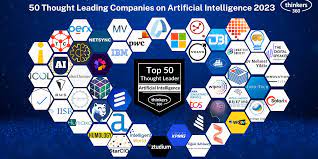
Artificial Intelligence Companies: Shaping the Future
Artificial Intelligence Companies: Shaping the Future
The landscape of technology is rapidly evolving, and at the forefront of this transformation are artificial intelligence (AI) companies. These organizations are pioneering advancements that are not only reshaping industries but also redefining how we interact with technology in our daily lives.
Leading AI Companies Making an Impact
Several key players in the AI industry are pushing boundaries and setting new standards. Here are a few notable companies:
- Google DeepMind: Known for its cutting-edge research, Google DeepMind has made significant strides in machine learning and neural networks. Their work on AlphaGo, which defeated a world champion Go player, demonstrated the potential of AI in mastering complex tasks.
- OpenAI: OpenAI aims to ensure that artificial general intelligence benefits all of humanity. With projects like GPT-3, they have showcased remarkable capabilities in natural language processing and generation.
- IBM Watson: IBM’s Watson has been instrumental in applying AI to healthcare, finance, and customer service. Its ability to analyze vast amounts of data quickly makes it a valuable tool for businesses seeking insights.
- NVIDIA: While primarily known for its graphics processing units (GPUs), NVIDIA has become a leader in AI hardware. Their technology accelerates machine learning processes, making it possible to train complex models faster than ever before.
The Role of Startups in AI Innovation
Apart from established giants, numerous startups are contributing significantly to AI innovation. These smaller companies often bring fresh perspectives and agile methodologies that drive progress:
- CognitiveScale: Specializing in augmented intelligence solutions for various sectors including healthcare and financial services, CognitiveScale leverages machine learning to deliver personalized experiences.
- Sensetime: As one of the world’s most valuable AI startups, Sensetime focuses on facial recognition technology and computer vision applications used across security systems and smart cities.
The Impact on Industries
The influence of AI companies extends across multiple industries:
- Healthcare: From predictive diagnostics to personalized medicine, AI is enhancing patient care and operational efficiency.
- Finance: Algorithms can analyze market trends faster than humans ever could, leading to smarter investment strategies and fraud detection systems.
- Retail: Personalized recommendations powered by AI improve customer satisfaction while optimizing inventory management for retailers.
The Future of Artificial Intelligence Companies
The future looks promising as artificial intelligence continues its rapid advancement. As these companies develop more sophisticated algorithms and technologies become increasingly integrated into our lives; ethical considerations will play a crucial role ensuring responsible development practices prevail over time.
The collaboration between industry leaders academia governments will be essential harnessing full potential safely securely ultimately benefiting society whole paving way smarter more connected world tomorrow today!
9 Ways Artificial Intelligence Companies Are Transforming Industries and Enhancing Lives
- 1. Innovate industries with cutting-edge technology.
- 2. Enhance efficiency and productivity in various sectors.
- 3. Enable personalized user experiences through data analysis.
- 4. Improve decision-making processes with advanced algorithms.
- 5. Drive automation of repetitive tasks, saving time and resources.
- 6. Enhance customer service with chatbots and virtual assistants.
- 7. Revolutionize healthcare with predictive analytics and diagnostics.
- 8. Boost cybersecurity measures through AI-powered threat detection systems.
- 9. Foster continuous learning and adaptation for ongoing improvement.
Addressing the Challenges: Privacy, Employment, and Bias in AI Companies
- Privacy Concerns
- Job Displacement
- Bias in Algorithms
1. Innovate industries with cutting-edge technology.
Artificial intelligence companies are at the forefront of innovation, leveraging cutting-edge technology to revolutionize various industries. By developing advanced algorithms and machine learning models, these companies enable unprecedented levels of automation and efficiency. In healthcare, AI is transforming diagnostics and personalized medicine, allowing for more accurate predictions and tailored treatments. In finance, AI-driven analytics provide insights that lead to smarter investment decisions and improved risk management. Additionally, in manufacturing, AI optimizes production processes through predictive maintenance and quality control. By continuously pushing the boundaries of what’s possible, artificial intelligence companies are not only enhancing existing sectors but also paving the way for entirely new markets and opportunities.
2. Enhance efficiency and productivity in various sectors.
Artificial intelligence companies have proven to enhance efficiency and productivity across various sectors through the automation of tasks, data analysis, and predictive capabilities. By implementing AI-driven solutions, businesses can streamline operations, optimize resource allocation, and make data-driven decisions faster and more accurately. This increased efficiency not only saves time and reduces costs but also allows organizations to focus on innovation and strategic initiatives, ultimately leading to improved performance and competitiveness in the market.
3. Enable personalized user experiences through data analysis.
Artificial intelligence companies excel in enabling personalized user experiences by leveraging advanced data analysis techniques. By collecting and analyzing vast amounts of user data, AI systems can identify patterns and preferences that allow for tailored recommendations and interactions. This capability is particularly beneficial in industries like retail, entertainment, and online services, where understanding individual user behavior can significantly enhance customer satisfaction and engagement. For instance, streaming platforms use AI to suggest content based on viewing history, while e-commerce sites recommend products that align with past purchases or browsing habits. Through these personalized experiences, AI companies not only improve user satisfaction but also foster brand loyalty and drive business growth.
4. Improve decision-making processes with advanced algorithms.
Artificial intelligence companies are revolutionizing decision-making processes by leveraging advanced algorithms that can analyze vast amounts of data with unprecedented speed and accuracy. These algorithms enable businesses to identify patterns, predict outcomes, and make informed decisions more efficiently than ever before. By processing complex datasets and generating actionable insights, AI technology helps organizations optimize operations, reduce risks, and capitalize on opportunities. This enhanced decision-making capability not only drives business growth but also fosters innovation across various sectors, as companies can now rely on data-driven strategies to navigate an increasingly competitive landscape.
5. Drive automation of repetitive tasks, saving time and resources.
Artificial intelligence companies play a pivotal role in driving the automation of repetitive tasks, which significantly saves time and resources for businesses across various industries. By utilizing advanced algorithms and machine learning techniques, AI systems can efficiently handle tasks that were traditionally performed by humans, such as data entry, customer service inquiries, and routine maintenance operations. This automation not only boosts productivity by freeing up employees to focus on more strategic and creative endeavors but also reduces the likelihood of human error. As a result, companies can allocate their resources more effectively, leading to cost savings and improved operational efficiency. In essence, AI-driven automation empowers organizations to operate smarter and faster in an increasingly competitive landscape.
6. Enhance customer service with chatbots and virtual assistants.
Artificial intelligence companies are revolutionizing customer service by deploying chatbots and virtual assistants, which significantly enhance the customer experience. These AI-driven tools are available 24/7, providing immediate responses to customer inquiries and handling a wide range of tasks, from answering frequently asked questions to assisting with transactions. By automating routine interactions, chatbots free up human agents to focus on more complex issues that require a personal touch. This not only increases efficiency but also ensures that customers receive timely and accurate information. Additionally, AI-powered virtual assistants can learn from each interaction, continuously improving their ability to understand and respond to customer needs more effectively over time. As a result, businesses can offer a seamless and personalized service experience that boosts customer satisfaction and loyalty.
7. Revolutionize healthcare with predictive analytics and diagnostics.
Artificial intelligence companies are revolutionizing healthcare by leveraging predictive analytics and diagnostics. Through advanced algorithms and machine learning, these companies can analyze vast amounts of patient data to predict potential health issues, identify patterns, and provide early detection of diseases. This proactive approach not only improves patient outcomes but also enhances the efficiency of healthcare systems by enabling more accurate diagnoses and personalized treatment plans. By harnessing the power of AI, healthcare providers can deliver better care, save lives, and ultimately transform the way we approach healthcare.
8. Boost cybersecurity measures through AI-powered threat detection systems.
Artificial intelligence companies are revolutionizing cybersecurity by developing AI-powered threat detection systems that significantly enhance protective measures. These advanced systems can analyze vast amounts of data in real-time, identifying potential threats and vulnerabilities much faster than traditional methods. By leveraging machine learning algorithms, these systems continuously learn and adapt to new attack patterns, making them highly effective at detecting both known and emerging threats. This proactive approach not only helps in mitigating risks before they cause harm but also reduces the burden on human cybersecurity teams, allowing them to focus on more complex tasks. As cyber threats become increasingly sophisticated, AI-driven solutions provide a robust defense mechanism that is crucial for safeguarding sensitive information and maintaining the integrity of digital infrastructures.
9. Foster continuous learning and adaptation for ongoing improvement.
Artificial intelligence companies play a crucial role in fostering continuous learning and adaptation, which is essential for ongoing improvement. By leveraging machine learning algorithms and data analytics, these companies enable systems to learn from new data and experiences, leading to enhanced performance over time. This iterative process allows AI technologies to adapt to changing environments and user needs, ensuring they remain effective and relevant. As a result, businesses that integrate AI solutions can benefit from more efficient operations, improved decision-making processes, and the ability to stay ahead in competitive markets. This capacity for continuous learning not only drives innovation but also empowers organizations to respond swiftly to emerging challenges and opportunities.
Privacy Concerns
The rapid advancement of artificial intelligence technologies has brought about significant privacy concerns, as AI companies often collect and analyze vast amounts of data to enhance their algorithms and services. This data collection can include sensitive personal information, leading to potential risks of unauthorized access, misuse, or data breaches. As these companies gather more data to improve their AI models, questions arise about how securely this information is stored and who has access to it. Additionally, the lack of transparency in how data is used and shared can erode trust among consumers. As a result, there is growing pressure on AI companies to implement robust privacy measures and adhere to strict data protection regulations to safeguard user information and maintain public confidence.
Job Displacement
The rise of artificial intelligence technologies has brought about significant advancements in efficiency and productivity, but it also presents the challenge of job displacement. As AI systems become increasingly capable of automating tasks traditionally performed by humans, certain roles across various industries are at risk of becoming obsolete. This shift can lead to a reduction in employment opportunities for workers whose skills are replaced by machines, creating economic and social challenges. While AI has the potential to create new jobs in emerging fields, the transition may not be seamless for everyone, especially for those without access to retraining or upskilling programs. Addressing this issue requires proactive measures from both companies and policymakers to ensure that affected workers are supported and prepared for new opportunities in the evolving job market.
Bias in Algorithms
Artificial intelligence companies face a significant challenge in addressing bias in algorithms, which arises when AI systems are trained on data that reflects existing prejudices or inequalities. This bias can lead to discriminatory outcomes, particularly if the data used is not representative of diverse populations. For instance, facial recognition technology may perform poorly on certain demographic groups if the training data lacks sufficient diversity. As AI becomes increasingly integrated into decision-making processes across various sectors, such as hiring, law enforcement, and lending, biased algorithms can perpetuate and even exacerbate societal inequalities. It is crucial for AI companies to implement rigorous checks and balances during the development phase to ensure fairness and accuracy, actively seeking diverse datasets and continuously monitoring algorithmic performance to mitigate potential biases.