
cfchris.com

Loading

Exploring the Transformative Power of AI and Machine Learning

Understanding AI and Machine Learning

Understanding AI and Machine Learning

Artificial Intelligence (AI) and Machine Learning (ML) are two of the most transformative technologies of our time. They are reshaping industries, enhancing productivity, and driving innovation across various sectors.

What is Artificial Intelligence?

Artificial Intelligence refers to the simulation of human intelligence in machines that are programmed to think and learn like humans. AI systems can perform tasks such as visual perception, speech recognition, decision-making, and language translation.

The Evolution of AI

The concept of AI has been around for decades, but recent advancements in computing power and data availability have accelerated its development. From simple rule-based systems to complex neural networks, AI has evolved significantly over the years.

What is Machine Learning?

Machine Learning is a subset of AI that involves the use of algorithms and statistical models to enable computers to improve their performance on a specific task through experience. Instead of being explicitly programmed for every task, ML systems learn from data.

Types of Machine Learning

  • Supervised Learning: Involves training a model on labeled data. The model learns to make predictions or decisions based on input-output pairs.
  • Unsupervised Learning: Involves training a model on unlabeled data. The system tries to learn patterns and structures from the input data without any guidance.
  • Reinforcement Learning: Involves training an agent to make sequences of decisions by rewarding desired behaviors and punishing undesired ones.

The Impact of AI and ML

The impact of AI and ML can be seen in various fields:

  • Healthcare: These technologies assist in diagnostics, personalized medicine, and drug discovery.
  • Finance: They enhance fraud detection, algorithmic trading, and credit scoring processes.
  • Agriculture: They optimize crop yields through predictive analytics and automated monitoring systems.
  • Transportation: Autonomous vehicles rely heavily on machine learning algorithms for navigation and safety features.
  • E-commerce: Personalized recommendations improve customer experience by analyzing user behavior patterns.

The Future of AI and Machine Learning

The future holds immense potential for further advancements in AI and ML. As these technologies continue to evolve, they will likely lead to more sophisticated applications that could revolutionize industries even further. However, it is also important to address ethical considerations such as privacy concerns, job displacement, and bias in algorithms as we move forward with these innovations.

The journey into artificial intelligence promises exciting developments that could transform how we live our lives while presenting unique challenges that need careful consideration along the way.


Understanding AI and Machine Learning: Key FAQs Answered

  1. What is Artificial Intelligence (AI)?
  2. How does Machine Learning (ML) differ from AI?
  3. What are the different types of Machine Learning algorithms?
  4. How is AI being used in healthcare?
  5. What role does AI play in autonomous vehicles?
  6. Can AI and ML be applied in finance and banking sectors?
  7. What are the ethical considerations surrounding AI and ML?
  8. How can businesses leverage AI and ML for improved decision-making?

What is Artificial Intelligence (AI)?

Artificial Intelligence (AI) refers to the creation of computer systems that can perform tasks typically requiring human intelligence. These tasks include problem-solving, understanding natural language, recognizing patterns, and making decisions. AI systems are designed to learn from data and improve over time, allowing them to adapt to new information and situations. By mimicking cognitive functions such as learning and problem-solving, AI can automate complex processes and provide insights in various fields, ranging from healthcare to finance. As a rapidly evolving technology, AI has the potential to transform industries by enhancing efficiency and creating new opportunities for innovation.

How does Machine Learning (ML) differ from AI?

Machine Learning (ML) is a subset of Artificial Intelligence (AI), and while the two terms are often used interchangeably, they refer to different concepts. AI is the broader concept of machines being able to carry out tasks in a way that we would consider “smart,” encompassing everything from rule-based systems to complex decision-making algorithms. Machine Learning, on the other hand, specifically involves the use of algorithms and statistical models that enable computers to learn from data and improve their performance over time without being explicitly programmed for each task. In essence, while AI encompasses the idea of machines simulating human intelligence, ML focuses on the process by which machines can automatically learn and adapt when exposed to new data.

What are the different types of Machine Learning algorithms?

Machine Learning algorithms can be broadly categorized into three main types: supervised learning, unsupervised learning, and reinforcement learning. Supervised learning algorithms are trained on labeled data, where the input and the desired output are provided, allowing the model to learn the mapping between them. This type is commonly used for tasks like classification and regression. Unsupervised learning algorithms, on the other hand, work with unlabeled data and aim to uncover hidden patterns or structures within the input data. Techniques such as clustering and dimensionality reduction fall under this category. Lastly, reinforcement learning involves training an agent to make a sequence of decisions by rewarding desired actions and penalizing undesired ones. This approach is often used in scenarios requiring dynamic decision-making, such as robotics and game playing. Each type of algorithm serves different purposes and is chosen based on the specific requirements of a task or problem domain.

How is AI being used in healthcare?

AI is revolutionizing healthcare by enhancing diagnostics, personalizing treatment, and improving patient outcomes. In diagnostics, AI algorithms analyze medical images such as X-rays and MRIs with remarkable accuracy, often detecting anomalies that may be missed by the human eye. Personalized medicine benefits from AI through the analysis of genetic information and patient data to tailor treatments specifically to individual needs. Additionally, AI-powered virtual health assistants provide patients with 24/7 support, answering questions and managing appointments. In research, AI accelerates drug discovery by predicting how different compounds will interact with targets in the body. Overall, AI is streamlining operations in healthcare facilities, reducing costs, and ultimately leading to better care for patients.

What role does AI play in autonomous vehicles?

AI plays a crucial role in the development and operation of autonomous vehicles, serving as the brain behind their ability to navigate and make real-time decisions. Machine learning algorithms process vast amounts of data from sensors and cameras to understand the vehicle’s environment, identify obstacles, interpret traffic signals, and predict the actions of pedestrians and other vehicles. AI systems enable autonomous vehicles to continuously learn from new data, improving their accuracy and safety over time. By integrating computer vision, sensor fusion, and deep learning techniques, AI allows these vehicles to operate with minimal human intervention, aiming for safer roads and more efficient transportation systems.

Can AI and ML be applied in finance and banking sectors?

AI and Machine Learning have significant applications in the finance and banking sectors, revolutionizing how these industries operate. These technologies enhance fraud detection by analyzing vast amounts of transaction data to identify unusual patterns indicative of fraudulent activity. Additionally, AI and ML streamline customer service through chatbots and virtual assistants that provide 24/7 support, improving customer satisfaction and reducing operational costs. In investment management, machine learning algorithms analyze market trends and historical data to optimize trading strategies and portfolio management. Credit scoring has also become more accurate with AI, as it evaluates a broader range of factors to assess creditworthiness, thereby enabling more informed lending decisions. Overall, AI and ML are driving efficiency, accuracy, and innovation in finance and banking.

What are the ethical considerations surrounding AI and ML?

The ethical considerations surrounding AI and machine learning are multifaceted and critical to address as these technologies continue to evolve. One major concern is bias in algorithms, which can occur when AI systems are trained on data that reflects existing prejudices, leading to unfair or discriminatory outcomes. Privacy is another significant issue, as AI systems often require vast amounts of personal data to function effectively, raising concerns about how this data is collected, stored, and used. Additionally, the potential for job displacement due to automation poses economic and social challenges that need thoughtful solutions. The use of AI in decision-making processes also raises questions about accountability and transparency, as it can be difficult to determine how an AI system arrived at a particular decision. Ensuring that AI and ML technologies are developed and deployed responsibly requires ongoing dialogue among technologists, ethicists, policymakers, and the public.

How can businesses leverage AI and ML for improved decision-making?

Businesses can leverage AI and machine learning to enhance decision-making by utilizing data-driven insights and predictive analytics. These technologies enable companies to process vast amounts of data quickly and accurately, uncovering patterns and trends that might be missed by human analysis alone. By integrating AI and ML into their operations, businesses can forecast market trends, optimize supply chains, personalize customer experiences, and improve risk management. Additionally, AI-powered tools can automate routine tasks, freeing up human resources for more strategic initiatives. This leads to more informed decisions, increased efficiency, and a competitive edge in the marketplace.
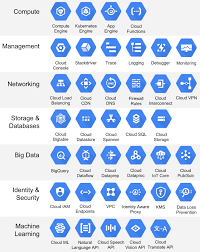
google cloud services

Unlocking the Power of Google Cloud Services: A Comprehensive Guide

Google Cloud Services

Exploring Google Cloud Services: A Comprehensive Overview

In today’s digital age, cloud computing has become an essential component for businesses and individuals alike. Among the leading providers of cloud services, Google Cloud stands out with its robust, reliable, and innovative offerings. This article delves into the various services provided by Google Cloud and how they can benefit your organization.

What is Google Cloud?

Google Cloud is a suite of cloud computing services offered by Google. It provides a range of solutions including computing power, storage options, machine learning capabilities, and data analytics tools. These services are designed to help businesses scale efficiently while maintaining security and performance.

Key Services Offered by Google Cloud

Compute Engine

The Compute Engine is Google’s Infrastructure-as-a-Service (IaaS) offering. It allows users to run virtual machines on Google’s infrastructure. With customizable VM configurations and support for various operating systems, Compute Engine enables businesses to deploy scalable applications with ease.

App Engine

The App Engine is a Platform-as-a-Service (PaaS) that lets developers build and deploy applications without worrying about the underlying infrastructure. It supports multiple programming languages such as Java, Python, PHP, and Go. The App Engine automatically handles scaling based on traffic demands.

Kubernetes Engine

Kubernetes Engine provides managed Kubernetes clusters for deploying containerized applications. Leveraging Kubernetes’ powerful orchestration capabilities, this service simplifies the management of complex containerized environments while ensuring high availability and scalability.

Storage Solutions

Google Cloud offers a variety of storage solutions tailored to different needs:

  • Cloud Storage: Object storage service for storing unstructured data like images and videos.
  • Persistent Disk: Durable block storage for virtual machines.
  • Filestore: Managed file storage service for applications requiring a file system interface.
  • Cloud SQL: Fully-managed relational database service supporting MySQL, PostgreSQL, and SQL Server.
  • Bigtable: NoSQL database service designed for large analytical workloads.

Big Data & Analytics

The platform excels in big data processing and analytics through services like BigQuery – a fully-managed data warehouse enabling super-fast SQL queries using the processing power of Google’s infrastructure. Additionally, Dataflow provides stream and batch processing capabilities while Dataproc offers managed Spark and Hadoop clusters.

Machine Learning & AI

Pioneering in artificial intelligence (AI), Google Cloud offers several machine learning tools such as TensorFlow Enterprise for building custom models or AutoML for those who prefer pre-trained models that can be further customized with minimal coding knowledge.

The Benefits of Using Google Cloud Services

  • Simplicity: Easy-to-use interfaces combined with extensive documentation make it accessible even to those new to cloud computing.
  • Sustainability: Google’s commitment to sustainability ensures their data centers run on renewable energy sources whenever possible.
  • Sustainability: Sustainability: Sustainability: Sustainability: Sustainability: Sustainability: Sustainability: Sustainability: Sustainability: Sustainability: Sustainability:Simplicity:Simplicity:Simplicity:Simplicity:Simplicity:Simplicity:Simplicity:Simplicity:Simplicity:
      Sustainability Sustainability Sustainability Sustainability Sustainability Sustainability Simplicity Simplicity Simplicity Simplicity Simplicity Simplicity Simplicity Simplicity Simplicity

      li

      Strong Security Measures:

      i

      Built-in security features provide robust protection against threats.

      i

      li

      li

      Global Network:

      i

      Benefit from low latency access through one of the largest networks globally.

      i

      li

      li

      Scalability:

      i

      Easily scale resources up or down based on demand without disrupting operations.

      i

      li

      ul

      h2

      Conclusion

      h2

      p

      Whether you’re looking to host websites store large datasets analyze information in real-time or develop cutting-edge AI models Google Clouds comprehensive suite has something offer every business its unparalleled combination performance reliability innovation makes ideal choice organizations seeking leverage power technology drive growth success future looks bright those who choose harness potential vast array services available platform why wait start exploring today see difference yourself

      p

      body html


      Top 5 Advantages of Using Google Cloud Services

      1. Scalability
      2. Security
      3. Global Network
      4. Simplicity
      5. Innovation


      7 Drawbacks of Google Cloud Services for Businesses

      1. Steep learning curve for beginners unfamiliar with cloud computing
      2. Potential for unexpected cost overruns if usage is not carefully monitored
      3. Limited availability of customer support compared to other cloud service providers
      4. Data privacy concerns due to Google’s data collection practices for advertising purposes
      5. Integration challenges with certain third-party applications and services
      6. Geographical restrictions on data storage locations may impact compliance requirements
      7. Dependency on internet connectivity for accessing and managing cloud resources

      Scalability

      One of the key advantages of Google Cloud services is its scalability feature, allowing users to effortlessly adjust resources based on demand without causing disruptions to ongoing operations. This flexibility enables businesses to efficiently manage their infrastructure, ensuring optimal performance during peak times while also saving costs during periods of lower activity. With the ability to scale up or down seamlessly, organizations can adapt to changing needs swiftly and effectively, enhancing overall operational efficiency and agility.

      Security

      Google Cloud services offer a significant advantage in terms of security, as they come equipped with built-in security features that provide robust protection against various threats. By integrating advanced security measures directly into their infrastructure, Google ensures that sensitive data and applications hosted on their platform are safeguarded from potential cyber threats, enhancing overall data protection and instilling confidence in users regarding the safety of their digital assets.

      Global Network

      One of the significant advantages of Google Cloud Services is its Global Network, which allows users to benefit from low latency access through one of the largest networks worldwide. This expansive network infrastructure ensures that data and applications can be accessed quickly and efficiently from various locations around the globe, providing users with a seamless and responsive experience. By leveraging this vast network, businesses can enhance their performance, scalability, and reach while maintaining high levels of reliability and connectivity.

      Simplicity

      Google Cloud Services stand out for their simplicity, offering easy-to-use interfaces and comprehensive documentation that make the platform accessible even to beginners. With user-friendly tools and resources readily available, individuals and businesses can quickly navigate the services, set up their infrastructure, and leverage the power of cloud computing without facing steep learning curves. This emphasis on simplicity not only enhances user experience but also encourages more users to explore and utilize Google Cloud’s capabilities effectively.

      Innovation

      Google Cloud Services offer a significant advantage in terms of innovation, providing access to cutting-edge technologies and tools for AI, machine learning, and big data analytics. By leveraging these advanced capabilities, businesses can stay ahead of the curve and drive impactful insights from their data. The robust suite of services empowers organizations to unlock new opportunities, make informed decisions, and enhance operational efficiency through the application of state-of-the-art solutions in artificial intelligence and analytics.

      Steep learning curve for beginners unfamiliar with cloud computing

      One significant drawback of Google Cloud services is the steep learning curve it presents for beginners who are unfamiliar with cloud computing. Navigating the complexities of setting up and managing cloud resources on the platform can be challenging for those without prior experience. This hurdle may require additional time and effort to overcome, potentially slowing down the onboarding process and hindering the adoption of Google Cloud services for novice users.

      Potential for unexpected cost overruns if usage is not carefully monitored

      One significant drawback of using Google Cloud services is the potential for unexpected cost overruns if usage is not carefully monitored. Due to the pay-as-you-go pricing model, where customers are charged based on their actual usage of resources, it can be challenging to predict and control costs effectively. Without proper monitoring and management of resources, organizations may find themselves facing higher-than-anticipated bills, especially if there are spikes in usage or inefficient resource allocation. It is crucial for users to implement cost-monitoring strategies and utilize tools provided by Google Cloud to track and optimize their usage to avoid budgetary surprises.

      Limited availability of customer support compared to other cloud service providers

      One notable drawback of Google Cloud services is the limited availability of customer support when compared to other cloud service providers. Users may find it challenging to receive immediate assistance or personalized guidance, especially during critical situations or complex technical issues. This limitation in customer support responsiveness can potentially lead to delays in problem resolution and hinder the overall user experience for businesses relying on Google Cloud for their operations.

      Data privacy concerns due to Google’s data collection practices for advertising purposes

      One significant con of using Google Cloud services is the potential data privacy concerns stemming from Google’s extensive data collection practices for advertising purposes. As a company deeply involved in online advertising, Google gathers vast amounts of user data to create targeted ads. This raises apprehensions about the security and privacy of sensitive information stored on Google Cloud servers. Organizations may hesitate to migrate their data to Google Cloud due to fears of unauthorized access or misuse of their confidential data for advertising purposes, highlighting the importance of robust data protection measures and transparency in handling user information.

      Integration challenges with certain third-party applications and services

      One significant drawback of Google Cloud services is the integration challenges that may arise when trying to connect with specific third-party applications and services. While Google Cloud offers a wide range of tools and solutions, compatibility issues can occur when attempting to integrate with external platforms that have different architectures or protocols. This can lead to delays in implementation, increased complexity in managing workflows, and potential limitations in leveraging the full capabilities of both Google Cloud and the third-party services. Organizations considering Google Cloud must carefully assess their existing ecosystem and ensure seamless integration with essential external tools before committing to the platform.

      Geographical restrictions on data storage locations may impact compliance requirements

      One significant drawback of Google Cloud services is the geographical restrictions imposed on data storage locations, which can pose challenges for businesses with strict compliance requirements. Due to data sovereignty laws and regulations, organizations may face limitations on where their data can be stored, potentially leading to conflicts with specific compliance mandates. This constraint could hinder companies operating in regions with stringent data residency rules from fully utilizing Google Cloud services, as they may need to ensure that their data is stored in approved locations to comply with local regulations.

      Dependency on internet connectivity for accessing and managing cloud resources

      One significant drawback of Google Cloud services is the reliance on internet connectivity for accessing and managing cloud resources. This dependency poses a challenge, especially in situations where stable internet access is not guaranteed. Users may face disruptions in accessing critical data or applications if there are network issues or outages, impacting productivity and potentially causing downtime. Additionally, concerns about data security and privacy may arise when relying on an internet connection to handle sensitive information stored in the cloud. Organizations need to consider these limitations and have contingency plans in place to mitigate the risks associated with this con of Google Cloud services.