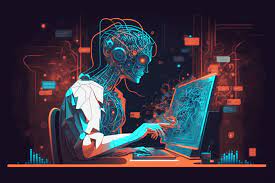
Unleashing the Power of Generative AI: Innovating Creativity in the Digital Age
Understanding Generative AI: Transforming Creativity and Innovation
Generative AI is a rapidly evolving field of artificial intelligence that focuses on creating models capable of generating new content. This includes everything from text and images to music and even complex data structures. By leveraging advanced algorithms, generative AI can produce outputs that mimic human creativity, opening up new possibilities in various industries.
What is Generative AI?
At its core, generative AI involves the use of machine learning models to generate data that resembles existing data. Unlike traditional AI, which often focuses on classification or prediction, generative AI aims to create new content. This is achieved through techniques such as neural networks and deep learning.
Key Technologies in Generative AI
- Generative Adversarial Networks (GANs): GANs consist of two neural networks—a generator and a discriminator—that work together to create realistic data. The generator creates new samples, while the discriminator evaluates them against real-world data. Through this adversarial process, GANs can produce remarkably lifelike images and videos.
- Variational Autoencoders (VAEs): VAEs are another type of neural network used in generative modeling. They work by encoding input data into a compressed representation before decoding it back into new content. VAEs are particularly useful for generating variations of existing data.
- Transformers: Originally designed for natural language processing tasks, transformer models like GPT-3 have demonstrated impressive capabilities in generating coherent text based on input prompts.
Applications of Generative AI
The potential applications of generative AI are vast and varied:
- Creative Arts: Artists and designers use generative AI to create unique artworks, music compositions, and fashion designs. These tools can assist creatives by providing inspiration or automating parts of the creative process.
- Content Creation: In media and entertainment, generative AI aids in script writing, video game design, and virtual world building by generating realistic characters and environments.
- Healthcare: Researchers utilize generative models to simulate complex biological processes or generate synthetic medical images for training diagnostic algorithms without compromising patient privacy.
- E-commerce: Businesses leverage generative AI for personalized marketing content creation or virtual try-ons for fashion items using generated imagery.
The Future of Generative AI
The future holds immense promise for generative AI as technology continues to advance at an unprecedented pace. However, it also poses challenges related to ethics and security concerns surrounding deepfakes—realistic fake media generated using these technologies—and intellectual property rights when machines create original works.
The key lies in responsible development practices that prioritize transparency while ensuring accountability throughout the entire lifecycle—from model training through deployment—to harness its full potential ethically across diverse domains globally.
This transformative technology has already begun reshaping industries worldwide with innovative solutions driven by machine-generated creativity—an exciting frontier where human ingenuity meets artificial intelligence head-on!
The journey into this brave new world promises both challenges yet untold opportunities waiting just beyond our current horizon—an era defined not only by what machines can do but how they inspire us all towards greater heights together!
Unlocking Creativity and Efficiency: The Top 6 Benefits of Generative AI
- 1. Enables creative content generation across various domains like art, music, and design.
- 2. Automates repetitive tasks in content creation, saving time and effort for creators.
- 3. Facilitates personalized experiences for users through tailored recommendations and outputs.
- 4. Supports innovation by providing new perspectives and ideas that may not have been considered otherwise.
- 5. Enhances research capabilities in fields such as healthcare by simulating complex scenarios and generating synthetic data.
- 6. Empowers businesses with tools for dynamic marketing strategies and product customization.
Navigating the Challenges of Generative AI: Ethics, Privacy, and Fairness
1. Enables creative content generation across various domains like art, music, and design.
Generative AI has revolutionized the creative landscape by enabling content generation across diverse domains such as art, music, and design. By harnessing advanced algorithms and machine learning models, generative AI can produce unique and innovative works that mimic human creativity. In art, it helps artists explore new styles and techniques, offering fresh perspectives and inspiration. In music, it assists composers in crafting original compositions or enhancing existing pieces with novel elements. In design, generative AI streamlines the creative process by generating patterns, layouts, and even entire structures that push the boundaries of traditional design principles. This technology not only augments human creativity but also democratizes access to creative tools, allowing individuals from all backgrounds to experiment and innovate in their respective fields.
2. Automates repetitive tasks in content creation, saving time and effort for creators.
Generative AI significantly enhances productivity in content creation by automating repetitive tasks, allowing creators to focus on more strategic and creative aspects of their work. By handling routine tasks such as drafting initial versions of text, generating image variations, or even creating background music tracks, generative AI reduces the time and effort required for these processes. This automation not only speeds up the production timeline but also helps maintain consistency and quality across different pieces of content. As a result, creators can allocate more resources to refining their ideas and developing innovative concepts, ultimately leading to more engaging and polished final products.
3. Facilitates personalized experiences for users through tailored recommendations and outputs.
Generative AI plays a pivotal role in enhancing user experiences by delivering personalized recommendations and outputs tailored to individual preferences. By analyzing vast amounts of data, generative models can discern patterns and preferences unique to each user, allowing for the creation of customized content that resonates on a personal level. Whether it’s suggesting music playlists, recommending products, or curating news articles, this technology ensures that users receive content that aligns with their tastes and interests. This level of personalization not only improves user satisfaction but also fosters engagement by making interactions more relevant and meaningful. As a result, businesses can build stronger relationships with their customers, while users enjoy a more enriched and individualized experience.
4. Supports innovation by providing new perspectives and ideas that may not have been considered otherwise.
Generative AI plays a pivotal role in fostering innovation by offering fresh perspectives and ideas that might not have been previously considered. By analyzing vast datasets and identifying patterns beyond human capability, these AI systems can propose novel solutions and creative approaches to complex problems. This ability to generate unexpected insights encourages out-of-the-box thinking, enabling businesses, researchers, and creatives to explore uncharted territories. Whether it’s designing a groundbreaking product, developing new scientific theories, or crafting unique artistic expressions, generative AI acts as a catalyst for innovation by breaking conventional boundaries and expanding the realm of possibilities.
5. Enhances research capabilities in fields such as healthcare by simulating complex scenarios and generating synthetic data.
Generative AI significantly enhances research capabilities, particularly in fields like healthcare, by simulating complex scenarios and generating synthetic data. This technology allows researchers to create detailed models of biological processes, enabling them to explore hypotheses and conduct experiments that would be difficult or impossible in real-world settings. By producing high-quality synthetic data, generative AI facilitates the training of machine learning models without the need for extensive real-world data collection, which can be costly and time-consuming. This capability not only accelerates the pace of medical research but also aids in the development of innovative treatments and diagnostic tools, ultimately contributing to improved patient outcomes.
6. Empowers businesses with tools for dynamic marketing strategies and product customization.
Generative AI empowers businesses by providing advanced tools for dynamic marketing strategies and product customization, allowing them to tailor their offerings to meet individual customer needs effectively. By analyzing vast amounts of consumer data, generative AI can create personalized marketing content that resonates with specific audiences, enhancing engagement and conversion rates. Additionally, it enables the development of customized products by generating design variations based on consumer preferences and trends. This level of personalization not only improves customer satisfaction but also fosters brand loyalty, as consumers feel more connected to products and services that are uniquely suited to their tastes and requirements. As a result, businesses can stay competitive in rapidly evolving markets by delivering innovative solutions that cater directly to their customers’ desires.
1. Ethical Concerns
Generative AI presents significant ethical concerns, particularly in the realm of creating fake content like deepfakes. These highly realistic but fabricated videos or images can be used to deceive or manipulate individuals, potentially leading to misinformation and erosion of trust in digital media. The ability to convincingly alter reality poses a threat to privacy, security, and the integrity of information. As generative AI technology becomes more accessible, it raises questions about accountability and the potential misuse by malicious actors seeking to exploit these tools for fraudulent activities or political manipulation. Addressing these ethical challenges requires robust regulatory frameworks and technological safeguards to ensure that generative AI is used responsibly and ethically.
2. Data Privacy Risks
Generative AI models often require extensive datasets to function effectively, which poses significant data privacy and security challenges. When these datasets contain sensitive information, such as personal details or confidential business data, the risk of exposure or misuse increases. The process of collecting, storing, and processing such large volumes of data can make systems vulnerable to breaches and unauthorized access. Additionally, ensuring that the data is anonymized and compliant with privacy regulations is a complex task that requires rigorous oversight. These concerns highlight the importance of implementing robust security measures and ethical guidelines to protect individuals’ privacy while leveraging the capabilities of generative AI.
3. Bias and Fairness
Generative AI models, while powerful, can inadvertently perpetuate biases present in their training data, leading to concerns about fairness and discrimination. These models learn from vast datasets that may contain historical or societal biases, which can then be reflected in the content they generate. For example, if a generative AI is trained on data with gender or racial biases, it might produce outputs that reinforce stereotypes or marginalize certain groups. This issue poses significant ethical challenges, as biased outputs can influence decision-making processes and impact real-world scenarios negatively. Addressing these biases requires careful curation of training data and the implementation of strategies to identify and mitigate unfair outcomes, ensuring that generative AI contributes positively to society without perpetuating existing inequalities.