
cfchris.com

Loading

devops sdlc

Optimizing Software Development: The Power of DevOps in SDLC

The Role of DevOps in the Software Development Life Cycle (SDLC)

The Role of DevOps in the Software Development Life Cycle (SDLC)

DevOps, a combination of “development” and “operations,” is a software development methodology that emphasizes collaboration and communication between software developers and IT operations professionals. When integrated into the Software Development Life Cycle (SDLC), DevOps can streamline the development process, improve efficiency, and enhance product quality.

Key Components of DevOps in SDLC:

Continuous Integration (CI): CI involves automatically integrating code changes into a shared repository multiple times a day. This practice helps identify and fix integration issues early in the development process.

Continuous Delivery (CD): CD focuses on automating the deployment process to deliver code changes to production quickly and reliably. It ensures that software is always in a deployable state.

Infrastructure as Code (IaC): IaC involves managing infrastructure through code and automation tools. It allows for consistent provisioning of environments, reducing manual errors and improving scalability.

Monitoring and Logging: Monitoring tools provide insights into system performance, while logging helps track events and troubleshoot issues. These practices are essential for maintaining system health and reliability.

Benefits of Integrating DevOps into SDLC:

Faster Time-to-Market: By automating processes and improving collaboration, DevOps accelerates development cycles, allowing organizations to release products faster.

Improved Quality: Continuous testing and integration help catch bugs early, leading to higher-quality software releases with fewer defects.

Enhanced Collaboration: DevOps promotes cross-functional teamwork, breaking down silos between development, operations, and other teams. This collaboration fosters innovation and efficiency.

Better Scalability: With IaC and automation, organizations can easily scale their infrastructure based on demand without manual intervention. This flexibility enables rapid growth without compromising stability.

In Conclusion

Integrating DevOps practices into the SDLC is crucial for modern software development teams looking to stay competitive in today’s fast-paced market. By embracing automation, collaboration, and continuous improvement, organizations can deliver high-quality products efficiently while meeting customer demands effectively.


6 Essential DevOps SDLC Tips for Streamlining Efficiency and Security

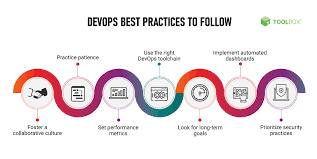
  1. Automate repetitive tasks to increase efficiency.
  2. Implement continuous integration and continuous deployment practices.
  3. Use version control systems to track changes in code and configurations.
  4. Monitor application performance and infrastructure health regularly.
  5. Encourage collaboration between development and operations teams.
  6. Prioritize security measures throughout the software development lifecycle.

Automate repetitive tasks to increase efficiency.

Automating repetitive tasks is a key tip in DevOps SDLC to boost efficiency and productivity. By leveraging automation tools and scripts, teams can streamline routine processes, such as testing, deployment, and monitoring, saving valuable time and reducing the risk of human error. This allows developers and operations professionals to focus on more strategic tasks, innovation, and problem-solving, ultimately accelerating the software development lifecycle and improving overall project outcomes.

Implement continuous integration and continuous deployment practices.

Implementing continuous integration and continuous deployment practices in DevOps SDLC is essential for streamlining the software development process. Continuous integration involves automatically integrating code changes into a shared repository multiple times a day, facilitating early detection and resolution of integration issues. On the other hand, continuous deployment focuses on automating the deployment process to deliver code changes to production swiftly and reliably. By adopting these practices, development teams can enhance collaboration, improve efficiency, and ensure that software is always in a deployable state, ultimately leading to faster time-to-market and higher-quality product releases.

Use version control systems to track changes in code and configurations.

In DevOps SDLC, it is essential to utilize version control systems to monitor and manage changes in code and configurations effectively. Version control systems, such as Git or SVN, allow developers to track modifications, collaborate seamlessly, revert to previous versions if needed, and maintain a clear history of changes. By implementing robust version control practices, teams can ensure consistency, traceability, and reliability throughout the software development process.

Monitor application performance and infrastructure health regularly.

Monitoring application performance and infrastructure health regularly is a critical aspect of implementing DevOps practices in the Software Development Life Cycle (SDLC). By continuously monitoring these key metrics, teams can identify potential issues early, ensure optimal system performance, and proactively address any anomalies that may impact the overall quality of the software. This proactive approach not only helps in maintaining a stable and reliable environment but also enables teams to make data-driven decisions to improve efficiency and enhance the end-user experience.

Encourage collaboration between development and operations teams.

Encouraging collaboration between development and operations teams is a key tip in implementing DevOps practices within the Software Development Life Cycle (SDLC). By fostering open communication and teamwork between these traditionally siloed departments, organizations can streamline processes, improve efficiency, and enhance the overall quality of software releases. When developers and operations professionals work together closely, they can better understand each other’s needs and challenges, leading to faster problem-solving, smoother deployments, and ultimately, more successful outcomes for the entire project.

Prioritize security measures throughout the software development lifecycle.

It is essential to prioritize security measures throughout the software development lifecycle when implementing DevOps practices. By integrating security from the initial stages of development, teams can identify and address vulnerabilities early on, reducing the risk of potential security breaches. This proactive approach ensures that security is not an afterthought but a fundamental aspect of the entire development process, leading to more secure and resilient software products.

kanban software development

Optimizing Workflow: The Impact of Kanban in Software Development

The Power of Kanban in Software Development

The Power of Kanban in Software Development

Kanban, a popular agile methodology, has revolutionized the way software development teams manage their projects. Originating from the Japanese manufacturing industry, Kanban has been adapted and embraced by software development teams worldwide for its simplicity and effectiveness.

What is Kanban?

Kanban is a visual project management tool that helps teams track and manage their work efficiently. The core principle of Kanban is to visualize work in progress (WIP) on a Kanban board, which typically consists of columns representing different stages of the workflow.

Key Concepts of Kanban

  • Visualizing Workflow: By visualizing tasks on a Kanban board, team members can easily see the status of each task and identify bottlenecks or blockers.
  • Limiting Work in Progress: Kanban encourages limiting the number of tasks in progress at any given time to improve focus and efficiency.
  • Continuous Delivery: Teams using Kanban strive for continuous delivery by completing and releasing tasks as soon as they are ready.
  • Continuous Improvement: Through regular retrospectives, teams reflect on their processes and make incremental improvements to enhance productivity.

The Benefits of Kanban in Software Development

Kanban offers several benefits to software development teams, including:

  • Improved Visibility: Team members have a clear view of the project status and can easily identify areas that need attention.
  • Increased Efficiency: By limiting WIP, teams can focus on completing tasks before moving on to new ones, leading to faster delivery times.
  • Better Collaboration: Kanban promotes collaboration among team members by fostering transparency and communication.
  • Flexibility: Teams can adapt to changing requirements or priorities quickly without disrupting the workflow.

In conclusion, Kanban is a powerful methodology that empowers software development teams to streamline their processes, improve efficiency, and deliver high-quality products consistently. By embracing the principles of Kanban, teams can achieve greater agility and success in today’s fast-paced development environment.


Understanding Kanban in Software Development: Key FAQs and Comparisons

  1. What is Kanban in software development?
  2. Is Jira a Kanban?
  3. Is Kanban good for software development?
  4. Is Kanban a agile tool?
  5. What is scrum vs Kanban?
  6. Is Kanban better than agile?
  7. Is Kanban a SDLC?

What is Kanban in software development?

Kanban in software development is a visual project management methodology that focuses on optimizing workflow efficiency and enhancing team collaboration. By visualizing tasks on a Kanban board and limiting work in progress, teams can easily track the status of each task, identify bottlenecks, and prioritize work effectively. Kanban promotes continuous delivery by completing tasks as soon as they are ready, leading to faster project completion times. This approach fosters transparency, flexibility, and continuous improvement within software development teams, ultimately resulting in enhanced productivity and successful project outcomes.

Is Jira a Kanban?

When it comes to Kanban software development, a common question that arises is whether Jira is a Kanban tool. Jira, a popular project management tool developed by Atlassian, offers Kanban boards as one of its features. While Jira itself is not inherently a Kanban methodology, it provides users with the flexibility to implement Kanban boards within its platform. This allows teams to visualize their workflow, track tasks, and manage projects using Kanban principles effectively. Therefore, while Jira is not exclusively a Kanban tool, it can be utilized as a powerful tool for implementing and practicing Kanban in software development projects.

Is Kanban good for software development?

When considering whether Kanban is suitable for software development, it’s important to recognize that Kanban’s principles and practices can significantly benefit software development teams. Kanban’s visual nature allows teams to track work progress, identify bottlenecks, and maintain a steady workflow. By limiting work in progress and focusing on continuous delivery, Kanban helps teams improve efficiency and productivity. Additionally, its emphasis on continuous improvement through regular retrospectives enables teams to adapt and optimize their processes over time. In essence, Kanban can be a valuable tool for software development by enhancing visibility, collaboration, and flexibility within the team.

Is Kanban a agile tool?

In the realm of software development, the question often arises: Is Kanban an agile tool? The answer is yes. Kanban is indeed considered an agile methodology that emphasizes flexibility, continuous improvement, and efficiency in managing workflows. While Kanban may have its unique approach compared to other agile frameworks like Scrum, its core principles align with the values and principles of the Agile Manifesto. By promoting visualizing work, limiting work in progress, and fostering continuous delivery and improvement, Kanban embodies the essence of agility in software development processes.

What is scrum vs Kanban?

When comparing Scrum and Kanban in software development, it’s essential to understand the key differences between the two methodologies. While both are agile approaches that aim to improve team efficiency and productivity, they have distinct characteristics. Scrum is based on fixed-length iterations (sprints) with predefined roles and ceremonies, while Kanban focuses on continuous delivery with no predefined timeframes and emphasizes visualizing workflow and limiting work in progress. Each methodology has its strengths and is suitable for different project requirements and team dynamics, making it crucial for teams to evaluate their needs carefully before choosing between Scrum and Kanban for their software development processes.

Is Kanban better than agile?

When comparing Kanban to Agile, it’s important to understand that Kanban is actually a framework within the broader Agile methodology. While both Kanban and Agile share common principles such as iterative development and continuous improvement, they serve different purposes. Kanban focuses on visualizing and optimizing workflow by limiting work in progress and promoting continuous delivery. On the other hand, Agile encompasses various methodologies like Scrum, XP, and Lean, each with its own set of practices. Therefore, it’s not a matter of Kanban being better than Agile but rather choosing the methodology that best suits the specific needs and goals of a software development team.

Is Kanban a SDLC?

In the context of software development, Kanban is not a Software Development Life Cycle (SDLC) methodology itself, but rather a project management framework that can be applied within various SDLC methodologies. While SDLC defines the overall process for developing software from initiation to deployment, Kanban focuses on visualizing and optimizing the flow of work within that process. Teams often integrate Kanban into their chosen SDLC methodology, such as Agile or Waterfall, to enhance efficiency, collaboration, and delivery speed by leveraging Kanban’s principles of visualizing workflow and limiting work in progress.

modern software development

Exploring the Innovations in Modern Software Development

The Evolution of Modern Software Development

The Evolution of Modern Software Development

In today’s fast-paced digital world, software development has undergone a significant transformation. Modern software development practices have revolutionized the way applications are built, deployed, and maintained.

Agile Methodology

One of the key pillars of modern software development is the adoption of agile methodology. Agile emphasizes iterative development, collaboration, and flexibility in responding to change. This approach allows teams to deliver high-quality software products more efficiently and adapt to evolving requirements.

DevOps Integration

DevOps has become an integral part of modern software development processes. By combining development (Dev) and operations (Ops) functions, DevOps promotes automation, collaboration, and continuous integration/continuous delivery (CI/CD). This integration streamlines the software delivery pipeline and enhances overall product quality.

Cloud Computing

Cloud computing has revolutionized how software is developed and deployed. Cloud platforms offer scalability, flexibility, and cost-effectiveness for hosting applications. Developers can leverage cloud services for storage, computing power, and infrastructure-as-code (IaC) to build robust and scalable solutions.

Microservices Architecture

Modern software applications are increasingly adopting a microservices architecture. This approach breaks down complex monolithic applications into smaller, independent services that communicate via APIs. Microservices enable teams to work on different components simultaneously, improve fault isolation, and scale individual services independently.

AI and Machine Learning

The integration of artificial intelligence (AI) and machine learning (ML) technologies is transforming modern software development. AI-powered tools enhance automation, predictive analytics, natural language processing (NLP), and data-driven decision-making. Developers can leverage AI/ML algorithms to optimize performance, personalize user experiences, and automate repetitive tasks.

In conclusion, modern software development is characterized by agility, automation, cloud-native architectures,

microservices,

AI/ML integration,

collaboration,

continuous delivery,

and customer-centricity.

Embracing these trends empowers organizations to innovate rapidly,

deliver value to customers efficiently,

and stay competitive in today’s dynamic market landscape.

By leveraging modern software development practices

businesses can drive digital transformation

accelerate time-to-market

improve product quality

foster innovation

respond quickly to changing market demands

Stay ahead in the digital era.


Understanding Modern Software Development: Key FAQs and Methodologies Explained

  1. What is modern programming?
  2. What are modern software engineering practices?
  3. What are the seven 7 software development methodologies?
  4. What are the 5 phases of software development?
  5. What are the 7 phases of software development life cycle?
  6. What are the top five principles of modern process?
  7. What are the 6 stages of software development?
  8. How is modern software built?
  9. What is the modern software development method?

What is modern programming?

Modern programming refers to the contemporary approach and practices used in software development to create efficient, scalable, and innovative applications. It encompasses the adoption of agile methodologies, DevOps principles, cloud computing services, microservices architecture, and integration of artificial intelligence and machine learning technologies. Modern programming emphasizes collaboration, automation, continuous delivery, and customer-centricity to meet the evolving demands of today’s digital landscape. By embracing modern programming techniques, developers can build robust solutions that drive digital transformation, enhance user experiences, and stay competitive in a rapidly changing technological environment.

What are modern software engineering practices?

Modern software engineering practices encompass a range of methodologies and techniques that have evolved to meet the demands of today’s dynamic digital landscape. These practices include agile development, DevOps integration, continuous integration/continuous delivery (CI/CD), test-driven development (TDD), code reviews, version control systems, and automated testing. By embracing these modern practices, software development teams can achieve greater efficiency, collaboration, quality assurance, and responsiveness to changing requirements. Adopting these practices enables organizations to deliver high-quality software products faster, more reliably, and with enhanced customer satisfaction.

What are the seven 7 software development methodologies?

When it comes to modern software development methodologies, there are several approaches that teams can adopt based on their project requirements and organizational goals. Seven commonly recognized software development methodologies include Agile, Waterfall, Scrum, Kanban, Lean, Extreme Programming (XP), and Spiral. Each methodology offers unique principles and practices to guide the development process, emphasizing factors such as iterative development, customer collaboration, continuous improvement, flexibility in responding to changes, and efficient project management. By understanding the characteristics of these methodologies, teams can choose the most suitable approach to enhance productivity and deliver high-quality software solutions effectively.

What are the 5 phases of software development?

In modern software development, the process typically consists of five key phases: requirements gathering, design, implementation, testing, and maintenance. During the requirements gathering phase, stakeholders define and document the project’s objectives and specifications. The design phase involves creating a blueprint for the software’s architecture and functionality. Implementation is where developers write and code the actual software based on the design specifications. Testing is crucial for identifying and fixing bugs or issues in the software before deployment. Finally, maintenance involves ongoing updates, enhancements, and support to ensure the software remains efficient and effective over time. These five phases form a structured approach to developing high-quality software that meets user needs and business objectives.

What are the 7 phases of software development life cycle?

The software development life cycle consists of seven key phases that guide the process of creating software applications. These phases include planning, requirement analysis, design, implementation, testing, deployment, and maintenance. Each phase plays a crucial role in ensuring the successful development and delivery of high-quality software products. From defining project goals and requirements to coding, testing, and ongoing maintenance, following these structured phases helps teams streamline development processes, manage risks effectively, and ultimately deliver solutions that meet user needs and business objectives.

What are the top five principles of modern process?

Modern software development is guided by several key principles that ensure efficiency, quality, and adaptability. The top five principles include:

  1. **Agility**: Emphasizing iterative development and flexibility, agile methodologies allow teams to adapt quickly to changing requirements and deliver incremental improvements continuously.
  2. **Collaboration**: Effective communication and teamwork across cross-functional teams are crucial for aligning goals, sharing knowledge, and ensuring that all stakeholders are on the same page throughout the development process.
  3. **Automation**: Automating repetitive tasks such as testing, integration, and deployment enhances productivity and reduces human error, allowing developers to focus on more complex problem-solving.
  4. **Continuous Improvement**: By fostering a culture of ongoing learning and refinement through regular feedback loops and retrospectives, teams can consistently enhance their processes and products.
  5. **Customer-Centricity**: Keeping the end-user in mind at every stage of development ensures that the final product meets customer needs and expectations, leading to higher satisfaction and better market fit.

Together, these principles form a robust framework for developing high-quality software in today’s fast-paced digital landscape.

What are the 6 stages of software development?

In modern software development, the process typically consists of six key stages: requirements gathering, design, implementation, testing, deployment, and maintenance. During the requirements gathering phase, stakeholders collaborate to define project goals and specifications. The design stage involves creating a blueprint for the software architecture and user interface. Implementation is where developers write the code based on the design specifications. Testing ensures that the software functions correctly and meets quality standards. Deployment involves releasing the software to users or clients. Finally, maintenance involves ongoing support, updates, and improvements to ensure the software remains efficient and effective over time. These six stages are crucial in delivering successful software solutions that meet user needs and business objectives.

How is modern software built?

Modern software development involves a multi-faceted approach that combines innovative methodologies, cutting-edge technologies, and collaborative practices. Typically, modern software is built using agile methodologies that emphasize iterative development, continuous feedback, and adaptive planning. Development teams leverage tools and frameworks for automation, version control, and testing to streamline the development process. Cloud computing plays a crucial role in providing scalable infrastructure for deploying and hosting applications. Furthermore, the adoption of microservices architecture allows for modular design, enabling teams to work on independent components efficiently. Overall, modern software is built through a combination of agile practices, DevOps principles, cloud services, and advanced technologies to deliver high-quality applications that meet evolving user needs.

What is the modern software development method?

The modern software development method primarily revolves around agile practices, which emphasize flexibility, collaboration, and iterative progress. Unlike traditional waterfall models that follow a linear approach, modern methodologies like Agile and Scrum allow for adaptive planning and continual improvement throughout the development process. This approach encourages frequent communication among cross-functional teams, involving stakeholders at every stage to ensure that the final product aligns with user needs and expectations. Additionally, modern methods often incorporate DevOps practices to streamline deployment and operations, enabling continuous integration and delivery (CI/CD). By fostering a culture of responsiveness and innovation, these methods help teams deliver high-quality software more efficiently in today’s fast-paced technological landscape.