
cfchris.com

Loading

machine learning and deep learning

Exploring the Synergy Between Machine Learning and Deep Learning

The Power of Machine Learning and Deep Learning

Machine learning and deep learning are two transformative technologies that have revolutionized various industries, from healthcare to finance to transportation. These cutting-edge fields of artificial intelligence have the potential to unlock new possibilities and drive innovation like never before.

Machine Learning

Machine learning is a subset of artificial intelligence that enables systems to learn from data and improve their performance without being explicitly programmed. By analyzing patterns in data, machine learning algorithms can make predictions or decisions with minimal human intervention. This technology is widely used in applications such as recommendation systems, fraud detection, and image recognition.

Key Concepts in Machine Learning:

  • Supervised Learning: Algorithms learn from labeled training data to make predictions or classifications.
  • Unsupervised Learning: Algorithms find patterns in unlabeled data without predefined outcomes.
  • Reinforcement Learning: Agents learn by interacting with an environment and receiving rewards or penalties based on their actions.

Deep Learning

Deep learning is a subset of machine learning that uses artificial neural networks with multiple layers to model complex relationships in data. These deep neural networks can automatically discover intricate patterns and features, leading to state-of-the-art performance in tasks like natural language processing, computer vision, and speech recognition.

Advantages of Deep Learning:

  • Hierarchical Feature Representation: Deep neural networks can learn hierarchical representations of data, capturing intricate features at different levels of abstraction.
  • Scalability: Deep learning models can scale with more data and computational resources, allowing for continuous improvement in performance.
  • Versatility: Deep learning architectures can be adapted to various domains and tasks, making them highly versatile for diverse applications.

In conclusion, machine learning and deep learning are driving the next wave of technological advancements across industries. As these fields continue to evolve, we can expect even more groundbreaking innovations that will shape the future of AI-driven solutions.


Understanding the Differences: ML vs DL vs NLP vs AI

  1. What is ML vs DL vs NLP?
  2. What is the difference between machine learning and deep learning?
  3. Does deep learning require machine learning?
  4. What is ML vs DL vs AI?
  5. What is the difference between deep learning and machine learning?
  6. What is the difference between AI ML and DL?

What is ML vs DL vs NLP?

When discussing machine learning (ML), deep learning (DL), and natural language processing (NLP), it’s essential to understand their distinctions. Machine learning is a broader concept that encompasses various algorithms and techniques enabling systems to learn from data and make predictions. Deep learning is a subset of machine learning that uses neural networks with multiple layers to model complex patterns in data, achieving high levels of accuracy in tasks like image recognition and speech synthesis. Natural language processing focuses specifically on the interaction between computers and human language, allowing machines to understand, interpret, and generate human language. In essence, ML provides the foundation for DL, which in turn powers advanced applications like NLP, showcasing the interconnected nature of these technologies in shaping the future of artificial intelligence.

What is the difference between machine learning and deep learning?

When exploring the distinction between machine learning and deep learning, it is essential to understand that machine learning is a broader concept that encompasses various techniques for enabling computers to learn from data and make decisions without explicit programming. On the other hand, deep learning is a subset of machine learning that specifically focuses on artificial neural networks with multiple layers to model complex patterns and relationships in data. While machine learning algorithms can handle a wide range of tasks based on labeled or unlabeled data, deep learning excels in processing vast amounts of unstructured data for tasks like image recognition, natural language processing, and speech recognition. In summary, deep learning is a sophisticated approach within the realm of machine learning that leverages deep neural networks to achieve high levels of accuracy and performance in complex tasks requiring intricate pattern recognition.

Does deep learning require machine learning?

In the realm of artificial intelligence, deep learning is actually a subset of machine learning. Therefore, deep learning does require machine learning as a foundational concept. Machine learning encompasses various algorithms and techniques that enable systems to learn from data and make predictions or decisions without explicit programming. Deep learning, on the other hand, utilizes complex neural networks with multiple layers to model intricate patterns in data. So, while deep learning is a specialized form of machine learning, it builds upon the core principles and methodologies of machine learning to achieve advanced levels of performance in tasks such as image recognition, natural language processing, and more.

What is ML vs DL vs AI?

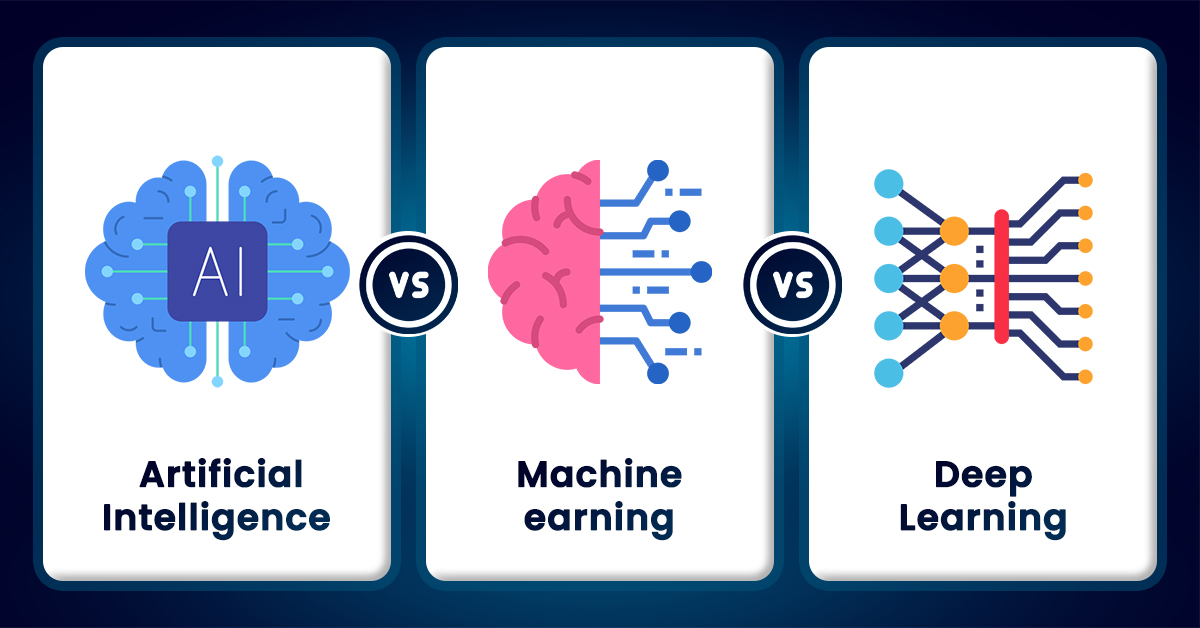
Machine Learning (ML), Deep Learning (DL), and Artificial Intelligence (AI) are interconnected fields that often cause confusion due to their overlapping nature. AI is the broadest concept, encompassing any technique that enables machines to mimic human intelligence. Within AI, machine learning is a subset focused on creating algorithms that allow computers to learn from and make predictions based on data. Deep learning, in turn, is a specialized subset of machine learning that uses neural networks with multiple layers to analyze complex patterns in large datasets. While AI can include rule-based systems and other non-learning techniques, ML and DL specifically refer to data-driven approaches where systems improve over time with exposure to more data.

What is the difference between deep learning and machine learning?

When discussing the difference between deep learning and machine learning, it’s important to understand that deep learning is a subset of machine learning. While both technologies involve training algorithms to make predictions based on data, the key distinction lies in their approach to data representation and feature extraction. Machine learning algorithms typically require manual feature engineering to extract relevant patterns from data, whereas deep learning models use artificial neural networks with multiple layers to automatically learn hierarchical representations of data. This allows deep learning algorithms to capture intricate features at different levels of abstraction, leading to superior performance in complex tasks such as image recognition and natural language processing. In essence, deep learning can be seen as a more advanced and sophisticated form of machine learning that leverages deep neural networks for unparalleled predictive power.

What is the difference between AI ML and DL?

Artificial Intelligence (AI), Machine Learning (ML), and Deep Learning (DL) are interconnected fields, but they differ in scope and complexity. AI is the broadest concept, encompassing any technique that enables machines to mimic human intelligence. Within AI, machine learning is a subset that focuses on algorithms allowing computers to learn from data and improve their performance over time without being explicitly programmed. Deep learning, in turn, is a specialized subset of machine learning that uses neural networks with multiple layers to analyze complex patterns in large datasets. While AI provides the overarching goal of creating intelligent systems, ML offers the methods for data-driven learning, and DL enhances these methods by enabling more sophisticated pattern recognition through deep neural networks.


artificial general intelligence

Unveiling the Future: Artificial General Intelligence and Its Implications

Artificial General Intelligence: The Future of AI

Artificial General Intelligence: The Future of AI

Artificial General Intelligence (AGI) represents a significant milestone in the field of artificial intelligence. Unlike narrow AI, which is designed to perform specific tasks, AGI aims to replicate the broad cognitive abilities of humans. This means an AGI system would be capable of understanding, learning, and applying knowledge across a wide range of tasks, much like a human being.

Understanding AGI

AGI is often referred to as “strong AI” or “full AI,” and it stands in contrast to “weak AI,” which encompasses systems that are highly specialized. For instance, today’s AI applications excel in areas like language translation, image recognition, and strategic game playing but lack the general reasoning capabilities humans possess.

The Road to AGI

The journey toward achieving AGI involves several complex challenges. One key challenge is developing algorithms that can learn from fewer examples than current systems require. Human beings can learn new concepts with minimal exposure; replicating this ability in machines is a significant hurdle.

Another challenge lies in creating systems that can understand context and exhibit common sense reasoning. Humans effortlessly navigate ambiguous situations by drawing on vast amounts of background knowledge and experience—something current AI models struggle with.

Potential Impacts of AGI

The development of AGI could revolutionize numerous industries by automating complex tasks that currently require human intelligence. It holds the potential to transform healthcare through advanced diagnostics and personalized treatment plans, enhance scientific research with faster data analysis, and improve decision-making processes across various sectors.

However, the advent of AGI also raises ethical and societal concerns. Ensuring that these powerful systems align with human values and do not pose risks to society is paramount. Discussions around safety measures, control mechanisms, and ethical guidelines are crucial as we advance toward this technological frontier.

The Current State of AGI Research

While true AGI has not yet been realized, research in this area continues to progress. Leading tech companies and academic institutions are investing heavily in exploring new methodologies for achieving general intelligence.

Current efforts focus on enhancing machine learning techniques, developing more sophisticated neural networks, and exploring alternative approaches such as neuromorphic computing—an area that seeks inspiration from the human brain’s architecture.

The Future Outlook

The timeline for achieving AGI remains uncertain; some experts predict it could be decades away while others believe it might emerge sooner given rapid advancements in technology. Regardless of when it arrives, preparing for its implications is essential for ensuring a beneficial integration into society.

In conclusion, Artificial General Intelligence represents both an exciting opportunity and a formidable challenge within the realm of artificial intelligence. Its successful development could unlock unprecedented possibilities while necessitating careful consideration of its broader impacts on humanity.


9 Essential Tips for Navigating the World of Artificial General Intelligence

  1. Understand the basics of machine learning and deep learning.
  2. Stay updated on the latest research and developments in AGI.
  3. Consider ethical implications and societal impact of AGI.
  4. Collaborate with experts from diverse fields like neuroscience, psychology, and computer science.
  5. Experiment with different algorithms and models to enhance AGI capabilities.
  6. Focus on creating robust and interpretable AI systems for better understanding of AGI behavior.
  7. Explore reinforcement learning techniques for training AGI agents in complex environments.
  8. Investigate methods for ensuring safety and control in autonomous AGI systems.
  9. Engage in discussions and debates about the future of AGI to foster a well-informed community.

Understand the basics of machine learning and deep learning.

Understanding the basics of machine learning and deep learning is essential for grasping the potential and challenges of artificial general intelligence (AGI). Machine learning involves algorithms that enable computers to learn from data and improve their performance over time without being explicitly programmed. Deep learning, a subset of machine learning, uses neural networks with many layers to analyze various levels of data abstraction. These technologies form the foundation of current AI systems and are crucial for developing more advanced models that could lead to AGI. By familiarizing oneself with these concepts, individuals can better appreciate how AI systems make decisions, recognize patterns, and potentially evolve toward achieving human-like cognitive abilities.

Stay updated on the latest research and developments in AGI.

To stay informed and knowledgeable about artificial general intelligence, it is crucial to remain updated on the latest research and developments in the field. By staying abreast of new findings, breakthroughs, and trends in AGI, individuals can deepen their understanding of this complex technology and its potential implications. Keeping up-to-date with AGI advancements also enables professionals to adapt their skills and strategies in alignment with the evolving landscape of artificial intelligence, ensuring they remain competitive and well-informed in this rapidly evolving field.

Consider ethical implications and societal impact of AGI.

When delving into the realm of artificial general intelligence (AGI), it is crucial to consider the ethical implications and societal impact that such advanced technology may bring. As AGI systems possess the potential for autonomous decision-making and significant influence on various aspects of human life, addressing ethical concerns surrounding their development, deployment, and governance is paramount. Furthermore, understanding how AGI could shape our society, economy, and cultural norms is essential for proactively mitigating any potential risks and ensuring that these powerful systems align with our shared values and benefit humanity as a whole.

Collaborate with experts from diverse fields like neuroscience, psychology, and computer science.

Collaborating with experts from diverse fields such as neuroscience, psychology, and computer science is crucial when delving into the realm of artificial general intelligence (AGI). By bringing together professionals with varied backgrounds and expertise, a multidisciplinary approach can be adopted to tackle the complex challenges associated with developing AGI. Neuroscientists can provide insights into how the human brain processes information, psychologists can contribute knowledge on human cognition and behavior, and computer scientists can offer technical skills in building intelligent systems. This collaborative effort fosters a holistic understanding of AGI and paves the way for innovative solutions that draw from the intersection of different disciplines.

Experiment with different algorithms and models to enhance AGI capabilities.

Experimenting with various algorithms and models is a crucial tip for advancing the capabilities of Artificial General Intelligence (AGI). By exploring different approaches to machine learning and neural networks, researchers can uncover innovative solutions that may propel AGI development forward. Diversifying experimentation allows for the discovery of more efficient methods, better performance, and potentially groundbreaking breakthroughs in achieving general intelligence. This iterative process of testing and refining algorithms is essential in pushing the boundaries of what AGI can achieve and accelerating progress towards creating truly intelligent machines.

Focus on creating robust and interpretable AI systems for better understanding of AGI behavior.

Focusing on creating robust and interpretable AI systems is crucial for advancing our understanding of Artificial General Intelligence (AGI) behavior. Robustness ensures that AI systems can perform reliably across a variety of tasks and conditions, which is essential for AGI’s goal of replicating human-like cognitive abilities. Interpretability, on the other hand, allows developers and users to comprehend how AI systems reach their decisions, making it easier to trust and refine these technologies. By prioritizing these aspects, researchers can gain deeper insights into the decision-making processes of AGI systems, identify potential biases or errors, and ensure that these intelligent systems align with human values and ethical standards. This approach not only enhances the safety and effectiveness of AGI but also builds public confidence in its deployment across different sectors.

Explore reinforcement learning techniques for training AGI agents in complex environments.

Exploring reinforcement learning techniques for training Artificial General Intelligence (AGI) agents in complex environments is a crucial step towards achieving general intelligence. By leveraging reinforcement learning, AGI agents can learn to make decisions and take actions based on feedback from their environment, gradually improving their performance over time. This approach allows AGI systems to adapt to dynamic and intricate scenarios, enhancing their ability to navigate diverse challenges and exhibit human-like cognitive capabilities.

Investigate methods for ensuring safety and control in autonomous AGI systems.

Investigating methods for ensuring safety and control in autonomous Artificial General Intelligence (AGI) systems is crucial as we advance towards creating machines with human-like cognitive abilities. Addressing potential risks associated with AGI, such as unintended consequences or system malfunctions, requires developing robust safety protocols and control mechanisms. By exploring strategies to mitigate risks proactively, we can pave the way for the responsible deployment of AGI technology that aligns with ethical standards and prioritizes the well-being of society.

Engage in discussions and debates about the future of AGI to foster a well-informed community.

Engaging in discussions and debates about the future of Artificial General Intelligence (AGI) is crucial for fostering a well-informed community. By actively participating in conversations surrounding AGI, individuals can share diverse perspectives, exchange knowledge, and raise important questions about the ethical, societal, and technological implications of AGI development. These discussions not only promote critical thinking but also help shape responsible approaches to advancing AGI technology in a way that aligns with human values and interests. Embracing open dialogue on AGI ensures that stakeholders stay informed, collaborate effectively, and collectively navigate the complexities of this transformative field.

google machine learning

Exploring the Impact of Google’s Machine Learning Innovations

Google Machine Learning

The Power of Google Machine Learning

Machine learning is a cutting-edge technology that has revolutionized various industries, and Google is at the forefront of this innovation. Google’s machine learning algorithms and tools have transformed the way we interact with technology and have opened up new possibilities for businesses and individuals alike.

Applications of Google Machine Learning

Google uses machine learning in a wide range of products and services, including:

  • Google Search: Machine learning algorithms help improve search results by understanding user intent and providing more relevant information.
  • Google Photos: The image recognition capabilities powered by machine learning enable users to search for photos based on objects, people, or locations.
  • Google Assistant: Natural language processing algorithms allow Google Assistant to understand and respond to user queries more effectively.
  • Google Translate: Machine learning helps improve translation accuracy and efficiency across multiple languages.
  • YouTube Recommendations: By analyzing user behavior, machine learning algorithms suggest personalized video recommendations to users.

The Future of Google Machine Learning

As technology advances, Google continues to push the boundaries of what is possible with machine learning. With ongoing research and development efforts, we can expect to see even more sophisticated applications of machine learning in Google’s products and services in the future.

In conclusion, Google’s commitment to leveraging machine learning has transformed the digital landscape and enhanced user experiences across its platforms. The power of Google machine learning continues to drive innovation and shape the future of technology.


Top 6 Frequently Asked Questions About Google’s Machine Learning

  1. How does machine learning work Google?
  2. What is Google’s machine learning called?
  3. Can I use Google AI for free?
  4. Is Google machine learning certification worth it?
  5. Does Google have machine learning?
  6. Is ChatGPT machine learning?

How does machine learning work Google?

Machine learning in Google works through a process where algorithms analyze vast amounts of data to recognize patterns and make predictions. Google utilizes various machine learning techniques, such as neural networks and deep learning, to train models that can perform tasks like image recognition, language translation, and personalized recommendations. These models continuously learn and improve from new data, enabling Google services to adapt and provide more accurate results over time. By leveraging the power of machine learning, Google enhances its products and services to deliver tailored experiences that meet the evolving needs of users.

What is Google’s machine learning called?

Google’s machine learning technology is commonly referred to as TensorFlow. TensorFlow is an open-source machine learning library developed by Google that allows developers to build and train various machine learning models efficiently. Known for its flexibility and scalability, TensorFlow has become a popular choice among researchers and practitioners in the field of artificial intelligence. By leveraging TensorFlow, users can explore the capabilities of machine learning and create innovative solutions across different domains.

Can I use Google AI for free?

Yes, Google offers several AI and machine learning tools that can be used for free. For instance, Google Colab allows users to write and execute Python code in a Jupyter notebook environment with the added benefit of free access to GPUs. Additionally, TensorFlow, an open-source machine learning framework developed by Google, is freely available for developers and researchers. Google Cloud also provides a free tier that includes access to certain AI and machine learning services such as AutoML and the Cloud AI Platform, albeit with usage limits. These resources make it easier for individuals and small businesses to experiment with and integrate powerful AI capabilities into their projects without significant upfront costs.

Is Google machine learning certification worth it?

When considering whether the Google machine learning certification is worth it, individuals should weigh the potential benefits against their specific career goals and aspirations. Obtaining a certification from Google in machine learning can enhance one’s credentials, demonstrate proficiency in the field, and open up new opportunities for career advancement. It may also provide valuable knowledge and skills that can be applied in various industries. However, the value of the certification ultimately depends on how it aligns with an individual’s career path and whether it helps them achieve their professional objectives. Conducting thorough research and evaluating the relevance of the certification to one’s goals can help determine if pursuing a Google machine learning certification is a worthwhile investment of time and resources.

Does Google have machine learning?

Yes, Google extensively utilizes machine learning in various aspects of its products and services. Google has been at the forefront of leveraging machine learning algorithms to enhance user experiences and improve the functionality of its platforms. From improving search results and image recognition in Google Photos to enhancing language processing capabilities in Google Assistant, the company’s commitment to integrating machine learning technologies is evident across its ecosystem. Google’s advancements in machine learning continue to drive innovation and set new standards for the industry.

Is ChatGPT machine learning?

When users inquire whether ChatGPT is a form of machine learning on Google, it’s important to clarify that ChatGPT is indeed a machine learning model. Developed by OpenAI, ChatGPT utilizes a deep learning architecture called the transformer model to generate human-like text responses based on the input it receives. By training on vast amounts of text data, ChatGPT learns patterns and context to engage in meaningful conversations with users. Its ability to continuously improve and adapt its responses showcases the power and effectiveness of machine learning in natural language processing tasks like conversational AI.