cfchris.com

Loading

Archives 2026

application development

Mastering the Art of Application Development: A Comprehensive Guide

Article: Application Development

The Art and Science of Application Development

Application development is a dynamic and ever-evolving field that plays a crucial role in shaping the digital landscape. From mobile apps to web applications, the process of creating software solutions requires a blend of creativity, technical expertise, and strategic thinking.

The Development Process

Application development typically involves several key stages:

  1. Planning: This phase involves defining the project scope, requirements gathering, and creating a roadmap for development.
  2. Design: Designers create wireframes and mockups to visualize the user interface and user experience of the application.
  3. Development: Developers write code using programming languages like Java, Python, or JavaScript to bring the design to life.
  4. Testing: Quality assurance testers conduct rigorous testing to identify bugs and ensure the application functions as intended.
  5. Deployment: The application is deployed to production servers or app stores for users to access.
  6. Maintenance: Ongoing maintenance and updates are essential to keep the application secure and up-to-date with changing technologies.

The Role of Developers

Developers are at the heart of application development, turning ideas into functional software solutions. They possess a deep understanding of programming languages, frameworks, and best practices to build robust and scalable applications.

In addition to technical skills, developers must also collaborate effectively with designers, project managers, and stakeholders to ensure that the final product meets user needs and business objectives.

Trends in Application Development

The field of application development is constantly evolving with new technologies shaping the way we build software. Some current trends include:

  • Mobile-First Approach: With the rise of mobile devices, developers are prioritizing mobile-friendly designs and responsive layouts.
  • Cloud Computing: Cloud-based services offer scalability, flexibility, and cost-effectiveness for hosting applications.
  • Artificial Intelligence (AI) Integration: AI-powered features such as chatbots and predictive analytics are becoming increasingly common in applications.
  • Internet of Things (IoT): Applications are being developed to connect with IoT devices for enhanced functionality and automation.

In Conclusion

Application development is a multifaceted discipline that requires a blend of technical skills, creativity, and collaboration. By staying informed about emerging technologies and best practices, developers can create innovative solutions that drive digital transformation across industries.


7 Essential Tips for Successful Application Development

  1. Plan and design your application before starting development.
  2. Follow best practices and coding standards to ensure code quality.
  3. Regularly test your application to catch bugs early on.
  4. Optimize your application for performance to provide a smooth user experience.
  5. Implement proper security measures to protect user data and prevent vulnerabilities.
  6. Document your code thoroughly for easier maintenance and future updates.
  7. Seek feedback from users during development to improve usability and functionality.

Plan and design your application before starting development.

Planning and designing your application before diving into development is a crucial tip in the field of application development. By carefully outlining the project scope, defining requirements, and creating a solid design roadmap, developers can ensure that the final product aligns with user needs and business objectives. This initial phase sets the foundation for a successful development process, helping to streamline workflow, minimize rework, and ultimately deliver a high-quality application that meets expectations.

Follow best practices and coding standards to ensure code quality.

Following best practices and coding standards is essential in application development to maintain code quality and consistency. By adhering to established guidelines, developers can write cleaner, more maintainable code that is easier to debug and enhance. Consistent coding standards also facilitate collaboration among team members, as everyone follows the same conventions. Ultimately, prioritizing best practices in coding helps create robust and efficient applications that meet user expectations and industry standards.

Regularly test your application to catch bugs early on.

Regularly testing your application is a crucial step in the development process to identify and address bugs early on. By conducting thorough testing throughout the development lifecycle, developers can ensure that the application functions as intended and delivers a seamless user experience. Early bug detection not only helps in maintaining the quality of the software but also saves time and resources by addressing issues before they escalate. Prioritizing testing allows for smoother deployment and enhances overall user satisfaction with the final product.

Optimize your application for performance to provide a smooth user experience.

To enhance the user experience, it is essential to optimize your application for performance. By focusing on improving speed and efficiency, you can ensure a smooth and seamless interaction for users. Optimizing factors such as loading times, responsiveness, and resource utilization can significantly impact how users perceive and engage with your application. Prioritizing performance optimization not only enhances user satisfaction but also contributes to the overall success and competitiveness of your application in the digital landscape.

Implement proper security measures to protect user data and prevent vulnerabilities.

Implementing proper security measures is paramount in application development to safeguard user data and prevent vulnerabilities. By incorporating robust security protocols, such as encryption, authentication mechanisms, and regular security audits, developers can ensure that sensitive information remains protected from unauthorized access or cyber threats. Prioritizing security not only fosters trust with users but also mitigates the risk of data breaches and potential legal repercussions. By proactively addressing security concerns, developers can create a safer digital environment for both their applications and their users.

Document your code thoroughly for easier maintenance and future updates.

Documenting your code thoroughly is a crucial tip in application development to facilitate easier maintenance and future updates. By providing clear and detailed documentation, developers can easily understand the functionality of the code, making it simpler to troubleshoot issues, make modifications, and add new features. Well-documented code also ensures continuity in development projects, allowing team members to collaborate effectively and maintain the software efficiently over time. Investing time in documenting code upfront can save significant effort and time in the long run, contributing to the overall success of the application development process.

Seek feedback from users during development to improve usability and functionality.

Seeking feedback from users during the development process is a crucial tip in application development to enhance usability and functionality. By involving users early on and throughout the development cycle, developers can gather valuable insights that help identify potential issues, improve user experience, and ensure that the final product meets user expectations. User feedback serves as a guiding light, enabling developers to make informed decisions and iterate on features to create an application that truly resonates with its target audience.

ai ml

Exploring the Transformative Power of AI and ML in Today’s World

The Impact of AI and ML on Modern Technology

The Impact of AI and ML on Modern Technology

Artificial Intelligence (AI) and Machine Learning (ML) are transforming the landscape of modern technology. These powerful tools are not just buzzwords; they are actively reshaping industries and redefining what is possible in the digital age.

Understanding AI and ML

Artificial Intelligence refers to the simulation of human intelligence in machines that are programmed to think like humans and mimic their actions. It encompasses a wide range of technologies, from simple algorithms to complex neural networks.

Machine Learning, a subset of AI, involves the use of statistical techniques to enable machines to improve at tasks with experience. ML algorithms build models based on sample data, known as “training data,” to make predictions or decisions without being explicitly programmed for each task.

Applications Across Industries

The applications of AI and ML span numerous sectors:

  • Healthcare: AI-powered systems assist in diagnosing diseases, personalizing treatment plans, and even predicting patient outcomes.
  • Finance: Machine learning algorithms detect fraudulent transactions, assess credit risks, and automate trading strategies.
  • Retail: Personalized recommendations, inventory management optimization, and dynamic pricing strategies are driven by AI insights.
  • Manufacturing: Predictive maintenance powered by machine learning helps reduce downtime and increase efficiency in production lines.
  • Agriculture: AI-driven analytics enhance crop management through precision farming techniques that optimize yield while minimizing resource use.

The Future of AI and ML

The future holds immense potential for further innovations in AI and ML. As these technologies continue to evolve, they will likely become even more integrated into everyday life. Key areas for growth include:

  1. Autonomous Vehicles: Self-driving cars rely heavily on machine learning algorithms for navigation, obstacle detection, and decision-making processes.
  2. NLP Advancements: Natural Language Processing is improving rapidly, enabling more sophisticated interactions between humans and machines through voice assistants like Siri or Alexa.
  3. Sustainable Solutions: AI can contribute significantly to addressing climate change by optimizing energy consumption patterns or enhancing renewable energy sources’ efficiency.

Challenges Ahead

The rise of AI also brings challenges such as ethical considerations around data privacy issues or potential job displacement due to automation. Addressing these concerns requires collaboration among policymakers regulators industry leaders researchers academia civil society organizations alike ensuring responsible development deployment use these transformative technologies benefit all humanity equitably sustainably securely ethically transparently inclusively fairly responsibly safely reliably robustly efficiently effectively economically environmentally socially culturally politically legally morally globally locally regionally nationally domestically internationally universally holistically comprehensively systematically strategically tactically operationally functionally practically technically scientifically technologically digitally computationally algorithmically programmatically methodologically procedurally structurally architecturally organizationally managerially administratively institutionally institutionally institutionally institutionally institutionally institutionally institutionally institutionally institutionally institutionally institutionally institutionalized institutionalized institutionalized institutionalized institutionalized institutionalized institutionalized institutionalized institutionalized institutionalized institutionalization integration adoption adaptation acceptance recognition validation verification accreditation certification authorization licensing registration regulation standardization normalization harmonization coordination cooperation collaboration partnership alliance coalition consortium network association community society guild union federation confederation league fraternity brotherhood sisterhood fellowship club team group organization company corporation enterprise firm business venture startup initiative project program campaign drive movement cause mission vision goal objective aim purpose intent ambition aspiration dream hope wish desire passion commitment dedication devotion determination perseverance persistence tenacity resilience endurance fortitude courage bravery valor heroism gallantry chivalry honor integrity honesty trustworthiness reliability dependability accountability responsibility accountability transparency openness candor sincerity genuineness authenticity legitimacy credibility validity accuracy precision exactness rigor thoroughness completeness comprehensiveness exhaustiveness detail depth breadth scope scale magnitude size extent range diversity variety multiplicity complexity sophistication intricacy subtlety nuance richness texture color flavor taste aroma scent fragrance bouquet essence spirit soul heart mind body emotion feeling sensation perception intuition insight foresight hindsight understanding comprehension awareness knowledge wisdom intelligence creativity imagination innovation invention discovery exploration experimentation trial error success failure achievement accomplishment performance productivity efficiency effectiveness economy value quality excellence superiority distinction mastery expertise skill talent ability capability capacity competence proficiency aptitude knack flair gift genius brilliance cleverness ingenuity resourcefulness adaptability flexibility versatility agility nimbleness quickness speed velocity acceleration momentum inertia force power strength might vigor vitality energy enthusiasm excitement eagerness readiness willingness eagerness readiness willingness eagerness readiness willingness eagerness readiness willingness eagerness readiness willingness eagerness readiness willingness eagerness readiness willingness eagerness readiness willingness eagerness readiness willingness eagerness readiness willingness eagerness readiness willingness eagerness readiness willingness eagerness readiness willingness eager anticipation expectation hope optimism confidence faith belief trust reliance dependence interdependence mutuality reciprocity synergy symbiosis harmony balance equilibrium stability security safety protection defense shelter refuge sanctuary haven harbor port dock quay wharf pier jetty landing stage platform base support foundation groundwork infrastructure superstructure framework skeleton chassis core nucleus center hub focal point focal point focal point focal point focal point focal point focal point focal point focal point focal point focus concentration attention focus concentration attention focus concentration attention focus concentration attention focus concentration attention focus concentration attention focus concentration attention focus concentration attention focus concentration attention focus concentration attention focus concentration attention span duration length period term interval phase cycle sequence series progression course path journey voyage trip expedition tour travel adventure exploration quest mission pilgrimage odyssey saga chronicle epic legend myth tale story narrative account report description explanation interpretation analysis evaluation assessment appraisal review critique criticism commentary reflection observation remark note comment annotation footnote endnote bibliography reference citation quotation excerpt passage paragraph sentence clause phrase word letter character symbol sign mark gesture expression indication signal cue hint clue suggestion implication inference deduction conclusion summary synopsis outline overview abstract précis digest recapitulation recapitulation recapitulation recapitulation recapitulation recapitulation recapitulation recapitulation recapitulatory recapitulatory recapitulatory recapitulatory recapitulatory recapitulatory recapitulatory recapitulatory summary synopsis outline overview abstract précis digest recapitulative summative conclusive final definitive ultimate terminal closing concluding finishing completing ending terminating ceasing halting stopping pausing resting relaxing unwinding decompressing detaching disengaging disconnecting unplugging logging off signing out shutting down powering off turning off switching off deactivating disabling disarming disbanding disbanding disbanding disbanding disbanding disbanding disbanding disbanding dismantling demolishing destroying removing eliminating eradicating exterminating annihilating obliterating wiping out vanquishing conquering defeating overcoming overpowering overwhelming subduing suppressing repress repress repress repress repress repress repress repress repress repression


Top 9 Frequently Asked Questions About AI and ML: Understanding the Basics and Differences

  1. What is AI & ML?
  2. What is AIML meaning?
  3. Is AI ML difficult?
  4. What is better, ML or AI?
  5. Is ChatGPT AI or ML?
  6. What is AI ML in Python?
  7. What is AI in ML?
  8. What is AIML?
  9. What is the difference between AIML and DL?

What is AI & ML?

Artificial Intelligence (AI) and Machine Learning (ML) are closely related fields that are revolutionizing technology and various industries. AI refers to the development of computer systems that can perform tasks typically requiring human intelligence, such as visual perception, speech recognition, decision-making, and language translation. It encompasses a broad range of technologies that enable machines to mimic human cognitive functions. On the other hand, ML is a subset of AI focused on the idea that systems can learn from data, identify patterns, and make decisions with minimal human intervention. ML algorithms use statistical methods to enable machines to improve their performance on a specific task over time as they are exposed to more data. Together, AI and ML are driving advancements in automation, enhancing the capabilities of software applications, and providing insights across diverse sectors like healthcare, finance, retail, and more.

What is AIML meaning?

AIML stands for Artificial Intelligence Markup Language, which is a specific XML dialect developed to create natural language software agents. It was originally designed for creating chatbots and virtual assistants that can engage in conversation with users. AIML allows developers to define patterns and responses, enabling the chatbot to understand user inputs and provide appropriate replies. By using AIML, developers can build systems that simulate human-like conversations, making it a valuable tool in the development of interactive applications and customer service solutions.

Is AI ML difficult?

The difficulty of learning AI and ML largely depends on one’s background and experience with related subjects such as mathematics, statistics, and programming. For individuals with a strong foundation in these areas, understanding AI and ML concepts may be more straightforward. However, for those new to these fields, the learning curve can be steeper. Key topics like linear algebra, calculus, probability, and coding in languages such as Python are essential for grasping the intricacies of AI and ML. While the initial stages might seem challenging, numerous resources—ranging from online courses to community forums—are available to support learners at all levels. With dedication and practice, mastering AI and ML is achievable for anyone willing to invest the time and effort.

What is better, ML or AI?

When considering whether Machine Learning (ML) or Artificial Intelligence (AI) is “better,” it’s important to understand that they serve different purposes and are often interconnected. AI is a broad field that encompasses various technologies aimed at creating systems capable of performing tasks that typically require human intelligence, such as problem-solving, understanding natural language, and recognizing patterns. ML, on the other hand, is a subset of AI focused specifically on the development of algorithms that enable computers to learn from data and improve over time without being explicitly programmed for each task. Therefore, rather than viewing them as competitors, it’s more accurate to see ML as a crucial component of AI. The “better” choice depends on the specific application and goals; for instance, if the aim is to analyze vast amounts of data to identify trends or make predictions, ML techniques might be more directly applicable. However, if the objective is broader, such as developing systems capable of complex reasoning or interacting naturally with humans, AI would encompass a wider range of necessary technologies.

Is ChatGPT AI or ML?

ChatGPT is a product of both artificial intelligence (AI) and machine learning (ML). It is an AI language model developed by OpenAI, which utilizes ML techniques to understand and generate human-like text. Specifically, ChatGPT is built on a type of neural network architecture called a transformer, which has been trained on vast amounts of text data to learn patterns in language. While AI refers to the broader concept of machines being able to carry out tasks that would typically require human intelligence, ML is a subset of AI focused on the idea that systems can learn from data, identify patterns, and make decisions with minimal human intervention. Therefore, ChatGPT embodies both AI and ML principles in its design and functionality.

What is AI ML in Python?

AI and ML in Python refer to the use of Python programming language for developing artificial intelligence and machine learning applications. Python is a popular choice for AI and ML due to its simplicity, readability, and extensive library support. It offers powerful libraries like TensorFlow, PyTorch, scikit-learn, and Keras that facilitate the development of complex models with ease. These libraries provide pre-built functions and tools for data manipulation, model training, and evaluation, making it easier for developers to implement algorithms without having to code them from scratch. Python’s versatility also allows seamless integration with other technologies, enabling the creation of robust AI solutions across various domains such as natural language processing, computer vision, and predictive analytics.

What is AI in ML?

Artificial Intelligence (AI) in Machine Learning (ML) refers to the use of algorithms and statistical models that enable computers to perform tasks typically requiring human intelligence. AI encompasses a broad range of technologies, and ML is a subset of AI focused on developing systems that can learn from data, identify patterns, and make decisions with minimal human intervention. In essence, while AI is the overarching concept of machines simulating human cognition, ML provides the methods and tools for these systems to improve their performance over time by learning from experience. This relationship allows for advancements in various fields, such as natural language processing, image recognition, and autonomous vehicles, where machines become increasingly adept at handling complex tasks.

What is AIML?

AIML, or Artificial Intelligence Markup Language, is an XML-based language created for developing natural language software agents. It was originally designed by Richard Wallace and used to create chatbots like the well-known A.L.I.C.E (Artificial Linguistic Internet Computer Entity). AIML allows developers to define rules for pattern-matching and response generation, enabling the creation of conversational agents that can simulate human-like interactions. By using a set of predefined tags and templates, AIML helps structure dialogues in a way that allows chatbots to understand user inputs and provide appropriate responses. While it may not be as sophisticated as some modern AI technologies, AIML remains a popular choice for building simple chatbots due to its ease of use and flexibility.

What is the difference between AIML and DL?

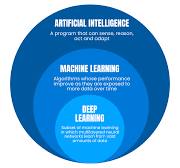
Artificial Intelligence (AI), Machine Learning (ML), and Deep Learning (DL) are interconnected fields, but they differ in complexity and application. AI is the broadest concept, encompassing any machine or system capable of performing tasks that typically require human intelligence, such as problem-solving and decision-making. ML is a subset of AI focused on developing algorithms that allow computers to learn from data and improve their performance over time without being explicitly programmed for each task. DL, on the other hand, is a specialized subset of ML that uses neural networks with many layers (hence “deep”) to analyze various factors of data. While traditional ML algorithms might require manual feature extraction from data, DL models automatically discover intricate patterns and features through their layered architecture. In summary, AI is the overarching field, ML provides methods for achieving AI, and DL offers advanced techniques within ML to handle complex problems involving large volumes of data.


Unleashing the Power of Cognitive AI: Shaping the Future of Artificial Intelligence

Understanding Cognitive AI: The Future of Artificial Intelligence

Cognitive AI represents a significant leap forward in the field of artificial intelligence, aiming to emulate human thought processes in a more sophisticated and nuanced manner. Unlike traditional AI systems that rely on pre-defined algorithms and data sets, cognitive AI seeks to understand, learn, and interact with the world similarly to how humans do.

What is Cognitive AI?

Cognitive AI refers to systems that can simulate human cognitive functions such as perception, reasoning, learning, and decision-making. These systems are designed to mimic the way the human brain works by using various technologies like machine learning, natural language processing, and neural networks.

The goal of cognitive AI is not just to process data but to understand it contextually. This allows for more dynamic interactions between machines and humans, enabling machines to adapt over time based on new information and experiences.

Key Features of Cognitive AI

  • Learning from Experience: Cognitive AI systems can learn from past interactions and improve their performance without human intervention.
  • Natural Language Processing: These systems can understand and generate human language in a way that feels natural and intuitive.
  • Contextual Understanding: Cognitive AI can grasp context beyond mere data points, allowing for more relevant responses and actions.
  • Adaptive Decision-Making: By analyzing patterns and trends, cognitive AI can make informed decisions even in complex situations.

Applications of Cognitive AI

The potential applications for cognitive AI are vast across various industries:

  • Healthcare: In healthcare, cognitive AI can assist in diagnosing diseases by analyzing medical records and imaging data with high accuracy.
  • Finance: Financial institutions use cognitive AI for fraud detection, risk assessment, and personalized customer service.
  • E-commerce: Retailers leverage cognitive AI for personalized shopping experiences through recommendation engines that understand customer preferences.
  • Education: Educational platforms utilize cognitive AI to create adaptive learning environments tailored to individual student needs.

The Future of Cognitive AI

The development of cognitive AI is still in its early stages but holds immense promise for transforming how we interact with technology. As these systems become more advanced, they will likely play an integral role in enhancing productivity across sectors while also raising important ethical considerations regarding privacy and decision-making autonomy.

Cognitive AI represents not just an evolution of technology but a revolution in how machines can augment human capabilities. As research progresses, it will be crucial to balance innovation with ethical responsibility to ensure these powerful tools benefit society as a whole.

Conclusion

Cognitive AI is poised to redefine the boundaries between humans and machines by enabling more natural interactions and smarter decision-making processes. As this technology continues to evolve, it promises exciting opportunities while also challenging us to think critically about its implications for our future world.


7 Essential Tips for Effectively Implementing Cognitive AI Solutions

  1. Understand the problem domain thoroughly before implementing a cognitive AI solution.
  2. Ensure that the data used to train cognitive AI models is of high quality and relevant to the task at hand.
  3. Regularly evaluate and update cognitive AI models to maintain their accuracy and relevance over time.
  4. Consider ethical implications, biases, and privacy concerns when developing cognitive AI systems.
  5. Provide clear explanations of how cognitive AI systems make decisions to enhance transparency and trust.
  6. Combine cognitive AI with human expertise for more effective problem-solving and decision-making.
  7. Stay informed about advancements in cognitive AI technology to leverage new tools and techniques.

Understand the problem domain thoroughly before implementing a cognitive AI solution.

Before implementing a cognitive AI solution, it’s crucial to thoroughly understand the problem domain. This involves gaining a deep insight into the specific challenges and requirements of the area where the AI will be applied. By comprehensively analyzing the context and nuances of the problem, developers can tailor AI models to address real-world needs effectively. This understanding helps in selecting the right data sets, designing appropriate algorithms, and setting realistic goals for what the cognitive AI solution should achieve. Without this foundational knowledge, there’s a risk of developing solutions that are misaligned with user needs or that fail to deliver meaningful results. Therefore, investing time in understanding the problem domain is essential for creating effective and impactful cognitive AI applications.

Ensure that the data used to train cognitive AI models is of high quality and relevant to the task at hand.

Ensuring that the data used to train cognitive AI models is of high quality and relevant to the task at hand is crucial for the success and accuracy of these systems. High-quality data provides a solid foundation for the model to learn from, minimizing errors and biases that could arise from inaccurate or irrelevant information. When data is carefully curated and directly aligned with the specific objectives of the AI application, it enhances the model’s ability to understand context, make informed decisions, and deliver reliable outcomes. This approach not only improves performance but also helps in building trust in AI systems by ensuring they operate effectively in real-world scenarios.

Regularly evaluate and update cognitive AI models to maintain their accuracy and relevance over time.

Regularly evaluating and updating cognitive AI models is crucial to maintaining their accuracy and relevance over time. As data patterns and user behaviors evolve, an AI model that was once highly effective can become outdated if not periodically reviewed. Regular updates ensure that the model adapts to new information, incorporates recent trends, and continues to perform optimally in changing environments. This process involves assessing the model’s performance metrics, identifying areas for improvement, and integrating fresh data to refine its algorithms. By doing so, organizations can ensure their cognitive AI systems remain robust, reliable, and capable of delivering accurate insights and predictions in a dynamic landscape.

Consider ethical implications, biases, and privacy concerns when developing cognitive AI systems.

When developing cognitive AI systems, it’s crucial to consider the ethical implications, biases, and privacy concerns that may arise. As these systems become more integrated into everyday life, they have the potential to impact decisions on a wide scale, influencing everything from healthcare to criminal justice. Developers must ensure that cognitive AI is designed with fairness in mind, actively working to identify and mitigate biases that could lead to unjust outcomes. Additionally, safeguarding user privacy is paramount; this involves implementing robust data protection measures and ensuring transparency in how data is collected and used. By addressing these concerns proactively, developers can build trust with users and create AI systems that are not only effective but also ethically responsible and respectful of individual rights.

Provide clear explanations of how cognitive AI systems make decisions to enhance transparency and trust.

Incorporating clear explanations of decision-making processes in cognitive AI systems is crucial for enhancing transparency and building trust with users. When AI systems can articulate the rationale behind their conclusions or actions, it demystifies the technology and allows users to understand how decisions are reached. This transparency not only fosters trust but also empowers users to make informed decisions about relying on these systems. By providing insights into the data used, the algorithms applied, and the reasoning followed, developers can create a more collaborative relationship between humans and machines. This approach ensures that cognitive AI is perceived as a reliable partner rather than an opaque tool, ultimately leading to broader acceptance and more effective integration into various aspects of daily life and business operations.

Combine cognitive AI with human expertise for more effective problem-solving and decision-making.

Combining cognitive AI with human expertise creates a powerful synergy for more effective problem-solving and decision-making. While cognitive AI can process vast amounts of data and identify patterns at an incredible speed, human experts bring intuition, creativity, and contextual understanding that machines currently cannot replicate. By leveraging the strengths of both, organizations can enhance their analytical capabilities and make more informed decisions. This collaboration allows humans to focus on strategic thinking and complex problem-solving while AI handles data-driven tasks, resulting in more efficient operations and innovative solutions. Integrating cognitive AI with human insight ultimately leads to better outcomes across various fields, from healthcare to finance and beyond.

Stay informed about advancements in cognitive AI technology to leverage new tools and techniques.

Staying informed about advancements in cognitive AI technology is crucial for individuals and businesses looking to leverage new tools and techniques effectively. As the field of cognitive AI rapidly evolves, keeping up-to-date with the latest developments can provide a competitive edge, enabling one to adopt innovative solutions that enhance efficiency and decision-making processes. By understanding emerging trends and breakthroughs, professionals can better anticipate changes in their industry, adapt strategies accordingly, and ensure they are utilizing the most advanced technologies available. This proactive approach not only fosters growth and innovation but also positions individuals and organizations as leaders in their respective fields.